Linkener Raises €7.5M to Consolidate Spain’s Business Energy Software Market
Top Picks
Submit PR
Stay Ahead of the Market
Get the latest startup funding, hiring trends and global opportunities delivered to your inbox every week.
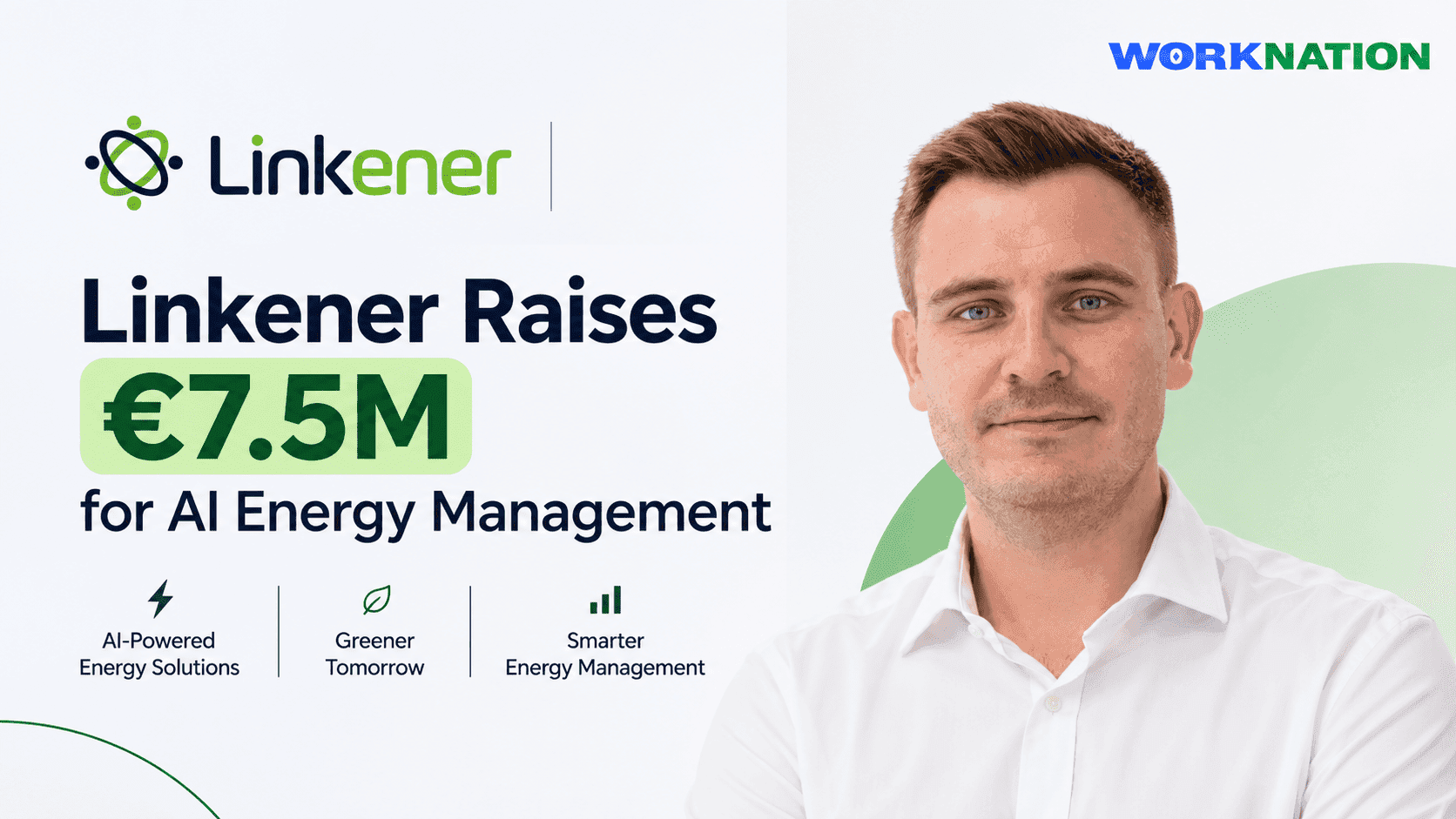
Spanish energy technology startup Linkener has raised €7.5 million in a funding round led by Klima, the energy transition investment fund of Alantra. The company plans to use the capital to develop its energy management platform, build proprietary artificial intelligence models, and acquire complementary businesses in Spain’s fragmented business energy software market.
Existing investor GoHub Ventures remains a shareholder following the investment.
Linkener develops technology that helps businesses monitor energy consumption, analyse electricity contracts, validate energy bills, and identify potential savings. Its platform combines remote metering hardware, data analytics, and AI to turn energy consumption data into actionable insights.
The funding marks a new phase for the company as it looks to expand beyond its existing technology and services business into a broader platform for business energy management.
What Does Linkener Do?
Linkener provides an Intelligent Energy Management System known as SIGE. The platform is designed to help businesses understand how much energy they consume, what they pay for it, and where inefficiencies or billing irregularities may exist.
Managing energy expenses can be complicated for organisations with multiple facilities, electricity supply points, contracts, and consumption patterns. Businesses need reliable data to assess their energy usage, verify supplier invoices, and make informed purchasing decisions.
Linkener brings several of these activities together through its combination of metering hardware, software, analytics, and AI.
Its platform enables customers to track energy consumption remotely, validate electricity bills, analyse contractual terms, and flag anomalies that could indicate opportunities for savings. These capabilities can help organisations move from periodic reviews of energy expenses toward more continuous monitoring.
According to the company, Linkener serves more than 2,000 customers and manages approximately 10,000 energy supply points. Together, these points account for around 1.7 terawatt-hours of annual energy consumption, which the company compares with the consumption of a city of approximately 400,000 people.
These figures are self-reported and have not been independently audited, according to the source article.
Linkener combines software development with installation and other energy-related services. Its growth strategy increasingly focuses on expanding the software capabilities of the business, particularly through AI-driven automation and a broader portfolio of integrated services.
How AI Could Change Business Energy Management
A central part of Linkener's expansion strategy is the development of proprietary AI models.
Energy management generates large amounts of data from meters, invoices, contracts, and consumption records. Extracting useful insights from these sources can require considerable manual work, particularly when organisations manage many facilities or supply points.
Linkener intends to use AI to automate several processes, including invoice processing, consumption-data validation, anomaly detection, and the generation of recommendations.
The company aims to analyse millions of daily data points and turn them into information that businesses can use to make decisions about energy spending.
Automating invoice processing could help reduce repetitive administrative work. Consumption-data validation could help identify inconsistencies, while anomaly detection could flag unusual patterns that warrant further investigation. Recommendations generated from this information could help businesses assess their energy costs and identify potential efficiency improvements.
Linkener's CEO, José Ignacio Ruiz, said the investment would help accelerate the transformation of a sector where energy management still relies on practices that have changed relatively little over several decades.
The company's objective is to give businesses more reliable information about their energy expenses, help them anticipate costs, and support better decision-making.
However, the source article does not disclose specific performance benchmarks for Linkener's AI models, independently verified savings attributable to the platform, or the extent to which its planned automation is already deployed across its customer base.
The commercial opportunity will therefore depend on how effectively the company translates its data and AI capabilities into measurable benefits for customers.
Why Alantra's Klima Is Investing in Linkener
The €7.5 million round was led by Klima, Alantra's energy transition fund. Existing investor GoHub Ventures continues to support the company.
The investment reflects an interest in technology that can help businesses manage energy more efficiently while modernising an industry that remains fragmented.
Klima has also invested in Dexter Energy, leading a €23 million Series C funding round for the company in July 2025. Dexter Energy focuses on renewable energy asset owners and traders, while Linkener serves businesses that purchase and consume energy.
The two investments address different parts of the energy value chain, but both involve using software and AI to improve decisions based on energy data.
For Linkener, the new funding provides capital to expand its technology and pursue acquisitions. For Klima, the company offers a platform with existing customers, proprietary technology, and direct relationships with organisations managing significant energy consumption.
Iñigo Echaniz, a partner at Klima, described business energy management as a fragmented market with substantial potential for digitisation. He highlighted Linkener's technology, independent energy data, and customer relationships as a foundation for expanding its capabilities.
GoHub Ventures first invested in Linkener in 2019 and is continuing its backing. GoHub Ventures partner Víctor Vercher said the new round positions the company to scale and consolidate the market, citing its approach to AI and technology.
The continued participation of an existing investor alongside a new funding round provides continuity as Linkener enters its next stage of growth.
Acquisitions Are Central to Linkener's Growth Strategy
Linkener does not intend to rely solely on developing its existing products. It also plans to acquire companies offering complementary technologies, products, and services.
The strategy is aimed at consolidating a fragmented business energy management market by bringing additional capabilities into a single platform.
Potential acquisitions could expand the range of services available to Linkener's customers and strengthen its technology offering. Integrating those businesses could also help the company broaden its customer relationships and product portfolio.
However, acquisition-led growth comes with execution challenges. Linkener will need to integrate different technologies, maintain reliable data across systems, and ensure that acquired products work effectively within its platform.
The source article does not identify a target company, disclose a completed acquisition, or provide a timeline for its first deal.
The next phase will therefore be important in determining how Linkener translates its acquisition plans into a larger, more integrated energy management business.
Competition in Europe's Energy Software Market
Linkener is entering a European market where several startups are developing software to help businesses and energy companies manage consumption, infrastructure, and costs.
Dutch startup Tibo Energy raised €6 million in seed funding in June 2025 for AI-driven energy management at industrial sites. Finnish company Capalo AI raised €11 million in Series A funding in February 2026 to optimise battery storage and renewable energy assets. Nomos has also attracted investment to address European energy costs.
These companies operate in different segments of the energy value chain, so they are not all direct competitors to Linkener. Nevertheless, their activities reflect a broader trend toward using software and AI to make energy systems more efficient.
For Linkener, differentiation will depend on its ability to combine energy data, metering infrastructure, bill validation, contract analysis, and automated recommendations in a practical offering for businesses.
The company will also need to demonstrate that its platform produces measurable savings and that its technology remains reliable as it expands through acquisitions.
The International Energy Agency has reported average savings of around 25% from energy service company projects in 2024, with established markets such as Europe reporting savings of approximately 20% to 30%. These figures provide broader industry context, not a verified performance result for Linkener.
What Comes Next for Linkener?
The €7.5 million investment gives Linkener additional resources to develop proprietary AI, improve its product offering, and pursue acquisitions.
Its existing reported footprint of more than 2,000 customers and 10,000 energy supply points provides a foundation for expansion. The company's challenge now is to scale that foundation while maintaining the reliability of its data and demonstrating the value of its technology to customers.
The acquisition strategy could accelerate expansion by adding complementary products and services, but successful integration will be essential.
Linkener's progress will ultimately depend on whether it can turn fragmented energy data into consistent, measurable improvements in how businesses monitor consumption and manage costs.
With fresh backing from Alantra's Klima and continued support from GoHub Ventures, the company is positioning itself to play a larger role in Spain's business energy management market.
The next major milestone will be seeing how Linkener deploys its new capital, particularly whether it completes acquisitions and demonstrates tangible results from its planned AI capabilities.
Have a Funding Round or Exciting Update to Share?
Submit your press release to get featured on WorkNation and reach founders, investors, and tech leaders.