Oshen Raises $5M to Scale Production of Hurricane-Tested Ocean Robots
Top Picks
Submit PR
Stay Ahead of the Market
Get the latest startup funding, hiring trends and global opportunities delivered to your inbox every week.
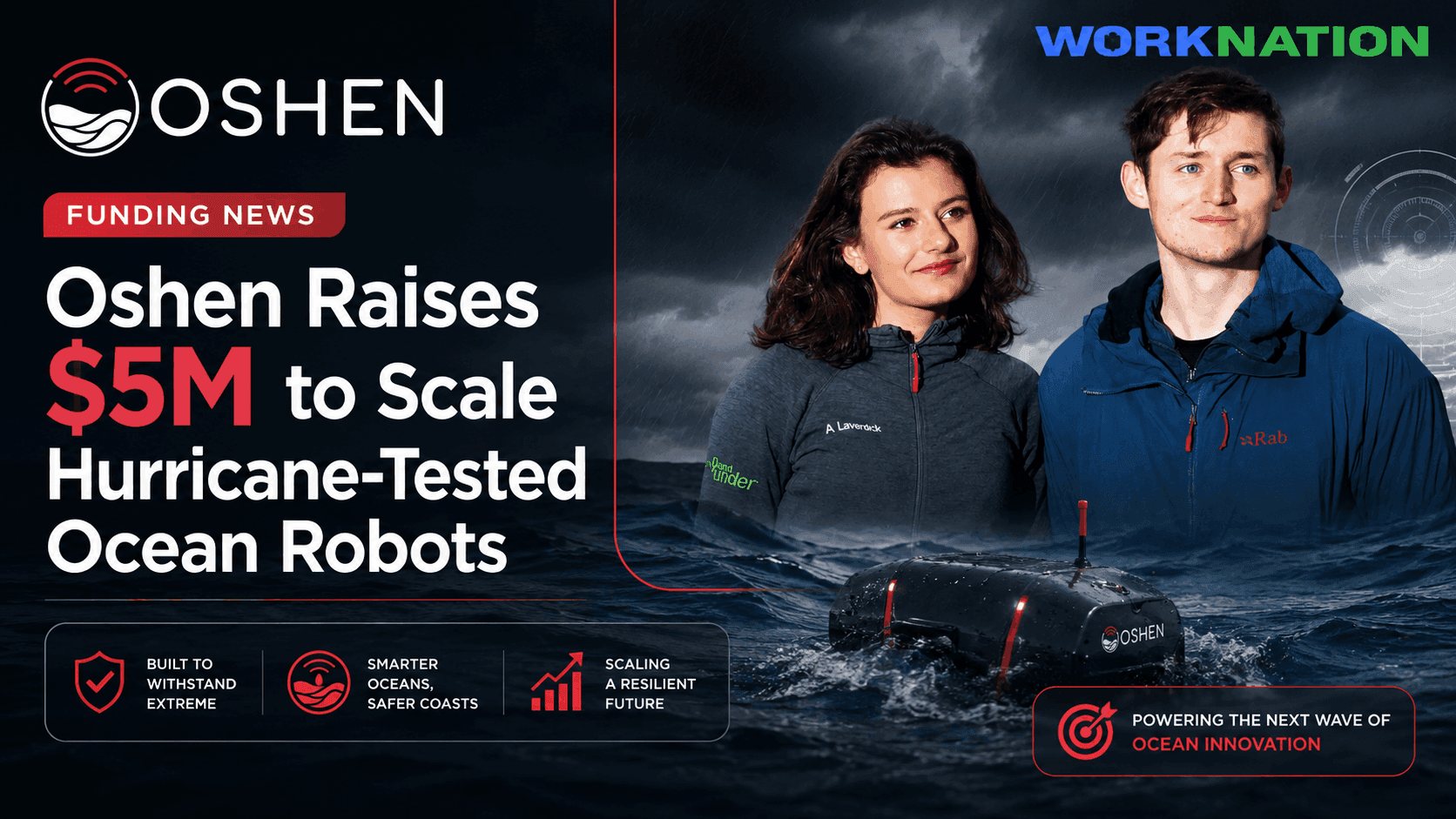
Plymouth-based ocean robotics startup Oshen has raised $5 million in funding to expand production of its autonomous C-Star ocean robots. The round was led by Lunar Ventures, with participation from AlbionVC, Twin Track, Concept Ventures and angel investors.
Founded in 2022 by Imperial College London engineering graduates Anahita Laverack and Ciaran Dowds, Oshen develops small autonomous robots designed to collect real-time data across large areas of the ocean.
The company’s C-Star robots are powered by wind and solar energy and can operate autonomously for months while transmitting data through satellite connectivity. The 1.2-metre vehicles can be launched by a single person and deployed in groups to cover large areas of ocean.
Oshen’s technology has already been tested in extreme conditions. Its robots became the first uncrewed vehicles to collect real-time data from inside a Category 5 hurricane, demonstrating their ability to operate in some of the ocean’s most challenging environments.
The startup currently produces around 15 robots every six weeks, a significant increase from the 15 units it produced during its first three years. It also has orders for another 100 units.
Oshen has grown from seven employees in September 2025 to almost 30, with manufacturing now based in Plymouth. Its customer base includes organisations working across defence and climate-related projects.
The company is also working with the US Navy’s Naval Meteorology and Oceanography Command on shallow-water surveys and is testing a distributed passive acoustic network with ZeroUSV and MarineAI through a UK Defence and Security Accelerator-supported project.
The new funding will be used to scale manufacturing and meet growing demand for applications including passive acoustics for ship detection, protection of subsea cables and pipelines, and anti-submarine warfare.
Oshen’s approach is built around deploying large numbers of lower-cost autonomous robots rather than relying on a small number of expensive specialised platforms. The company’s next challenge will be proving that this high-volume model can translate its technical performance into large-scale commercial and government adoption.
Have a Funding Round or Exciting Update to Share?
Submit your press release to get featured on WorkNation and reach founders, investors, and tech leaders.