mika Raises €6M to Build AI-Native Alternative to Traditional Tax Firms
Top Picks
Submit PR
Stay Ahead of the Market
Get the latest startup funding, hiring trends and global opportunities delivered to your inbox every week.
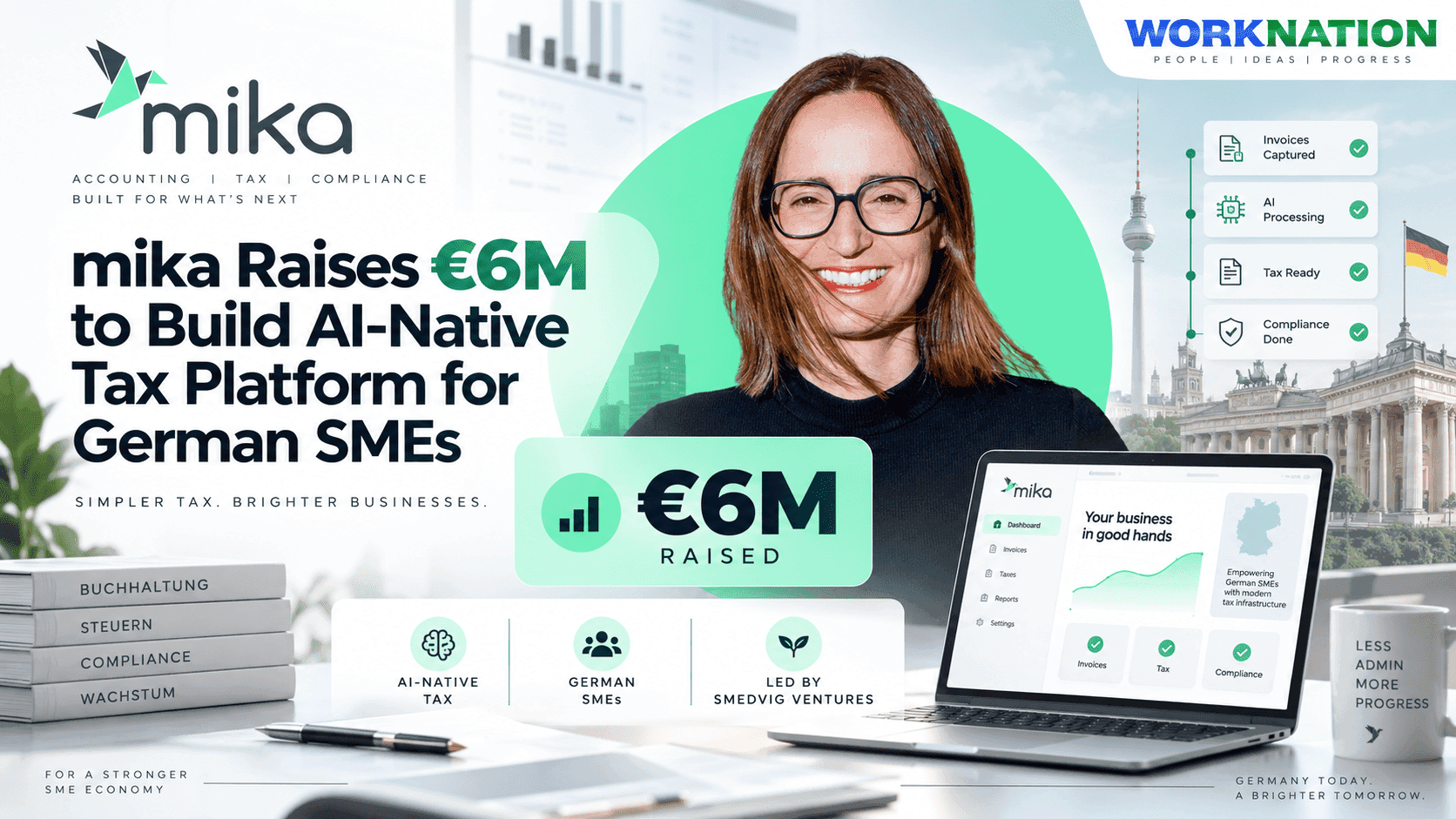
Berlin-based vertical AI startup mika has raised €6 million in a Seed funding round to scale its AI-native alternative to traditional tax firms serving small limited companies in Germany.
The round was led by Smedvig Ventures, with participation from Basel-based family office Wecken & Cie. (Care4 AG), along with Dennis Bemmann and Michael Brehm, co-founders of studiVZ; Johannes Ditterich, founder of limango; and Martina Pfeifer of encourageventures.
Existing investors Keen Venture Partners and Dutch Founders Fund also increased their stakes in the company.
The latest financing builds on mika's €800,000 pre-Seed round raised in 2024. That earlier round was led by Samen Slimmer, an alliance comprising Keen Venture Partners, Dutch Founders Fund and Slimmer AI.
Founded in 2022, mika is developing an AI-native financial operating system for German small businesses, with a focus on GmbHs and UGs.
Rebuilding Accounting Around AI
Rather than simply digitising the processes used by traditional tax firms, mika says it is rebuilding accounting, tax and finance from the ground up using artificial intelligence.
The company's platform handles recurring financial and tax-related processes for small German limited companies, including bookkeeping, VAT returns, annual accounts and tax filings.
For GmbHs and UGs, these activities are an important part of ongoing financial administration. mika's proposition is to combine software, AI models and accounting expertise into a single platform that can manage these processes.
The company has developed its own AI-native general ledger specifically for German accounting.
Its AI can read and interpret receipts and payments, categorize transactions and record them within the company's financial system.
The platform also explains individual entries to users, giving business owners visibility into what has been recorded rather than simply producing financial outputs in the background.
Combining AI With Human Accountants
Although mika is designed around automation, the company does not rely entirely on AI for every accounting decision.
According to the company, trained in-house accountants review the AI-generated results and intervene when a situation requires additional human expertise.
The underlying system uses different AI models depending on the task, with those models operating within the accounting rules and domain knowledge developed by mika.
This hybrid approach allows the company to automate routine bookkeeping and accounting processes while retaining human oversight for more complex cases.
For small businesses, that combination is intended to reduce the amount of manual work involved in financial administration without removing access to professional expertise when it is needed.
Making Company Finances More Accessible
mika is targeting small limited companies in Germany, particularly GmbHs and UGs.
The company argues that the complexity of German accounting and tax rules often pushes small businesses toward traditional tax advisers.
Agnieszka Walorska, founder and CEO of mika, said the company wants to reduce the barrier that accounting and tax complexity can create for people starting businesses.
The company's approach is based on giving founders direct access to their financial information while automating many of the processes that would otherwise require significant manual work.
Users can interact with their own financial data inside mika and through the Model Context Protocol, or MCP, with AI assistants such as ChatGPT or Claude.
This allows users to ask questions about their own accounts and financial information through AI interfaces.
Explaining Tax Office Letters
mika's platform also goes beyond transaction processing.
Users can upload letters received from the German tax authorities and have the platform explain what the document means and what actions may be required.
The company says the system can also answer questions about a user's own accounts and finances.
However, individual tax advice is not currently included as part of the offering.
For cases requiring individual tax advice, mika relies on licensed tax advisers within its network.
This distinction allows the company to automate accounting and financial workflows while maintaining a separate route to licensed professional advice when required.
Growing Customer Base
mika has reported rapid growth in its customer base during 2026.
At the beginning of the year, approximately 400 GmbHs and UGs were using the platform.
That number has since grown to more than 750 companies, according to the startup.
The company initially focused on digital-first service businesses such as agencies and consultancies.
Its customer base has since expanded into Software-as-a-Service, property and e-commerce businesses.
Retail and skilled trades are among the most recent sectors to adopt the platform.
The broader customer mix gives mika exposure to different types of small businesses and accounting workflows as it expands beyond its initial digital-first audience.
Revenue Crosses €1M Annual Run Rate
mika also reported strong revenue growth.
According to the company, revenue has increased by more than 20% every month.
In July 2026, the startup said it crossed €1 million in annual revenue.
The combination of customer growth and recurring revenue expansion provides the company with a growing base as it enters its next phase of development.
Its latest funding is intended to support further growth as mika expands its product and customer base.
Leadership Team
Following a realignment under new management in 2024, mika is led by founder and CEO Agnieszka Walorska, alongside CFO Luke Linnekuhle and CTO Henry Müssemann.
The leadership team is focused on building the company's AI-native approach specifically for the German accounting and tax environment.
That local specialization is central to mika's positioning.
Rather than offering a generalized accounting automation product, the company has built its ledger and AI systems around German accounting rules and workflows.
Investor Support
Smedvig Ventures led the latest €6 million round, bringing a new institutional investor into mika's shareholder base.
Wecken & Cie., Dennis Bemmann, Michael Brehm, Johannes Ditterich and Martina Pfeifer also participated.
Existing backers Keen Venture Partners and Dutch Founders Fund increased their investments.
The new funding gives mika additional resources to scale its platform, expand its customer base and continue developing its AI-native accounting infrastructure.
Building an AI-Native Tax Alternative
mika's strategy reflects a broader movement toward vertical AI platforms that combine specialized models, domain knowledge and automation for specific industries.
In mika's case, the focus is on the intersection of accounting, tax and financial administration for small German companies.
The company's platform is designed to automate transaction categorization, bookkeeping and recurring tax-related workflows while giving users direct access to their financial information.
Its ability to interact with financial data through AI interfaces such as MCP also points toward a model in which business owners can increasingly ask questions about their companies using natural language.
For now, mika remains focused on Germany's small limited-company market.
With more than 750 customers, annual revenue exceeding €1 million and €6 million in new Seed funding, the Berlin startup is entering its next phase with plans to scale both its technology and customer base.
Have a Funding Round or Exciting Update to Share?
Submit your press release to get featured on WorkNation and reach founders, investors, and tech leaders.