Cortas Raises €1.47 Million to Build an AI-Native Property Management Business
Top Picks
Submit PR
Stay Ahead of the Market
Get the latest startup funding, hiring trends and global opportunities delivered to your inbox every week.
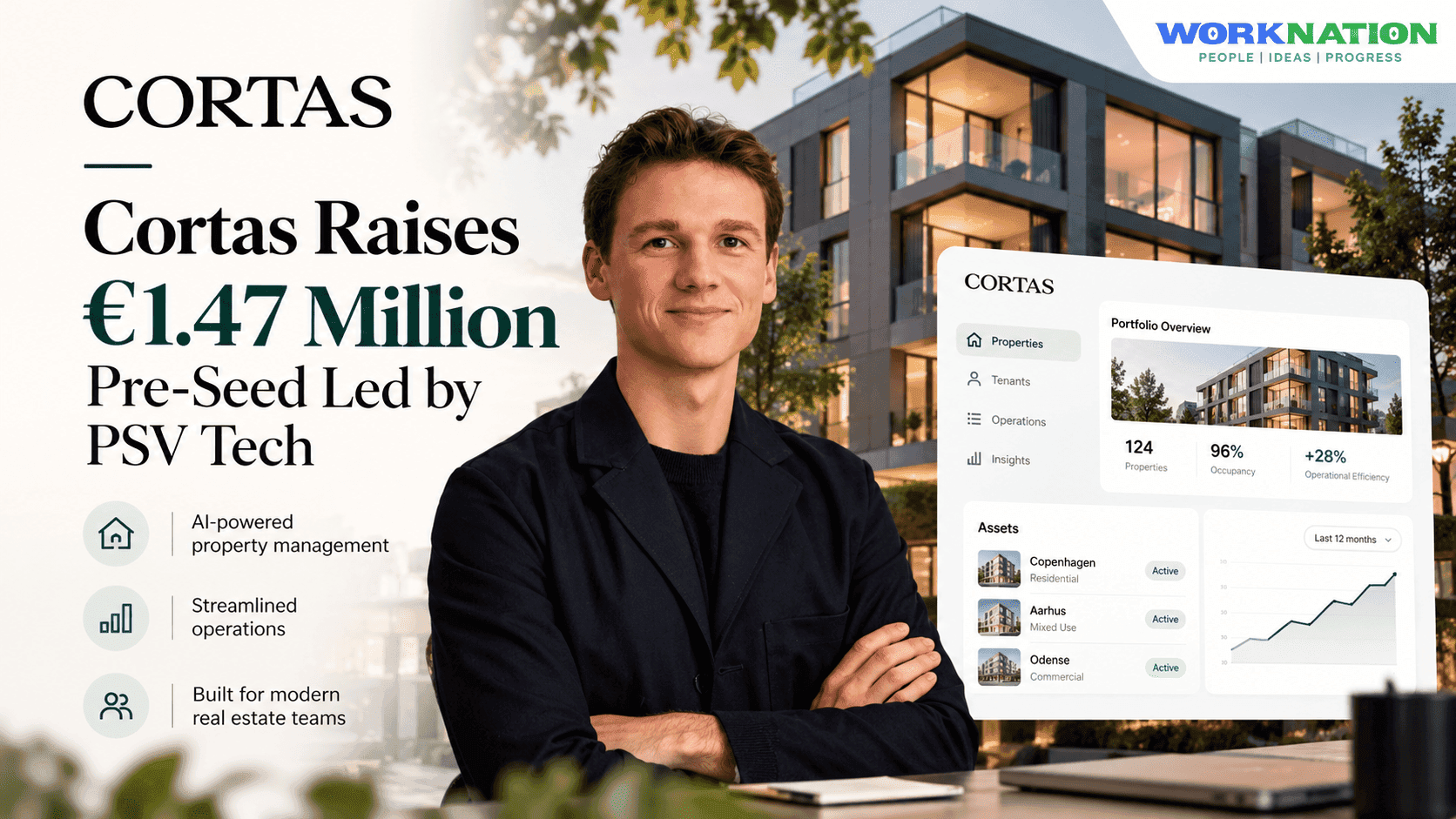
Danish PropTech startup Cortas has raised approximately €1.47 million in a pre-seed funding round led by PSV Tech. The round also included JRNY Capital, EIFO, Denmark's state-owned export and investment fund, and several technology founders, including entrepreneurs behind Flatpay and Spirii.
Founded by Christian Pind Schmidt and Frederik Buchardt, Cortas is taking a different approach to property management. Instead of simply selling software to established property managers, the Copenhagen-based startup plans to build its own technology platform and use it to manage properties directly for institutional real estate investors.
The company intends to use the fresh capital to improve its technology, expand its team, and establish itself as an alternative to traditional property management providers.
From Property Investors to PropTech Founders
Schmidt and Buchardt met while working in property investment at Thylander Group, a major Danish property investor.
Their experience exposed them to the operational challenges involved in managing real estate, particularly slow processes and disconnected software systems. They identified an opportunity to rethink how property management services are delivered by combining software development with the management business itself.
That insight became the foundation for Cortas, which was established in Copenhagen.
The founders believe that simply adding artificial intelligence to existing workflows will not fundamentally change how property management operates. Instead, they want to redesign the underlying processes, using technology where it creates measurable value and people where expertise and judgement remain essential.
Their experience on the investment side of real estate also gives them a perspective on the operational requirements of institutional property owners.
A Property Manager Building Its Own Software
Traditionally, property owners may rely on a property management company for operational services and a separate technology provider for the software used to coordinate those activities.
Cortas intends to combine these functions. It plans to build its own property management tools and use them to deliver services directly to institutional real estate investors.
The company's planned service covers day-to-day property operations, including:
Tenant enquiries and communication.
Tenant move-ins and move-outs.
Administrative processes and documentation.
Bookkeeping and financial management.
Financial administration for the different legal entities involved in property ownership.
By controlling both the service delivery and the software, Cortas aims to improve how these activities are organised and executed.
This model also gives the company direct insight into the problems its technology needs to solve. Rather than developing features based only on feedback from software customers, the team can test new approaches within its own property management operations.
The approach could create a closer relationship between product development and customer outcomes, although its success will depend on service quality, operational efficiency, and the ability to scale across property portfolios.
Why Cortas Is Taking an AI-Native Approach
Cortas describes itself as an AI-native business, but its founders argue that AI should not be treated as a strategy in itself.
Schmidt believes the opportunity lies in rethinking the property management business model rather than placing a chatbot on top of existing systems. The company wants to develop software internally and test new approaches continuously.
Buchardt has similarly emphasised that the starting point should be providing the best possible property management service, not finding as many places as possible to apply AI.
This means Cortas expects to use a combination of AI, conventional automation, improved processes, and skilled employees.
Administrative work that can be handled reliably by technology may be automated, while activities requiring human judgement, specialised expertise, and relationship building remain supported by people.
This distinction matters because property management involves more than processing information. Tenant concerns, property-specific decisions, financial responsibilities, and relationships with owners often require context and accountability.
Cortas is seeking to use technology to improve the overall service rather than automate every task indiscriminately.
Investors Back a Different Property Management Model
PSV Tech led the pre-seed round, with JRNY Capital, EIFO, and several technology founders also participating.
Among the individual participants were founders associated with Flatpay, the Danish payments company, and Spirii, an electric vehicle charging platform acquired by Edenred in 2024.
PSV Tech's Christian Dalsgaard highlighted the founders' execution capabilities, industry experience, and network among property investors. He also pointed to the opportunity to serve large institutional investors with demanding operational requirements.
Tore Harritshøj, founder of Spirii and a Cortas investor, drew parallels between Cortas' approach and the transformation of other industries through technology. He sees potential for technology to change both the cost structure and customer experience of property management.
The investor thesis rests on the possibility that Cortas can build a new operating model for property management rather than compete solely as another software vendor.
However, combining a technology business with direct service delivery also creates operational responsibilities. The company will need to develop its software while delivering reliable services to property owners and tenants.
A Competitive Market for AI-Powered Property Management
Cortas is entering a market where startups are applying AI to rental operations, housing, and property management.
The source article highlights German company Reltix, which raised a €3 million pre-seed round in June 2026, and Paris-based Rivage, which raised €1.5 million in July 2026 for AI-powered rental management software.
It also points to EliseAI, which raised $350 million at a reported $4 billion valuation in September 2026 to automate workflows in housing and healthcare.
These businesses have different operating models and target customers, but they reflect growing interest in applying AI to property-related operations.
Cortas' intended distinction is that it is not primarily building software for existing property managers. Instead, it plans to operate as a property manager using its own technology.
This strategy could allow the company to redesign workflows from the ground up. It also means Cortas must compete on both technology and the quality of its management services.
How Cortas Plans to Use the Funding
The approximately €1.47 million pre-seed round will support three main priorities: improving its technology, growing its team, and positioning the business as an alternative to established property managers.
Building the platform internally will be important to its operating model. The company wants to develop and test software continuously, using the experience gained from managing properties directly.
As the business grows, it will need to demonstrate that this combination can deliver reliable service while making property management more efficient.
The source announcement does not disclose a specific customer count, property portfolio size, or detailed expansion timeline. Cortas' immediate focus is on developing its technology and establishing its service offering.
What Comes Next for Cortas?
Cortas is building around a simple proposition: property management could work differently if the company responsible for the service also controlled the technology used to deliver it.
The €1.47 million pre-seed round gives the founders capital to develop that model in Denmark. Its progress will depend on whether it can combine reliable property management with technology that improves the economics and quality of service.
For PropTech founders and investors, Cortas offers a different way to approach vertical software. Instead of selling tools into an existing industry structure, the company plans to redesign the service itself and build technology around that new operating model.
The key question is whether this integrated approach can scale while maintaining the reliability institutional property investors expect.
Have a Funding Round or Exciting Update to Share?
Submit your press release to get featured on WorkNation and reach founders, investors, and tech leaders.