Treat Raises €3M to Make Private Healthcare Faster With AI
Top Picks
Submit PR
Stay Ahead of the Market
Get the latest startup funding, hiring trends and global opportunities delivered to your inbox every week.
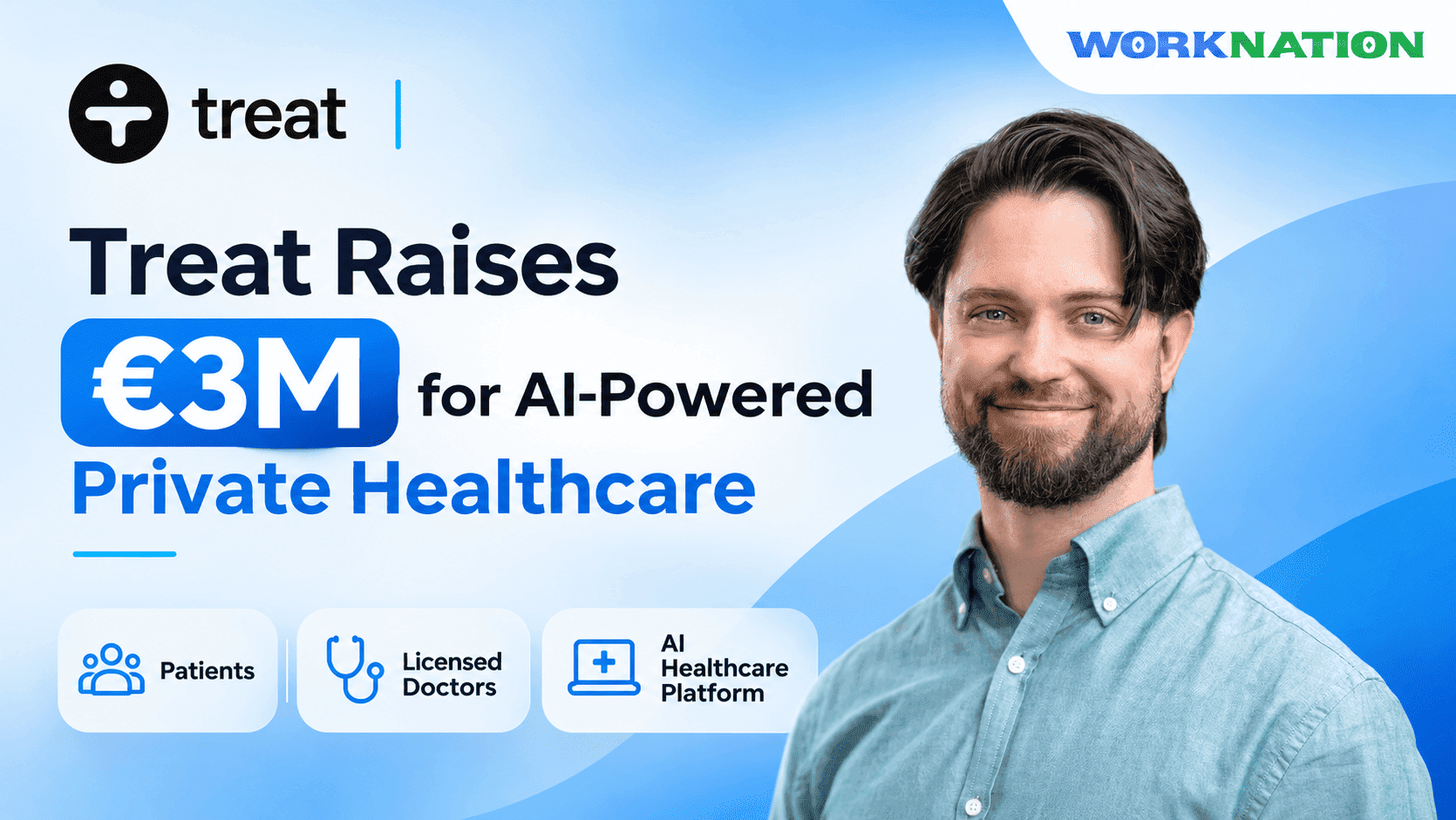
Helsinki-based healthtech startup Treat has raised €3 million in pre-seed funding to use AI to simplify access to private healthcare and help patients reach the right medical professionals without unnecessary consultations.
Founded in 2026 by Sami Marttinen, former CEO and co-founder of Swappie, medical doctor Antti Mauno and fintech engineering lead Onni Wahlberg, Treat is building an AI-powered healthcare platform that collects and organises patient information before connecting users with licensed doctors.
The pre-seed round was led by Nordic venture capital firm byFounders, with participation from Illusian, the investment company founded by Supercell co-founder Ilkka Paananen, and Wave Ventures.
Marttinen says the fundraising process was completed in just one week after the first conversation with byFounders.
The company plans to use the funding primarily for product development and international expansion. Its longer-term ambition is to make accessing the right medical care faster and easier across multiple healthcare markets.
How a Single A4 Page Inspired Treat
Treat's founding story began with a frustrating experience involving Marttinen's wife, who went through nine separate private healthcare visits before receiving a diagnosis.
Despite Finland having a national medical records system that allows doctors to access public and private medical information, the relevant details were not being reviewed together during her consultations.
After several appointments, Marttinen decided to collect the medical history himself.
He reviewed the previous consultations, medications and test results, then condensed the information into a single A4-page summary.
The next doctor reviewed that summary and referred her to the specialist who eventually made the diagnosis.
For Marttinen, the experience exposed a wider problem in private healthcare: important medical information already exists, but it is often fragmented across appointments, providers and records.
He believes the problem is not necessarily the doctors themselves, but a system in which fragmented information and financial incentives can contribute to repeated consultations.
That experience became the starting point for Treat.
The company aims to make sure patients do not have to repeatedly explain their medical history or navigate unnecessary appointments before reaching the appropriate care.
How Treat Uses AI to Connect Patients With Doctors
Treat is designed to work as an access layer between patients, doctors, employers and existing healthcare providers.
Patients can describe their symptoms through text or voice. The platform then asks follow-up questions to collect relevant information and organise it into a structured medical brief.
Before the consultation, a licensed doctor can review the patient's available medical history and the information gathered through the intake process.
The doctor then connects with the patient, assesses the situation and determines the appropriate next step.
Depending on the case, that may involve resolving the concern through a consultation or directing the patient towards further specialist care.
The platform also checks available insurance and employer healthcare coverage, helping patients understand which care options are available to them.
This is intended to reduce the administrative work involved in navigating different healthcare providers and coverage arrangements.
Why Human Medical Oversight Matters
Healthcare is a high-stakes environment where incorrect information or automated decisions can have serious consequences.
Treat says identifiable patient records are not shared with public large language models. Licensed doctors retain access to medical histories and responsibility for clinical decisions.
AI is used to organise information and support the intake process, rather than independently diagnose patients or prescribe treatment.
This distinction is central to the company's model.
Instead of positioning AI as a replacement for doctors, Treat wants to give medical professionals better-organised information before they speak with patients.
The approach could reduce repetitive administrative work and help doctors focus more of their time on clinical assessment.
An Alternative to Repeated Healthcare Consultations
One of Treat's central arguments is that the economics of private healthcare can reward additional consultations rather than efficient resolution.
Traditional healthcare providers may generate revenue through appointments, tests and referrals. Treat says it does not earn revenue from laboratory tests, clinic visits or referrals.
Instead, its business model is designed around providing access to medical care through employers.
This creates a different incentive structure: helping employees reach the appropriate medical professional without unnecessary steps.
According to the company, 83% of cases are resolved during the first visit.
That is an important early performance claim, although the company has not publicly provided enough independent evidence to establish how the figure is calculated across different types of medical cases.
If the model consistently delivers efficient outcomes, it could offer value to both employers and employees.
Employers could gain better control over healthcare spending, while employees could spend less time navigating multiple providers and repeating their medical histories.
More Than 20 Employer Pilots and Thousands of Users
Treat developed its product during the spring and summer of 2026, initially testing the service with early users while operating in stealth.
The company now reports more than 20 pilot employers, primarily global businesses.
Its early employer base includes a company with approximately 1,300 employees, and Treat says it has already reached its first thousands of users.
The platform is initially focused on employer-sponsored healthcare, complementing existing occupational healthcare and insurance arrangements rather than replacing them entirely.
Finnish users can also access the service while travelling across Europe, with travel insurance and prescription-related features included in the offering.
The company expects to expand its availability into more than five countries by the end of 2026.
These early pilots will be important in determining whether Treat's model can work at a larger scale, particularly across employers with different healthcare coverage arrangements and employee populations.
Investors Backing Treat's Healthcare Model
The €3 million pre-seed round was led by byFounders, with Illusian and Wave Ventures participating.
Illusian is the investment company founded by Ilkka Paananen, co-founder of Supercell. Its participation brings backing from one of Finland's best-known technology entrepreneurs.
byFounders also sees an opportunity to address structural problems in private healthcare by combining AI with medical expertise.
Sara Rywe, general partner at byFounders, said Treat is addressing fragmented healthcare systems and mismatched incentives by aligning technology more closely with clinical workflows.
The round was reportedly completed in just one week after the initial conversation with byFounders.
The funding will primarily support product development and expansion as Treat moves from its initial employer pilots towards broader commercial adoption.
Competing in the Nordic AI Healthtech Market
Treat is entering a competitive market where startups and established healthcare companies are investing in AI-powered medical services.
Helsinki-based Gosta Labs raised €7.5 million in seed funding to develop AI technology for oncology and precision medicine.
Tandem Health raised $100 million in Series B funding to develop an AI-powered clinical operating system for European healthcare providers.
Meanwhile, Oura agreed to acquire AI-native primary care company Counsel Health for a reported $625 million, highlighting the growing interest in bringing healthcare services closer to digital health platforms.
These companies target different parts of the healthcare market, but they share a broader opportunity: using AI to improve how medical information is collected, interpreted and acted upon.
Treat's approach is more focused on the patient access and coordination layer.
Rather than building its own network of clinics, it works alongside existing healthcare providers and employer-sponsored healthcare arrangements.
That positioning could allow the company to expand without having to build a traditional healthcare delivery infrastructure in every market.
What Treat Needs to Prove Next
Treat has an experienced founding team, early employer interest and backing from established Nordic investors. However, expanding an AI-powered healthcare service across countries introduces significant challenges.
Several factors will determine its next stage:
Clinical outcomes: The company needs to demonstrate that its AI-assisted intake process consistently helps doctors reach appropriate decisions without compromising medical quality.
Employer adoption: More than 20 pilot employers provide an initial foundation, but converting pilots into long-term commercial contracts will be important.
Regulatory requirements: Healthcare regulations, patient data protection and medical service requirements differ across countries.
International expansion: Entering more than five countries will require adapting the service to local healthcare systems, insurance arrangements and medical workflows.
Business model validation: Treat needs to demonstrate that its employer-sponsored model can scale while maintaining its promise of avoiding unnecessary consultations.
Treat's €3 million pre-seed funding gives it the resources to develop its platform and expand beyond its initial Finnish market.
The bigger opportunity is to make healthcare navigation less fragmented by ensuring doctors receive relevant patient information before consultations begin.
Its next challenge is proving that this model can improve access to care while working alongside existing healthcare systems at an international scale.
Have a Funding Round or Exciting Update to Share?
Submit your press release to get featured on WorkNation and reach founders, investors, and tech leaders.