SRTD Biotech Raises €31.5 Million Seed Round to Advance Its Selective mRNA Technology
Top Picks
Submit PR
Stay Ahead of the Market
Get the latest startup funding, hiring trends and global opportunities delivered to your inbox every week.
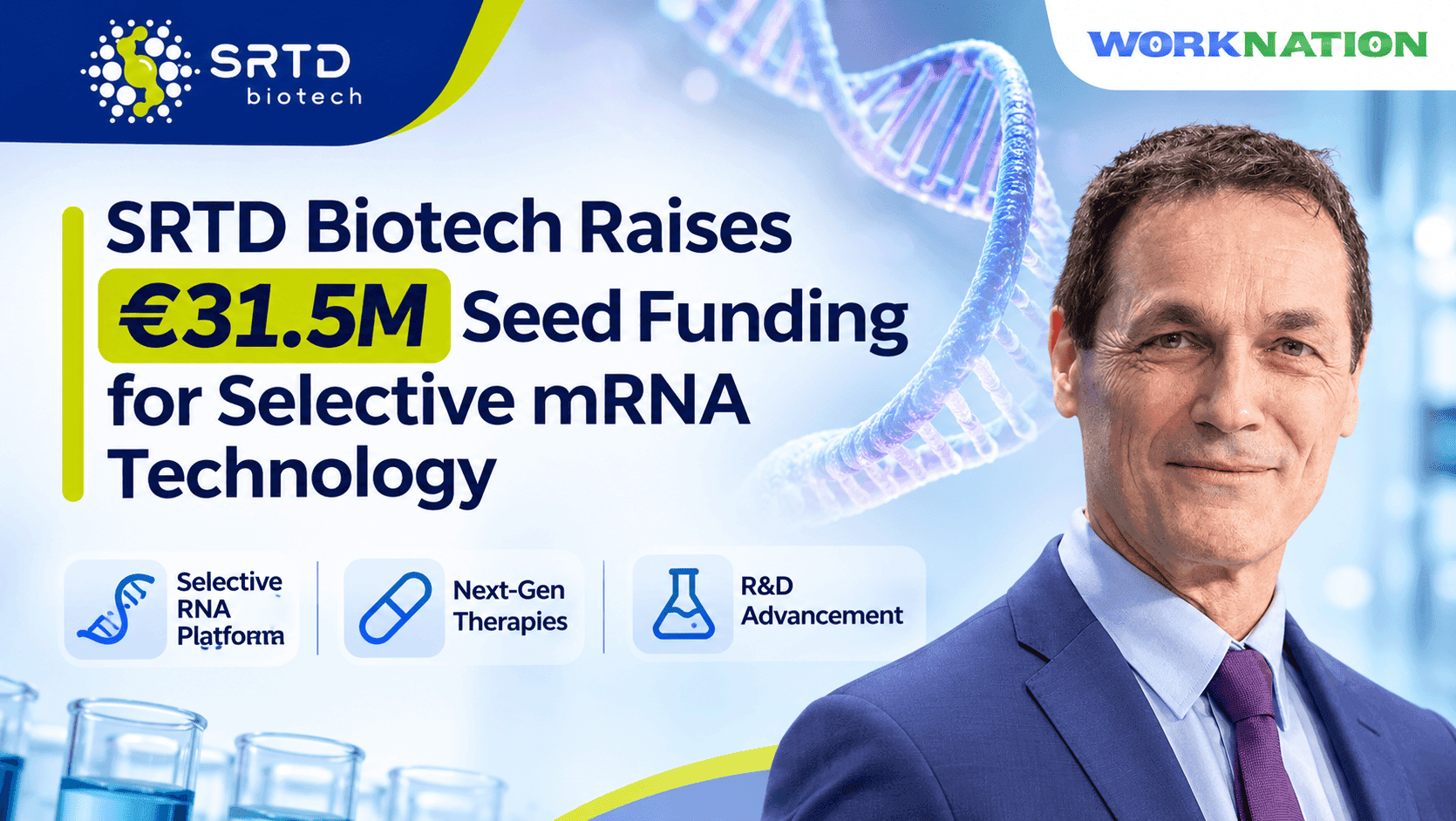
German biotechnology startup SRTD Biotech has raised €31.5 million in an oversubscribed seed funding round to advance its RNA-based therapeutic technology. The financing was co-led by Mérieux Equity Partners, through its Mérieux Innovation 2 fund, NRW.BANK and Boehringer Ingelheim Venture Fund. Lilly Ventures, High-Tech Gründerfonds (HTGF) and Anobis Asset also participated.
Announced on November 9, 2026, the investment will support preclinical development of the company's therapeutic programmes as it prepares for a potential Investigational New Drug (IND) application in the United States. An IND application is a regulatory submission required before a company can begin clinical trials in the US.
Founded in 2019, SRTD Biotech is developing a technology called selectively expressed RNA (seRNA). Its approach is designed to make therapeutic proteins only when specific RNA markers associated with diseased cells are present.
The latest financing is more than three times the size of the company's previous seven-figure seed round, which closed in November 2024 and was led by HTGF and business angels.
How SRTD's RNA On-Off Switch Works
Conventional messenger RNA (mRNA) therapeutics deliver genetic instructions that cells use to produce specific proteins. However, controlling exactly which cells activate those instructions remains a major challenge in developing targeted treatments.
SRTD's seRNA technology is designed to address this problem through an internal biological trigger.
Its RNA constructs remain inactive unless they encounter a specific RNA marker associated with a disease. When the marker is present, the construct activates and instructs the cell to produce a therapeutic protein. Without the required marker, the construct is designed to remain inactive.
This mechanism could allow treatments to act selectively in diseased cells while limiting activity in healthy tissue.
The approach is intended to address limitations associated with therapies that rely on cell-surface proteins as targets. Instead, SRTD focuses on RNA markers inside cells to determine where therapeutic activity should occur.
The technology remains in preclinical development. Its ability to improve treatment precision and reduce unintended effects will need to be demonstrated through further research and clinical testing.
Three Technology Platforms Support the Pipeline
SRTD's platform combines three main components.
1. Selectively expressed RNA constructs
The seRNA platform provides the core biological mechanism. It uses disease-associated RNA markers to control whether a cell produces a therapeutic protein.
2. Fusogenic lipid nanoparticles
The company is also developing a fusogenic lipid nanoparticle (fLNP) delivery system. Lipid nanoparticles are structures made from lipids that transport RNA into cells. SRTD says its delivery technology is designed to reach organs including the liver, lungs and brain.
3. Synthetic biology and AI-driven RNA design
Its third platform uses synthetic biology, bioinformatics and AI-driven RNA design to develop and optimize RNA constructs.
Together, these technologies are intended to create a reusable platform for different disease areas. The underlying design remains consistent across programmes, while the RNA marker that triggers activation and the therapeutic protein produced can be changed.
Four Preclinical Programmes Target Cancer and Other Diseases
SRTD currently reports four preclinical programmes across cancer, fibrosis and autoimmune disease.
Its cancer programmes are designed to target cells in primary liver and lung cancer. Another programme focuses on reprogramming cells involved in liver fibrosis, while a fourth aims to reduce harmful immune activity in autoimmune disease.
All four programmes use the same fundamental seRNA approach, with different disease-specific triggers and therapeutic proteins.
The company has not yet reported clinical efficacy or human trial results in the supplied announcement. Its programmes therefore remain experimental, and their potential to become effective treatments will depend on successful preclinical and clinical development.
From Research at Jülich to Biotech Commercialisation
SRTD credits Dr Bernd Hoffmann with inventing the seRNA construct and fLNP platform. Hoffmann is a group leader at Forschungszentrum Jülich, where he has published more than 100 research papers and founded three companies.
The company appointed Matthias Alder as CEO following the financing. Alder previously served as CEO of Nasdaq-listed Gain Therapeutics from September 2022 until June 2024. His professional background also includes roles at Cytos, Sucampo, Micromet, Novartis and Autolus.
Alder's experience in biotechnology leadership and transactions is expected to support the company's transition from research and early development towards clinical-stage operations.
Why Lilly and Boehringer Ingelheim Joined the Round
The investor group includes venture investment arms associated with two major pharmaceutical companies: Boehringer Ingelheim Venture Fund and Lilly Ventures.
Their participation places SRTD among European biotech startups attracting interest from investors with experience in pharmaceutical research and drug development.
Mérieux Equity Partners, one of the round's co-leads, highlighted the potential of SRTD's technology to improve therapeutic selectivity while limiting effects on healthy cells. NRW.BANK also pointed to the opportunity to translate research originating in North Rhine-Westphalia into treatments for diseases with significant unmet medical needs.
However, participation by pharmaceutical venture funds does not automatically establish a commercial partnership, licensing agreement or commitment to advance SRTD's candidates into clinical trials.
Funding Will Support Preclinical Development
The €31.5 million investment will finance further preclinical research and development, with the company preparing its programmes for a potential IND application.
SRTD previously raised an undisclosed seven-figure seed round in November 2024, led by HTGF and business angels. HTGF is the only investor identified in both rounds in the supplied report.
The company's next major milestone will be demonstrating that its RNA-based activation mechanism works reliably across its target disease areas and can progress through the regulatory requirements for human testing.
SRTD is entering a competitive mRNA therapeutics market. Other companies, including Strand Therapeutics, are developing programmable RNA approaches for applications such as cancer treatment.
For SRTD, the central challenge is to establish whether its disease-marker-triggered technology can deliver the selectivity and safety advantages it promises. The new funding provides capital to pursue that goal, but clinical evidence will ultimately determine the platform's therapeutic potential.
Have a Funding Round or Exciting Update to Share?
Submit your press release to get featured on WorkNation and reach founders, investors, and tech leaders.