Seva Money Raises $5 Million Seed Round to Build Wallets and Cards for Remittance Recipients
Top Picks
Submit PR
Stay Ahead of the Market
Get the latest startup funding, hiring trends and global opportunities delivered to your inbox every week.
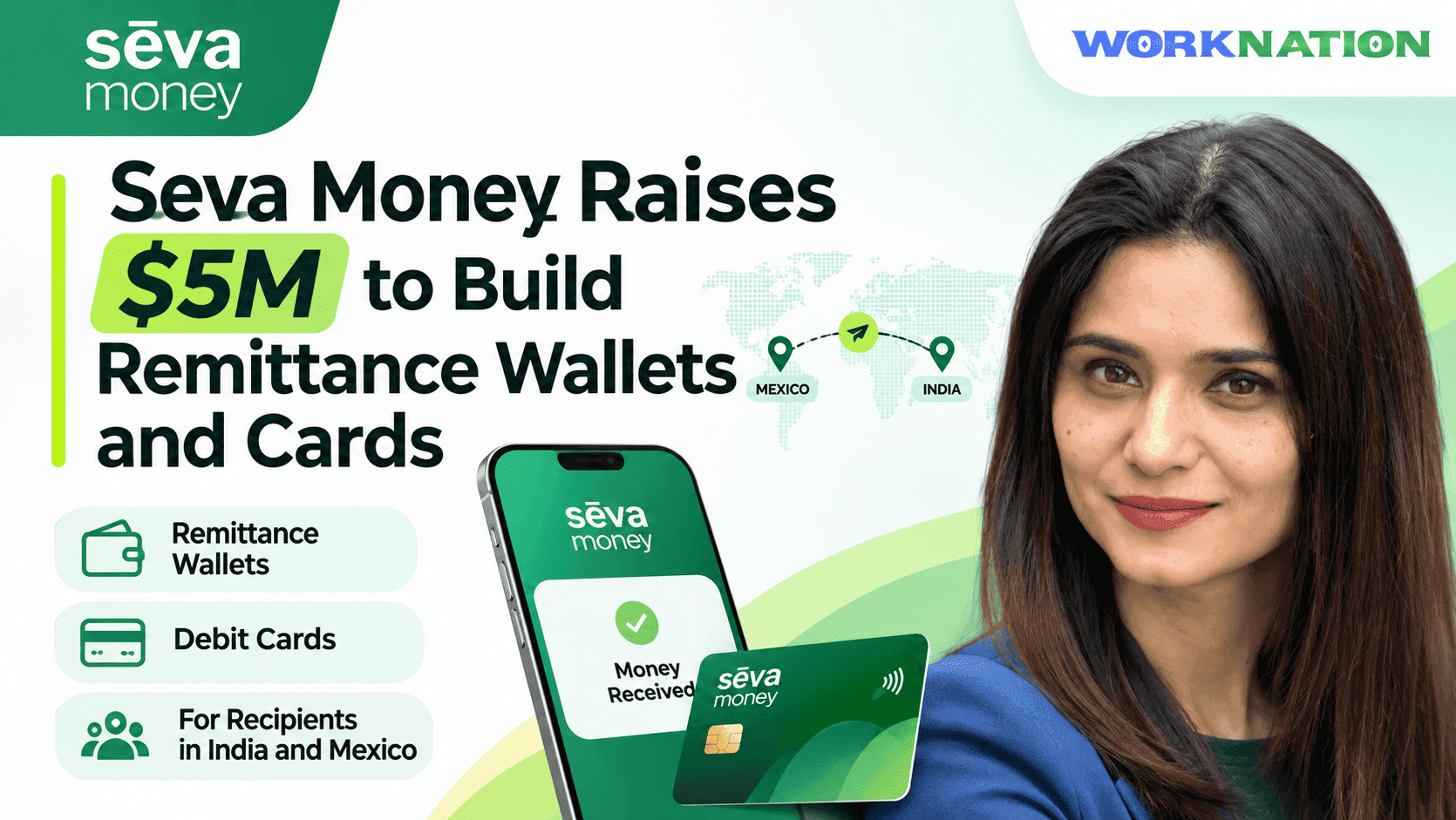
London-based fintech startup Seva Money has raised $5 million in a seed funding round to expand its financial services platform for people receiving international remittances. The round was co-led by Blockwall and Revent, with participation from existing investors Seedcamp, Stride.VC and Ada Ventures.
Angel investors joining the round include Husayn Kassai, NALA founder and CEO Benjamin Fernandes, and Michael Kent.
Founded by Ritu Soni, Seva Money provides money transfer operators (MTOs) with white-label digital wallets and payment cards that they can offer to recipients in countries such as India and Mexico. The platform is designed to extend the relationship between remittance providers and customers beyond the initial money transfer.
The company says its receive-side services are already live in India and Mexico. Over the next 12 months, it plans to expand into the Philippines, Kenya, Nigeria, Tanzania and Ghana.
The new funding will support product development, expansion of MTO partnerships and entry into additional receiving markets.
Addressing the Gap After Money Reaches Its Destination
Traditional remittance companies compete heavily on transaction fees, exchange rates and transfer speed. However, their relationship with customers often weakens once the money reaches the recipient.
Seva Money is targeting this gap by building financial infrastructure for the people receiving international transfers.
Its platform allows MTOs to offer recipients a branded wallet and payment card without having to build the entire service themselves. The technology integrates with existing money transfer flows and supports both traditional fiat currencies and stablecoins.
For example, a person working in the UK could send money to a family member in India, who could receive funds through a Seva-powered card and access additional financial and health-related services.
The company's proposition is to help remittance operators maintain an ongoing relationship with recipients rather than treating each transfer as an isolated transaction.
Wallets, Cards and Healthcare Benefits
Beyond receiving money, Seva Money aims to connect recipients with additional services through its platform.
According to the company's website, eligible users can access up to 60 free at-home specialist consultations annually. The card also offers discounts of up to 20% on medicines through partners including Tata 1mg and PharmEasy.
These services are intended to make the wallet more useful for recipients while giving MTOs additional reasons to remain connected with customers.
The company follows a recurring-revenue business model. Rather than depending entirely on the volume of transfers, it aims to help MTOs generate additional revenue from their existing customers and remittance corridors.
Seva Money claims its platform can improve customer retention by 29%. This is a company-reported figure, and the supplied announcement does not provide the methodology or independent validation behind it.
Ritu Soni's Experience in the Remittance Industry
Seva Money was founded by Ritu Soni, a product leader with experience across the international payments and remittance industry.
Before launching the company, Soni held senior product roles at WorldRemit, Paysafe, Skrill and Lebara Money. Her experience in the sector helped shape the company's focus on the recipient side of cross-border transfers.
Soni has also spoken about her personal experience as a migrant and the challenges of supporting family members from another country, particularly when they face health concerns.
Her thesis is that remittance providers have concentrated too heavily on the act of sending money, leaving opportunities to improve the experience of the people receiving it.
According to Soni, the opportunity lies in turning a one-time transfer into an ongoing customer relationship.
Investors See an Opportunity Beyond Traditional Remittances
Blockwall and Revent co-led the $5 million round, with Seedcamp, Stride.VC and Ada Ventures returning from the company's pre-seed financing.
The participation of Blockwall is particularly relevant to Seva Money's use of stablecoin infrastructure. The investor has backed companies in the digital asset ecosystem and sees an opportunity to apply stablecoin technology to established remittance networks.
Revent highlighted the company's approach of focusing on beneficiaries rather than only the people sending money.
The broader remittance market provides a substantial opportunity. The World Bank estimated global remittance flows at approximately $905 billion in 2024, according to the figure cited in the source article.
However, Seva Money's stated estimate of a $1 trillion global money transfer operator market should be distinguished from independently reported remittance-flow figures.
Competition Is Moving Into the Receive-Side Market
Seva Money is entering a market where established fintech companies are also expanding beyond traditional international transfers.
Remitly has introduced a stablecoin wallet and debit card offering, initially targeting Latin American markets. The company's reported second-quarter 2026 revenue was $495 million, up 20% year over year, with more than 10 million active customers each quarter.
Other competitors are expanding their financial infrastructure as well.
NALA secured a credit facility of up to $50 million in May 2026 to expand its stablecoin payment corridors, following its $40 million Series A in July 2024. LemFi raised a $53 million Series B in January 2025 and reportedly secured an additional €30 million in May 2026.
Larger financial infrastructure deals also point to growing institutional interest in stablecoin payments. Mastercard agreed to acquire stablecoin infrastructure provider BVNK for up to $1.8 billion in March 2026, while Ripple invested in Flutterwave in June 2026.
These developments indicate that stablecoin-based payment infrastructure is attracting significant investment. However, Seva Money's differentiation lies in its focus on the recipients of remittances and the additional services available after funds arrive.
What Comes Next for Seva Money?
The $5 million seed investment will help Seva Money develop its platform, secure more money transfer operator partnerships and expand into new receiving markets.
Its immediate challenge is adoption. The company must convince MTOs that offering wallets, cards and additional services can improve customer retention and create recurring revenue without adding unnecessary complexity to their existing operations.
Expansion across the Philippines and African markets will also require adapting to different payment systems, regulatory environments and local financial-service partnerships.
Seva Money is betting that the future of remittances will involve more than moving money across borders. By building services around the people receiving those transfers, it aims to turn an occasional transaction into a longer-term financial relationship.
Have a Funding Round or Exciting Update to Share?
Submit your press release to get featured on WorkNation and reach founders, investors, and tech leaders.