Jaipur Robotics Raises €4.3M to Scale AI-Powered Waste-to-Energy Operations
Top Picks
Submit PR
Stay Ahead of the Market
Get the latest startup funding, hiring trends and global opportunities delivered to your inbox every week.
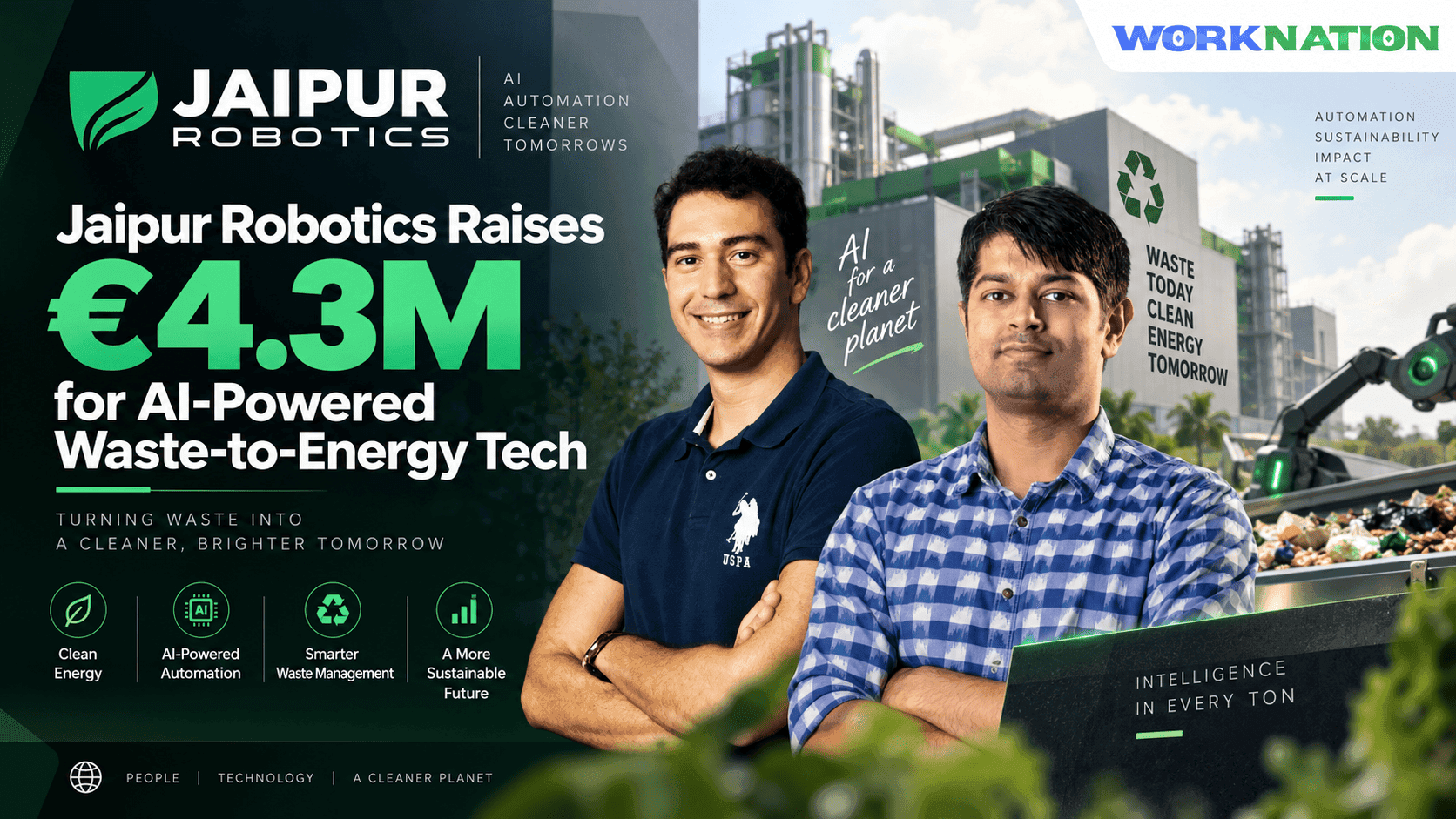
Swiss AI startup Jaipur Robotics has raised €4.3 million in a Seed funding round to expand its artificial intelligence and computer vision platform across waste-to-energy plants and other industrial sites.
The round was led by EquityPitcher Ventures and High-Tech Gründerfonds (HTGF). The latest investment follows a €725,000 pre-Seed round led by TiVentures SA in March 2025 and an additional €161,000 raised from Venture Kick later that year.
Founded in 2024 by Ermes Zamboni and Nikhil Prakash, Jaipur Robotics develops AI-powered computer vision solutions designed to make industrial operations safer, more efficient and increasingly automated.
Using AI to improve waste-to-energy plants
Waste-to-energy plants convert non-recyclable waste into energy, but operators face several challenges caused by the unpredictable nature of waste.
Hazardous objects such as gas cylinders and concrete blocks can enter waste bunkers and cause equipment damage or unplanned shutdowns. Variations in waste composition can also make it difficult to maintain optimal combustion, while a shortage of specialised operators creates additional operational pressure.
Jaipur Robotics uses computer vision and deep learning to address these problems.
Its systems can detect oversized and dangerous objects in waste bunkers and truck unloading areas, helping operators identify potential hazards before they cause disruptions.
Mapping waste quality with AI
The company's technology also analyses the calorific value of waste, known as Lower Heating Value (LHV), across waste bunkers.
The system provides crane operators with real-time visual heat maps showing areas with different calorific values. This allows operators to mix waste more effectively before it enters the combustion chamber, helping improve combustion efficiency and compliance.
Jaipur Robotics also offers crane-tracking technology that monitors the position and operational status of overhead cranes inside waste bunkers.
The company says predictive guidance can help automate crane operations and improve overall productivity.
More than 50 million labelled images
Jaipur Robotics says it has built Europe's largest dataset focused on waste-to-energy operations, containing more than 50 million labelled images.
Its systems currently analyse more than 5 million tonnes of waste each year and detect hazardous materials with a reported 99% accuracy.
According to the company, its technology can deliver more than 80% fewer unplanned shutdowns through real-time hazard detection and generate more than €1 million in additional annual value per plant through improved waste mixing and combustion optimisation.
Expanding across industrial sectors
While waste-to-energy is its primary focus, Jaipur Robotics is also developing AI and computer vision solutions for other industrial environments, including cement and biomass plants.
The new funding will support expansion into new regions while allowing the company to broaden and verticalise its product offering.
Headquartered at Technopole Ticino in Manno, near Lugano, Jaipur Robotics currently has a 40-person team and two R&D centres in Switzerland and Asia.
With its latest funding, the company aims to scale its AI operating system across more waste-to-energy facilities and move closer to its goal of making industrial waste data a foundation for safer and more automated plant operations.
Have a Funding Round or Exciting Update to Share?
Submit your press release to get featured on WorkNation and reach founders, investors, and tech leaders.