Daisytuner Raises €6M to Run AI Models Across Different Chips
Top Picks
Submit PR
Stay Ahead of the Market
Get the latest startup funding, hiring trends and global opportunities delivered to your inbox every week.
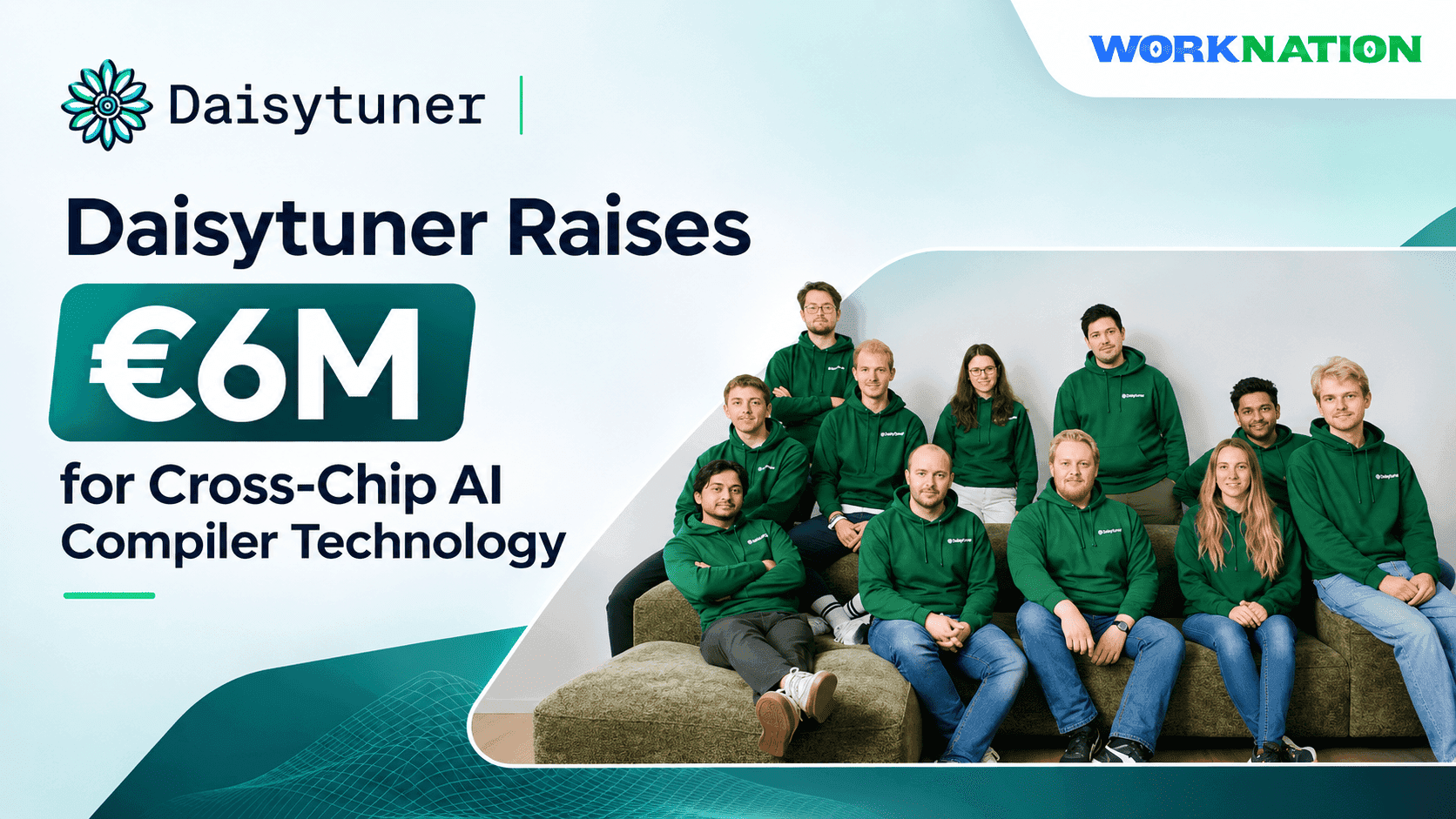
German AI infrastructure startup Daisytuner has raised €6 million in seed funding to help companies run AI models efficiently across different chip architectures, reducing dependence on software built around a single hardware ecosystem.
The round was co-led by Elaia and LEA Ventures, with participation from Amadeus APEX Technology Fund and Seedcamp. Founded in 2024 by Lukas Trümper and Adrian Schmitz, the Darmstadt-based company is developing an automated compiler that optimises software for different processors, including Nvidia and AMD GPUs as well as newer AI accelerators.
Daisytuner's technology combines an open-source compiler with AI agents that test and validate software optimisations on real hardware. Its goal is to make it easier for companies to deploy AI workloads across different chips without repeatedly rewriting or manually tuning their software.
The funding comes as demand for AI computing continues to grow and companies look for alternatives to relying on a single hardware provider.
The Problem: AI Software Is Still Closely Tied to Hardware
AI models do not automatically run at their best performance on every processor. Each chip architecture has different capabilities, and software often needs to be adapted and optimised to take advantage of the available hardware.
This creates a challenge for companies operating AI infrastructure.
A model that performs well on one GPU may not deliver the same performance on another. Moving workloads between hardware platforms can require specialist engineering, testing and optimisation, adding time and cost to deployment.
Daisytuner wants to automate much of that work.
Its compiler takes code from software frameworks and translates it into native code for different hardware architectures. AI agents then test optimisation strategies on actual chips, while the compiler validates whether those changes are correct.
Successful optimisations are added to a performance database, allowing the system to reuse them when it encounters similar code in the future.
This creates a feedback loop in which each validated optimisation can improve future performance engineering.
Why cross-chip AI optimisation matters
The AI hardware market is becoming more diverse. Nvidia remains a major provider of AI GPUs, but AMD and newer accelerator companies are also competing for workloads.
For enterprises, cloud providers and AI developers, having more hardware options can improve flexibility and potentially reduce infrastructure costs.
However, hardware choice only matters if the software can use that hardware efficiently.
This is where compiler technology becomes important. Instead of requiring developers to rewrite applications for every new processor, an automated compiler can help translate and optimise workloads for the target architecture.
Daisytuner is positioning itself around this software layer, supporting Nvidia, AMD and emerging chip platforms rather than focusing exclusively on moving workloads away from Nvidia.
Daisyflow Brings the Technology Into Production
Alongside the funding announcement, Daisytuner introduced Daisyflow, its inference engine designed to run inside customer infrastructure.
Daisyflow supports language, vision, speech and recommendation models through standard APIs. This allows companies to deploy AI models within their own environments rather than depending entirely on external AI cloud infrastructure.
The company says early benchmarking results show Alibaba's Qwen 2.5 model running up to 18% faster than vLLM on AMD Instinct GPUs.
This is a company-reported benchmark, not an independently established performance result across all workloads or hardware configurations.
The distinction matters because AI inference performance depends on several factors, including model size, hardware configuration, workload characteristics and software settings.
Still, the result provides an early indication of what Daisytuner is trying to achieve: improving the performance of AI workloads on hardware that may otherwise be underutilised.
Working With Chipmakers and Expanding the Team
Daisytuner has spent the past year working with chipmakers Tenstorrent and Q.ANT, according to CEO Lukas Trümper.
These relationships are relevant because emerging chip companies need software ecosystems that allow developers to use their hardware without extensive custom engineering.
Daisytuner says it is also in discussions with other chipmakers under non-disclosure agreements and is close to finalising its first enterprise deals.
The company currently has 12 employees, with plans to grow to more than 20 by early 2027.
Its team brings experience from institutions including ETH Zurich, Technical University of Munich, RWTH Aachen, TU Darmstadt and Lawrence Livermore National Laboratory.
Trümper previously worked on moving workloads from CPUs to Nvidia GPUs. His experience with hardware optimisation helped shape the company's current focus as the industry increasingly explores alternatives to established GPU platforms.
Investors Backing the Cross-Chip AI Opportunity
Elaia and LEA Ventures co-led the €6 million seed round. Amadeus APEX Technology Fund and Seedcamp also participated.
The investment reflects growing interest in the software infrastructure needed to support a more diverse AI hardware market.
Sébastien Lefebvre, partner at Elaia, said Daisytuner is addressing a major bottleneck in AI computing by allowing the same code to run efficiently across different hardware without requiring developers to rewrite it.
Alexi Malikotsinas, general partner at LEA Ventures, highlighted compute efficiency and technology sovereignty as important challenges for the AI industry.
The latest round follows an earlier funding milestone. Daisytuner raised approximately €1 million in pre-seed funding in May 2025, led by LEA Partners, alongside Angel Invest and several angel investors.
This brings the company's publicly reported funding history beyond the newly announced seed round.
A Competitive Market for AI Compiler Technology
Daisytuner is entering a market where software portability and hardware optimisation are becoming increasingly important.
One of its major competitors is Modular, an AI software company whose technology helps developers run AI workloads across different processors.
In June 2026, Qualcomm announced an agreement to acquire Modular for approximately $3.9 billion. The acquisition was completed on July 29, 2026.
The deal highlights the strategic value of software that can connect AI workloads with different hardware platforms.
Other startups are also working on compiler technology, AI inference optimisation and tools that make it easier to deploy workloads across different accelerators.
For Daisytuner, the opportunity is to build a specialised software layer that works across hardware providers while helping customers improve performance without taking on extensive manual optimisation work.
Where the €6M Funding Will Go
Daisytuner plans to direct most of the new capital towards hiring and expanding its engineering team.
The remaining funds will be used to purchase chips from different vendors for testing, benchmarking and training the AI agents that improve its compiler.
This spending strategy reflects the nature of the business. Building a compiler that works across different architectures requires access to real hardware, not just software simulations.
The company needs to test its optimisations across multiple processors, validate performance improvements and continuously expand its hardware support.
Its hiring plans will also help it move from research-driven technology towards broader enterprise adoption.
What Daisytuner Needs to Prove Next
Daisytuner is addressing an important problem in AI infrastructure, but the opportunity comes with significant technical and commercial challenges.
Several factors will determine whether the company can turn its technology into a widely adopted platform:
Performance across different chips: The company needs to demonstrate consistent optimisation results across a broad range of hardware, not just selected benchmarks.
Enterprise adoption: Its upcoming enterprise deals will be an important milestone in proving that customers are willing to pay for the technology.
Hardware partnerships: Working closely with chipmakers could help Daisytuner support new processors as they enter the market.
Reliability and correctness: Compiler optimisations must preserve the intended behaviour of software while improving performance.
Competition: Modular's acquisition by Qualcomm demonstrates the strategic importance of this market and raises the competitive bar for smaller companies.
The broader opportunity is not simply about replacing one GPU provider with another. It is about making AI software more adaptable as the hardware market expands.
Daisytuner's €6 million seed round gives it additional resources to develop that software layer, expand its team and work with more hardware vendors.
The next challenge is proving that a relatively small team can deliver reliable, measurable performance improvements across a growing range of AI chips and enterprise workloads.
Have a Funding Round or Exciting Update to Share?
Submit your press release to get featured on WorkNation and reach founders, investors, and tech leaders.