Calliora Raises $6M to Use AI to Cut Hospital Billing Errors
Top Picks
Submit PR
Stay Ahead of the Market
Get the latest startup funding, hiring trends and global opportunities delivered to your inbox every week.
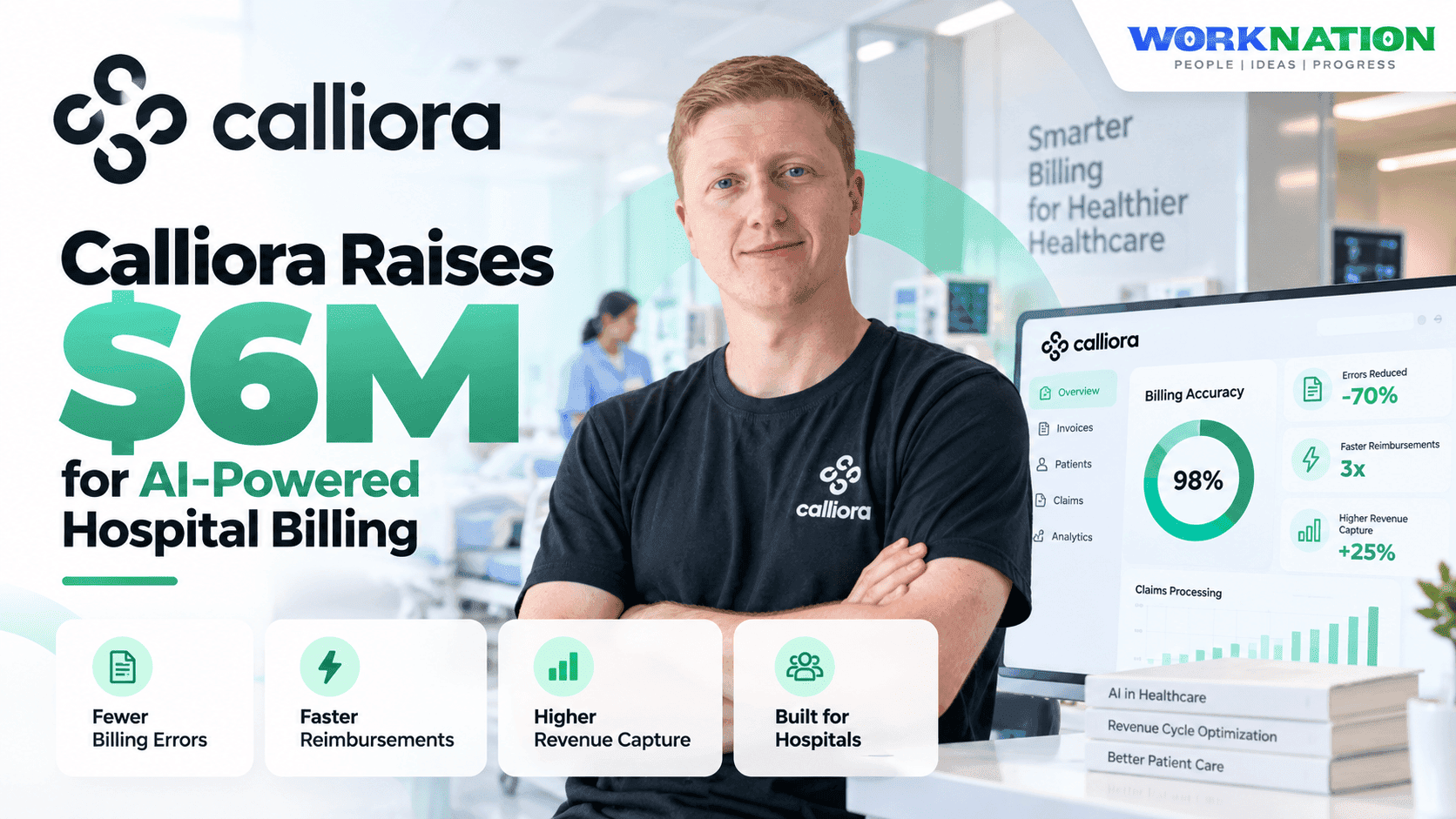
Munich-based healthtech startup calliora has raised $6 million in pre-seed funding to use artificial intelligence to identify hospital billing errors before invoices are submitted to insurers.
The round was led by Bertelsmann Healthcare Investments (BHI) and redalpine, with participation from angel investors from healthcare and AI. The investor group includes Dr Ulrich Wandschneider, former CEO of Asklepios and Mediclin AG; Sara Siegel of Deloitte; Peter Sarlin, founder of Silo AI; and Frank Hutter of Prior Labs.
Calliora plans to use the new capital to expand its AI, engineering, and product teams while extending its platform across more stages of the hospital case lifecycle.
The timing is particularly relevant for German hospitals. New billing audit rules coming into effect in 2027 could expose hospitals with high rejection rates to substantially more audits, creating a stronger financial incentive to identify documentation and coding problems before an invoice leaves the hospital.
Germany's hospital billing problem
Hospital billing in Germany involves more than simply sending an invoice after a patient receives treatment.
Clinical documentation, diagnosis codes, evidence, medical controlling, and billing information all need to line up. When information is missing or inconsistent, an insurer can reject the invoice or request an audit.
Calliora is targeting this point in the process.
The company argues that finding an error before an invoice is submitted is much cheaper than discovering it during an audit. A missing piece of documentation may take minutes to fix while a rejected invoice can lead to repayment, penalties, and additional administrative work for hospitals, insurers, and the Medical Service.
The regulatory environment is making this issue more urgent.
Under Germany's Statutory Health Insurance Contribution Rate Stabilisation Act, hospitals will face a new audit system from 2027 that links the number of invoices insurers can have audited to the hospital's previous billing performance.
According to the source, hospitals with rejection rates above 35% among audited invoices could face audits covering up to 40% of invoices. If more than half of audited invoices are rejected, the cap can rise to as much as 100%.
At the other end of the scale, hospitals where at least 80% of audited invoices pass cleanly can remain at the lowest 5% audit cap.
That means billing accuracy is becoming more than an administrative concern. It can directly affect how much scrutiny a hospital faces.
The measurement has already started. According to BI.healthcare, audit results from the third quarter of 2026 will help determine the applicable cap for the first quarter of 2027.
AI that sits across the hospital case
Calliora was founded in 2023 by Dr Frederik Träuble and Jonas Wildberger.
The founders are AI researchers who, according to the company, earned PhDs at the Max Planck Institute for Intelligent Systems after studying at Cambridge and Oxford and working in AI roles at Amazon Web Services and GSK.
Their approach is to place an AI layer across the information generated during a hospital case.
Rather than waiting until a billing problem has already occurred, calliora aims to identify missing diagnoses, supporting evidence, and other issues while the case is still being processed.
CEO and co-founder Frederik Träuble compares the system to a surgical assistant. The AI is meant to understand what has already happened, anticipate what information is needed next, and put that information in front of the relevant professional.
The AI does not replace the medical professional making the decision. Its role is to reduce the administrative work surrounding coding and medical controlling.
Calliora says its technology has already more than halved the effort required per case.
However, the company has not publicly named the hospitals using the platform, which leaves an important part of the commercial picture difficult to assess.
Data security is central to the pitch
Healthcare AI operates under a much higher privacy burden than many other enterprise software categories.
Calliora says it processes data only in Germany and follows EU data protection requirements under GDPR.
Its website also lists ISO 27001 certification and a BSI C5 cloud security attestation.
For hospitals, these safeguards matter because an AI billing platform can potentially process highly sensitive clinical and patient information.
Calliora is therefore selling more than an AI model. It needs hospitals to trust the infrastructure handling the underlying data.
That is also reflected in the company's choice of advisers.
Its advisory network includes Prof. Dr Bernhard Schölkopf of the Max Planck Institute for Intelligent Systems and Dr Andreas Stockmanns, managing director of hospital billing consultancy Kaysers Consilium, who has more than two decades of experience in medical controlling and hospital management.
Investors see a larger administrative opportunity
Bertelsmann Healthcare Investments and redalpine are betting that the combination of AI expertise and healthcare-specific knowledge can help calliora tackle a costly administrative problem.
Maximilian Boner, Europe lead at BHI, pointed to the growing importance of error-free billing in healthcare and said calliora is bringing that approach to Europe by addressing errors at their source.
Redalpine partner Mira Kamp highlighted the broader cost of administrative inefficiency in healthcare, particularly the fragmented software and regulatory requirements hospitals have to manage.
The funding will allow calliora to build out its AI and engineering capabilities while expanding the platform beyond its current focus.
That expansion could be important.
Hospital billing is only one part of a much larger administrative workflow involving clinical documentation, coding, admissions, discharge processes, insurance claims, and medical controlling.
A growing European hospital AI market
Calliora is entering a European market where several startups are already using AI to automate hospital administration.
Paris-based Parallel raised $20 million in Series A funding led by Index Ventures in March 2026. Its AI agents operate on top of existing hospital software, initially focusing on medical coding before expanding into billing and admissions.
Italy-focused Health Force raised €4.2 million in seed funding led by LUMO Labs in September 2026. Its agents already operate inside private hospital groups including Humanitas and Gruppo San Donato, with plans to expand into Germany, France, and Spain.
Berlin-based Recare has focused on discharge management and raised up to €37 million in January 2026, including a €7 million option, in a round led by DNV.
Stockholm-based Tandem Health raised $100 million in Series B funding led by EQT's Scaleup Europe Fund for an AI clinic operating system that connects clinical documentation with billing codes.
Berlin's Aiomics has also raised €2 million in pre-seed funding for AI-powered healthcare documentation and automated coding.
Calliora's position is narrower.
Its product is closely tied to German hospital billing and the country's upcoming audit rules. That focus could give the company a clear initial market, but it also means the company needs to prove that its technology can produce measurable improvements in real hospital environments.
2027 will be the real test
The $6 million round gives calliora capital to build its product and expand its team at a time when German hospitals have a direct reason to improve billing accuracy.
But there are still unanswered questions.
The company has not disclosed its hospital customers, revenue, or detailed commercial traction. Its claim that AI has more than halved effort per case is also a company-reported metric rather than independently verified evidence in the source.
That makes 2027 an important milestone.
As the new audit rules take effect, hospitals will have a stronger financial reason to prevent billing errors before invoices are submitted. If calliora can demonstrate that its AI consistently reduces rejected claims and audit exposure, the regulatory change could become a major demand driver.
For now, the company has raised $6 million, assembled investors from healthcare and AI, and positioned itself around a very specific problem: getting hospital billing right before the invoice reaches the insurer.
Have a Funding Round or Exciting Update to Share?
Submit your press release to get featured on WorkNation and reach founders, investors, and tech leaders.