Reclinker Raises £10M Series A to Turn Demolition Waste into Low-Carbon Cement
Top Picks
Submit PR
Stay Ahead of the Market
Get the latest startup funding, hiring trends and global opportunities delivered to your inbox every week.
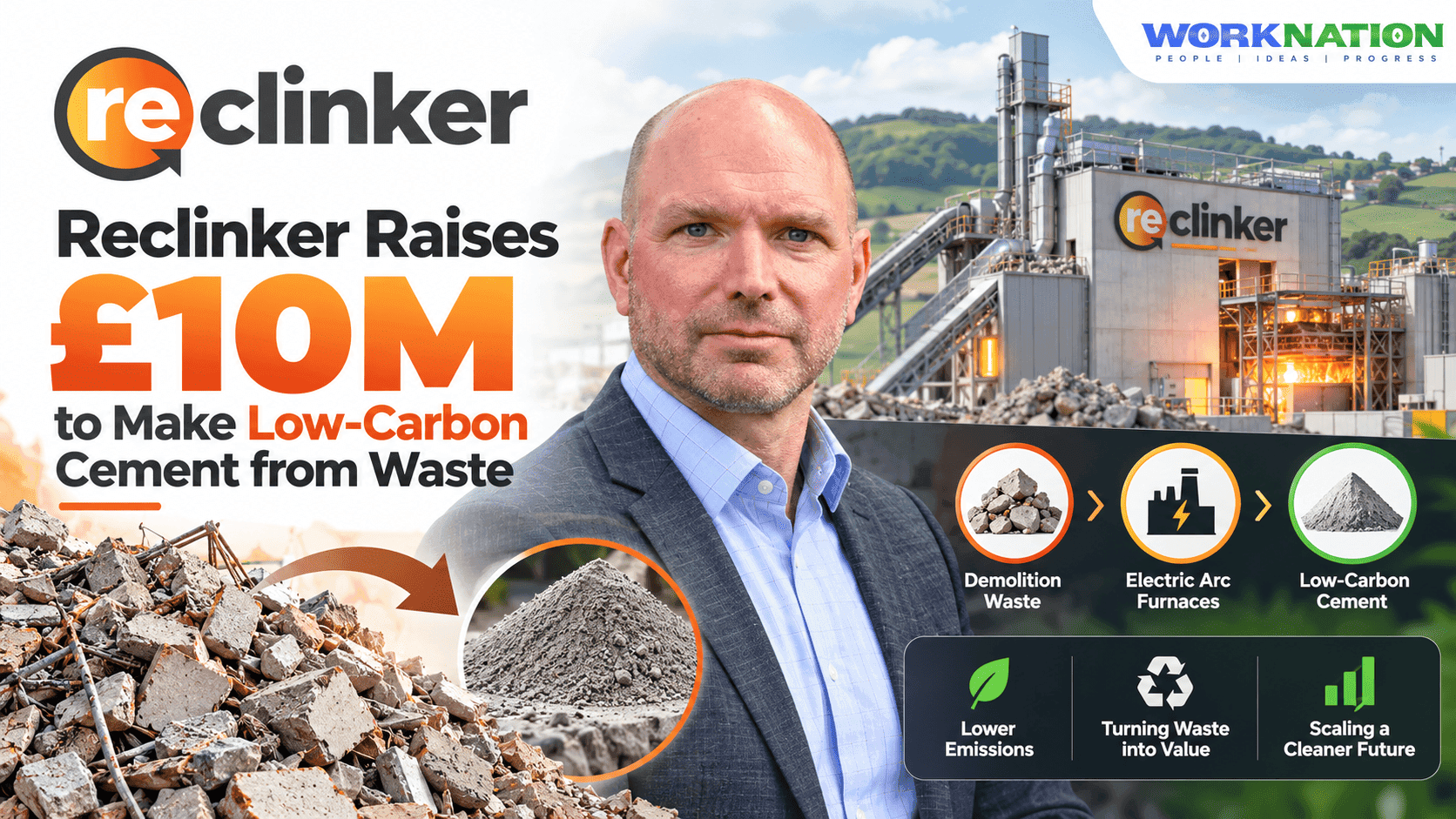
Cambridge-born climate technology startup Reclinker has raised £10 million in Series A funding to scale its technology that converts construction and demolition waste into low-carbon cement materials. The company plans to expand production at its Cardiff facility in Wales and bring its process to additional industrial sites across Europe and the United States.
The funding round was co-led by Clean Growth Fund and AP Ventures, with participation from the Development Bank of Wales, Kibo Invest, existing investor Zero Carbon Capital and Cambridge Enterprise. The investment will support commercial production, create skilled green jobs in South Wales and help Reclinker expand its technology beyond its existing industrial operations.
The announcement comes after the company produced thousands of tonnes of material at 7 Steel UK's Cardiff facility and secured its first commercial sales. These milestones mark a move from industrial trials towards wider market adoption.
How Reclinker turns demolition waste into cement
Founded in 2022 as a spinout from the University of Cambridge, Reclinker is developing an alternative approach to clinker production. Clinker is a key ingredient in conventional cement and one of the main sources of emissions associated with cement manufacturing.
Traditional production involves heating limestone in high-temperature kilns, typically using fossil fuels. The process releases carbon dioxide both from the chemical reaction involved in processing limestone and from the energy required to maintain the necessary temperatures.
Reclinker takes a different approach. It recovers cement paste from construction and demolition waste and converts the material into clinker inside electric arc furnaces, which are already used in the steel recycling industry.
By connecting cement production with existing steel-recycling infrastructure, the company aims to reduce the need for conventional cement kilns, quarried limestone and fossil-fuel heat. It also creates a potential use for material recovered from demolished buildings that would otherwise need to be processed or disposed of.
This approach could offer steel producers another way to use their industrial infrastructure while helping the construction sector find alternative sources of lower-carbon cement materials.
According to Reclinker, its cementitious slag can deliver an immediate 50% reduction in emissions, with further reductions expected as the technology scales. The company is also targeting cost parity with conventional cement, an important factor in a market where construction materials must compete on price, availability and performance.
£10M funding to expand production in Wales
The Series A investment will help Reclinker scale production at its Cardiff site, building on the thousands of tonnes already produced at 7 Steel UK's facility.
The company intends to use the site as a foundation for further commercial deployment, with plans to replicate its technology at additional electric arc furnace locations across Europe and the US. This expansion strategy could allow Reclinker to use existing industrial infrastructure rather than depend entirely on building standalone cement production facilities.
The investment is also expected to support skilled green jobs in South Wales, linking industrial decarbonisation with regional economic development.
Bill Yost, CEO of Reclinker, said the oversubscribed funding round reflected support from both existing and incoming investors for the company's plans. He also highlighted the role of the investment in growing green industries in Wales.
Reclinker's commercial progress has extended beyond production trials. The company has secured its first commercial sales and participated in Innovate UK's Advance Market Commitment, through which major concrete users indicated an intention to introduce significant volumes of low-carbon materials over the next five years.
Such commitments can help emerging materials companies demonstrate demand and build a route from industrial testing to repeat commercial orders. However, the pace of adoption will depend on production capacity, material performance, customer requirements and the economics of supplying the construction industry.
Why cement decarbonisation matters
Cement production remains a difficult industrial emissions problem. According to the International Energy Agency's Global Energy Review 2025, cement accounted for around 6% of global greenhouse gas emissions in 2024.
Reducing those emissions is challenging because conventional cement manufacturing involves both energy-intensive heating and chemical reactions that release carbon dioxide. Improving energy efficiency alone cannot eliminate all of these emissions.
The IEA identifies several approaches to cutting cement-sector emissions, including alternative raw materials, clinker substitution and carbon capture. Reclinker is pursuing an approach focused on producing clinker from recovered material while connecting the process with existing steel-recycling infrastructure.
The opportunity is not limited to reducing emissions from cement manufacturing. The construction industry also produces large volumes of waste, including concrete and other materials from demolished buildings. Finding commercially viable ways to recover value from that waste could reduce reliance on virgin resources and create additional material supply chains.
Reclinker is also targeting a potential change in the availability of traditional supplementary cementitious materials. As steelmakers move away from blast furnaces, supplies of blast-furnace slag, which is used to reduce the clinker content and emissions of some cement products, are expected to decline.
The company aims to provide another source of cementitious material by processing demolition waste. If it can produce this material consistently at commercial scale and at a competitive price, it could offer cement and concrete manufacturers another option for reducing the carbon footprint of their products.
Reclinker and the competition in low-carbon cement
Reclinker is entering a market where startups are developing different methods to reduce emissions from cement and concrete production.
UK-based Material Evolution raised £15 million in Series A funding to scale its low-carbon cement technology. The company uses an alkali-fusion process and industrial waste materials to produce cement with a reported carbon footprint reduction of up to 85%.
Finnish startup Carbonaide raised €3.7 million in 2026 to scale technology that permanently mineralises carbon dioxide inside concrete. The round took its total funding to €5.5 million.
Meanwhile, Hyperion Robotics raised €3 million to develop construction technology combining 3D printing with sustainable concrete, including the use of industrial waste in lower-carbon building materials.
These companies address different parts of the construction materials supply chain. Some focus on alternative cement production, others on incorporating carbon dioxide into concrete or changing how construction components are manufactured.
Reclinker's distinguishing feature is its use of electric arc furnace infrastructure already present in the steel industry. Rather than relying solely on new standalone production facilities, the company is seeking to integrate its process into existing industrial sites and turn recovered demolition material into a useful cement input.
Stephen Price, Investment Partner at Clean Growth Fund, said the investment would support the company's efforts to scale production and commercial deployment. Andrew Hinkly, Managing Partner at AP Ventures, also highlighted the potential to reduce cement emissions while consuming an industrial waste stream. Gareth Mayhead of the Development Bank of Wales pointed to the investment's role in growing Reclinker's presence in Wales.
What comes next for Reclinker?
The next stage is to expand production, establish further commercial relationships and demonstrate that the technology can be replicated across more industrial sites.
The company's early production at Cardiff and its first commercial sales provide a starting point. Its longer-term progress will depend on whether it can maintain material quality, secure a reliable supply of suitable demolition waste, meet customer specifications and compete economically with conventional cement materials.
Expanding into other regions will also require suitable industrial partners and infrastructure. Electric arc furnaces could offer an existing platform for deployment, but each new site will need to support the process technically and commercially.
The £10 million Series A gives Reclinker additional capital to pursue these goals. If the company can scale while delivering the emissions reductions it reports, it could offer the construction sector another way to reuse demolition waste and reduce reliance on conventional clinker production.
For now, its focus is on turning successful industrial trials into a repeatable commercial operation, starting in Wales and extending to steel-recycling facilities across Europe and the United States.
Have a Funding Round or Exciting Update to Share?
Submit your press release to get featured on WorkNation and reach founders, investors, and tech leaders.