Warhound Raises $200M Seed Funding at $1.2B Valuation for Military Dog Technology
Top Picks
Submit PR
Stay Ahead of the Market
Get the latest startup funding, hiring trends and global opportunities delivered to your inbox every week.
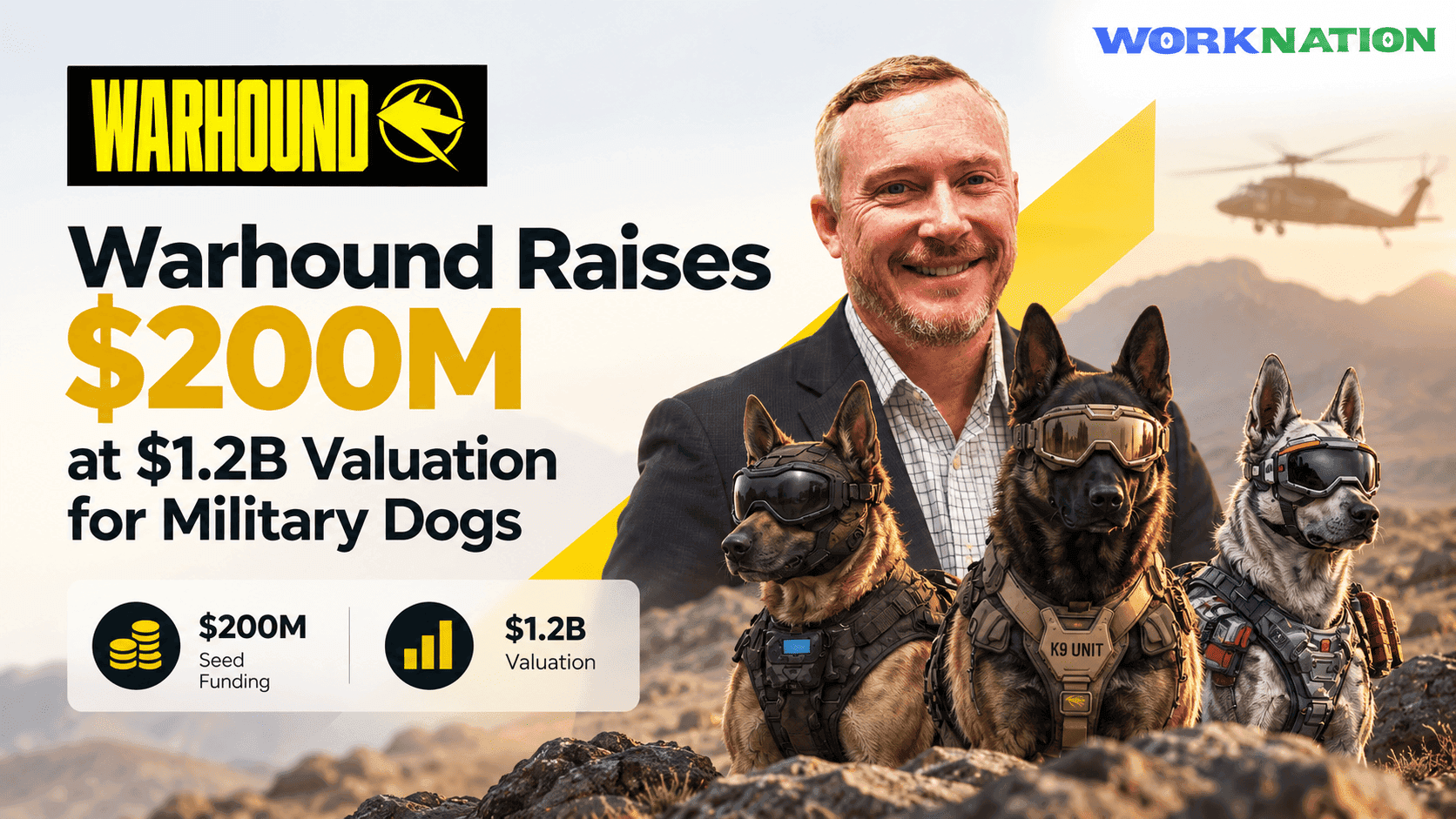
Warhound, a Texas-based defence technology startup, has raised $200 million in seed funding at a reported valuation of $1.2 billion to develop military working dogs using cloning, genetic engineering and advanced defence technology.
The company emerged from stealth on October 22, 2026, according to TechCrunch, as reported by Tech Funding News. Its goal is to address challenges in the supply and qualification of military working dogs used by the US military and other security organisations.
Warhound says fewer than half of the working dogs purchased by the US military qualify for service, while more than 80% come from Europe. The startup aims to develop dogs with selected traits intended to improve their suitability for military work and support their long-term health.
The funding round includes investors such as Sequoia Capital, In-Q-Tel, ARK Invest, Franklin Templeton, 8VC and Lux Capital, alongside USIT, Bob Nelsen, Breyer Capital, CAZ Investments, Neogenesis and Builders VC. The company has not disclosed a lead investor.
Despite the size of the investment, the dogs Warhound plans to produce have not yet been born. The company expects its first cloned dogs to arrive in early 2027, with the goal of entering service within two years.
How Warhound Plans to Develop Military Working Dogs
Warhound was conceived by Ben Lamm, co-founder and CEO of Colossal Biosciences, and Palmer Luckey, founder of defence technology company Anduril Industries. David Spirk, a former US Marine and former Pentagon chief data officer, leads Warhound as CEO.
The company's approach combines animal genetics and cloning with equipment and software designed to support working dogs in the field.
According to the report, Colossal collects and stores cell lines from high-performing Belgian Malinois and German Shepherds in a biobank. Scientists then plan to edit selected genes to introduce traits considered useful for working dogs and remove genetic variants associated with conditions such as hip dysplasia and muscle atrophy.
Viagen, another company owned by Colossal, will carry out the cloning process.
The strategy is intended to give Warhound greater control over the genetic characteristics of its working-dog supply. However, the company's proposed benefits have yet to be demonstrated through operational results from its own dogs.
"Every day, we ask dogs to put their lives on the line to protect ours," Lamm said in the company's launch announcement.
The startup's initial programme will be an important test of whether its combination of biotechnology and military working-dog training can deliver the intended results.
Anduril to Supply Protective Equipment and Software
Warhound's plans extend beyond cloning and genetic engineering. Anduril Industries will provide protective equipment and software intended to help handlers understand conditions around the dogs.
The equipment includes protective vests and eye protection, as well as software designed to give handlers greater situational awareness.
Lamm told TechCrunch that the equipment would be worn by the dogs rather than implanted in them.
The partnership brings together Colossal's biotechnology capabilities and Anduril's defence technology expertise. Anduril develops technology for military and security applications, making its involvement relevant to Warhound's intended customers.
Palmer Luckey described the philosophy behind the project by saying, "Man's best friend deserves man's best tech."
The combination of biological engineering and protective technology is central to Warhound's proposed model. Whether it produces meaningful improvements in health, training outcomes and operational effectiveness will depend on the performance of the dogs once they are born and trained.
Who Is Leading Warhound?
Warhound is led by David Spirk, whose background includes military service, intelligence and defence technology.
Spirk is a former US Marine and previously served as the Pentagon's first chief data officer. He also held senior intelligence roles at US Special Operations Command before joining Palantir Technologies as a senior counsellor in 2022.
His experience in military and intelligence organisations is relevant to Warhound's objective of supplying working dogs to defence and public safety customers.
The company expects to sell its dogs to the US Department of Defense, military service organisations, police forces and first responders. It has not yet announced pricing.
Lamm said Luckey holds no equity in Warhound. Colossal owns the stake and licenses its technology to the startup.
The structure connects Warhound to Colossal's existing biotechnology capabilities while allowing the new company to focus on military working-dog development and its intended customer base.
Major Investors Back the Startup
Warhound's $200 million seed round includes a substantial group of investors from the technology, defence and biotechnology investment ecosystem.
Its named backers include Sequoia Capital, In-Q-Tel, ARK Invest, Franklin Templeton, 8VC and Lux Capital, as well as several other investors.
In-Q-Tel is a venture firm funded by the CIA and other US intelligence agencies. The report also notes that several Warhound investors have previously backed Colossal, while 8VC and Lux Capital have invested in Anduril.
This overlap connects Warhound with investors familiar with its founders' existing companies and the broader defence technology sector.
Sequoia Capital partner Shaun Maguire expressed support for the team, saying the firm was proud to back Lamm, Luckey and Warhound.
However, the funding announcement does not establish how many dogs the startup will ultimately be able to deliver, what they will cost or how successfully they will qualify for service. Those results will be central to evaluating the business as it progresses.
A Growing Market for Defence Technology
Warhound's launch comes amid substantial investment in defence-focused startups.
According to S&P Global Market Intelligence figures cited by Tech Funding News, defence technology startups raised $29 billion through funding rounds in 2025, nearly three times the amount recorded in 2020.
Other companies in the sector have secured large investments. Shield AI raised $2 billion in a financing package in March 2026, including a $1.5 billion Series G round at a reported $12.7 billion valuation. Anduril announced a $5 billion Series H round at a reported $61 billion valuation in May 2026.
Warhound's funding reflects investor interest in defence applications that combine specialised hardware, software and emerging technologies. Its approach differs from conventional defence systems by focusing on biological engineering and the animals used in military and public safety operations.
Still, the company's valuation comes before its first dogs have been born or demonstrated their ability to complete military training.
The first generation of cloned dogs will therefore be a critical milestone in determining whether Warhound can translate its scientific ambitions into a practical supply of working animals.
Animal Welfare Remains a Key Consideration
Warhound's plans also raise questions about animal welfare, genetic engineering and the responsibilities involved in developing animals for high-risk work.
The company says American Humane Society will help guide welfare standards and training certification. Retired dogs are also intended to enter the organisation's Military Working Dog Reunification Program, according to Lamm.
American Humane Society CEO Dr. Robin Ganzert said that working dogs' welfare and care should remain central throughout their lives, from training and active service to retirement.
Legal and bioethics professor Alta Charo of the University of Wisconsin-Madison also commented on the potential to improve working dogs' health and welfare while supporting their work.
These commitments will need to be reflected in the company's actual practices, including the health of cloned animals, their training conditions, their working lives and their care after retirement.
Warhound has also said that its dogs will be trained like other military working dogs and managed by the organisations that purchase them.
What Comes Next for Warhound?
Warhound expects the first cloned dogs to be born in early 2027 and aims for them to enter service within two years. The company has not yet disclosed prices or detailed delivery targets.
Its central challenge is to show that its technology can produce healthy dogs that qualify for service at a higher rate than conventional sourcing approaches.
If the programme delivers on its goals, Warhound could establish a new model for supplying military working dogs while combining genetic research with protective equipment and software. If the dogs do not perform as intended, the startup will face questions about its valuation and the scale of investment made before commercial results are available.
For now, Warhound represents an ambitious attempt to apply biotechnology to a specialised defence need. Its next major milestones will be the birth, health evaluation and training of its first dogs.
Have a Funding Round or Exciting Update to Share?
Submit your press release to get featured on WorkNation and reach founders, investors, and tech leaders.