Cori Clinical Raises $4M to Cut Clinical Trial Protocol Costs
Top Picks
Submit PR
Stay Ahead of the Market
Get the latest startup funding, hiring trends and global opportunities delivered to your inbox every week.
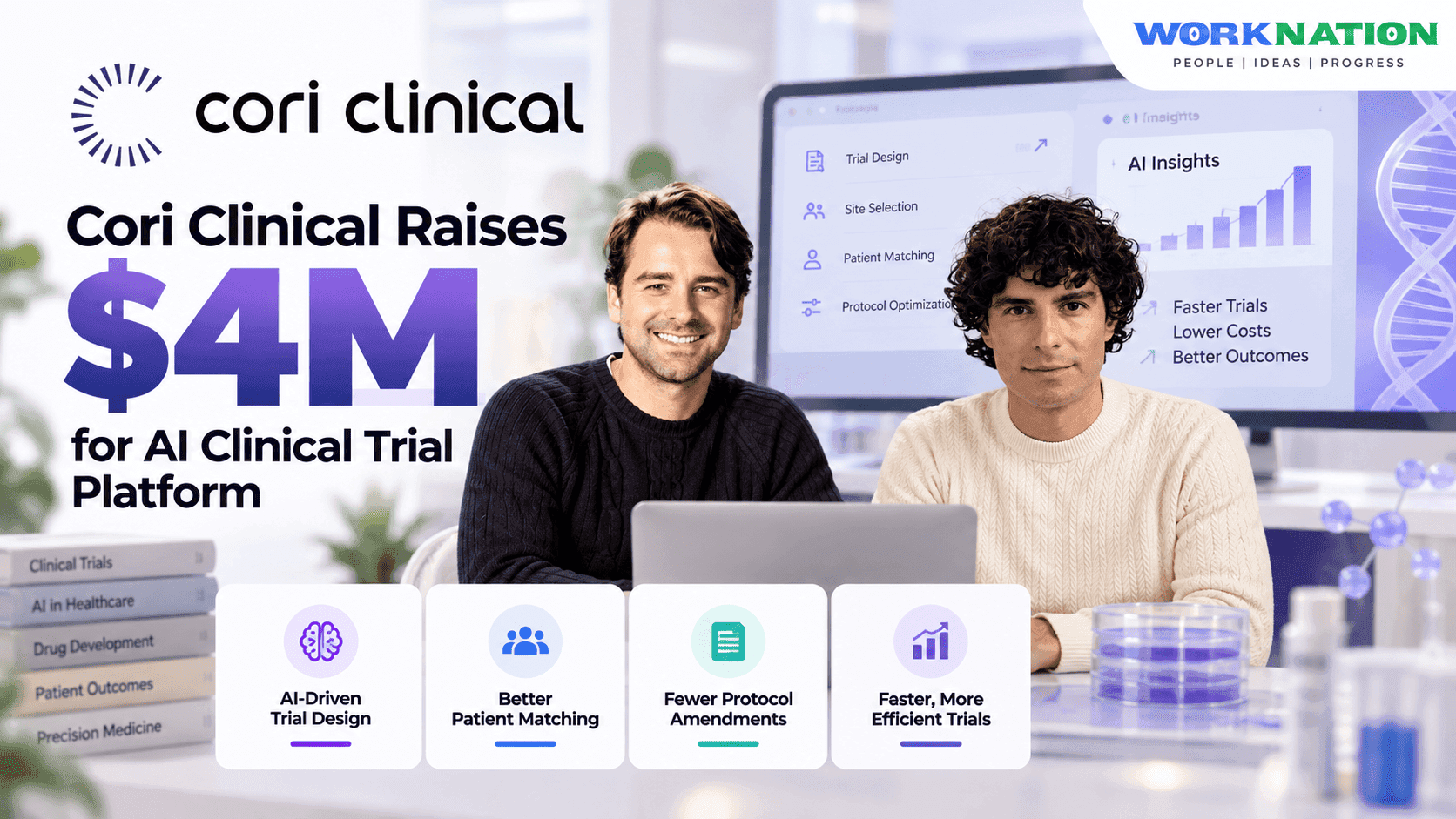
Cori Clinical, a London-based clinical trial technology startup, has raised $4 million in seed funding to help pharmaceutical companies and contract research organisations reduce costly protocol amendments and speed up clinical trial setup.
The round was led by Breega, with participation from Enzo Ventures, Heartfelt, Together Ventures, and Bynd. Cori plans to use the funding to expand its delivery capacity, grow its clinical, engineering, and commercial teams, and strengthen the regulatory and clinical intelligence built into its platform.
The company was incorporated in December 2024 and was founded by Jorn Jansen Schoonhoven and Patricio Fernández.
The Cost of Changing a Trial Protocol
Clinical trial protocols can involve hundreds of interconnected decisions covering patient populations, recruitment, endpoints, budgets, timelines, regulatory requirements, and operational planning.
Those decisions are often made using information spread across previous studies, internal documents, trial registries, regulatory guidance, and different teams.
That fragmentation can become expensive when problems are discovered after a trial has already started.
Research from the Tufts Center for the Study of Drug Development found that 76% of clinical trial protocols had at least one amendment, compared with 57% in an earlier study.
The financial impact can also be substantial. An earlier Tufts analysis put the median direct cost of a substantial amendment at approximately $141,000 for a Phase II protocol and $535,000 for a Phase III protocol.
Cori Clinical is building its platform around this problem.
An AI Workspace for Trial Design
Cori combines an organisation's internal clinical trial knowledge with external information from trial registries, regulatory guidance, and public sources.
That includes information from organisations such as the U.S. Food and Drug Administration, the UK's Medicines and Healthcare products Regulatory Agency, and the European Medicines Agency.
The platform is designed to turn an initial trial brief into a broader set of trial materials, including protocols, submission packages, and operational plans.
When new regulatory guidance becomes available, Cori says it can incorporate that information into the workspace and highlight decisions and risks that may affect the trial.
The company describes this as a "living blueprint" for a clinical trial.
The aim is to give clinical teams a central source of intelligence before a study reaches the point where changes become expensive.
Early Commercial Traction
Cori estimates that its approach could reduce average clinical trial setup costs by at least 33%.
The company says this estimate is based on internal modelling involving average setup costs, historical modification rates, and the time required to reach the first participant.
In an internal evaluation benchmarked against amendments from completed trials, Cori says its AI reviewer identified 82% of protocol errors classified as avoidable.
The startup says it already works with two of the world's five largest enterprise CROs, although it has not publicly named them or confirmed whether those relationships represent paying customers.
Cori also counts Erasmus MC in Rotterdam among its customers and has supported two trials there involving neurosurgery and neuro-oncology.
A Competitive Clinical AI Market
Cori is entering a market that already has several companies using AI to improve different parts of clinical research.
Barcelona-based Biorce raised $52 million in Series A funding in February 2026 for its Aika platform, which is built around a large historical clinical trial dataset and aims to reduce protocol amendments.
Lindus Health, where Cori's chief clinical officer previously worked, raised $55 million in Series B funding in January 2025 to modernise clinical trials.
Other startups are focusing on specific parts of the process, including clinical imaging, patient recruitment, data management, and trial operations.
Cori's approach is somewhat different. Rather than relying primarily on a large historical dataset, the company says its platform combines each customer's own protocols, budgets, bids, and internal knowledge with external regulatory and clinical information.
Founders With Industry Experience
Cori was founded by Jorn Jansen Schoonhoven and Patricio Fernández.
Schoonhoven previously worked at Amazon and IBM across supply-chain systems, robotics, and life-sciences applications. According to Cori, he also led data science teams at both companies, served as IBM's chief of staff for Europe, the Middle East, and Africa, and invested in AI startups at Octopus Ventures.
Fernández serves as Cori's chief technology officer. He previously worked in data science roles at Sanofi and AstraZeneca, including as data science director at AstraZeneca's Evinova.
The founders are building Cori around a problem they believe is still underserved: the gap between designing a clinical trial and actually getting it ready to run.
What Comes Next
The $4 million seed round gives Cori the resources to expand its team and strengthen the technology behind its clinical and regulatory intelligence platform.
The company also wants to deepen its relationships with pharmaceutical companies and CROs.
For Cori, the next challenge is turning early relationships into broader commercial adoption.
If it can prove that identifying protocol problems before a trial begins can consistently reduce costs and delays, its software could become a useful layer in the increasingly digital clinical trial process.
Have a Funding Round or Exciting Update to Share?
Submit your press release to get featured on WorkNation and reach founders, investors, and tech leaders.