Where to Post a Job to Reach the Right Candidates
Top Picks
Submit PR
Stay Ahead of the Market
Get the latest startup funding, hiring trends and global opportunities delivered to your inbox every week.
Key takeaways
Ask two things first. Who do you need? And how many forms can your team get through? Your answers pick the boards.
Put the full ad on your own jobs page first. Each post you make after that links back to it.
Big job boards are great when people search for your exact title, like "sales rep". Expect a pile of forms, though.
A job that needs deep know-how in a field belongs in niche groups. Read each group's rules before you post.
Are the people you want not on job boards? Ask your staff for names, and reach out to them yourself. Hold each name to the same bar.
Weigh each place on six things. Who does it reach, and where? What does it cost in cash and work? How much comes in? How do you track it? Who checks it?
Count good fits, not clicks or CVs. Know which place sends them before you add more.
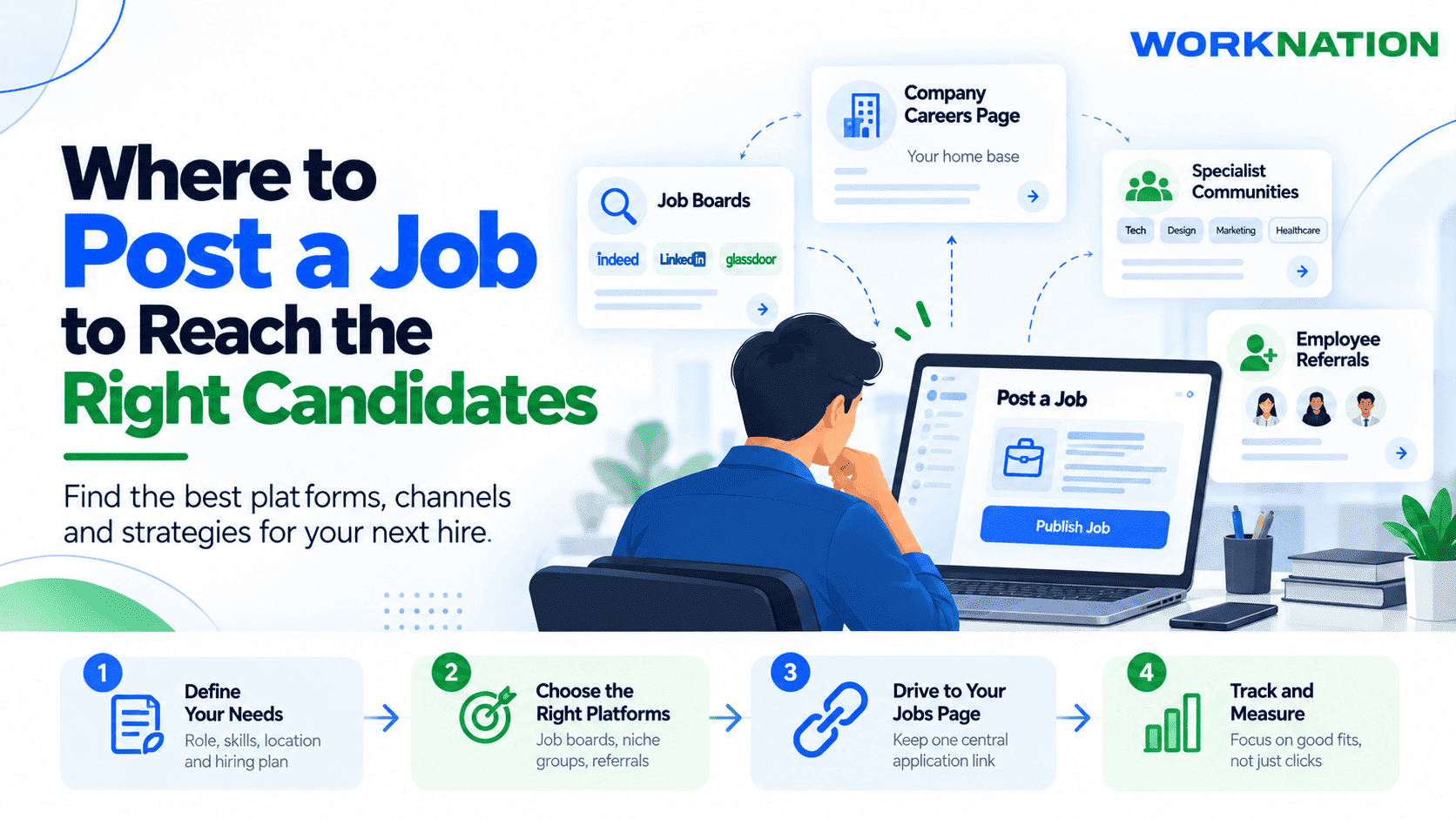
So, where should you post the job? Short answer: where the people you want already look. That depends on the role. Is the job in one city, or is it remote? How many hours a week can your team spend on forms? For most roles, a small mix does the trick. Use your jobs page and one or two boards that fit. Then add one tight group or a staff referral route. That tends to beat the same ad on dozens of boards.
This guide shows you how to pick where to post. It shows how to mix your picks, too. You get a side-by-side chart of the main choices. And you get a worked case you can reuse. It is the second guide in How to Attract Qualified Job Applicants. Read it once your ad is done. Not there yet? Go to How to Write a Job Description That Attracts Qualified Candidates first.
How to choose where to post a job, step by step
Anchor: put the full ad on your jobs page. Then each link points to one true record.
Match: pick places that fit the role. Think of the skill set, the place and the rank. Think, too, of how likely they are to be job hunting.
Cap: choose a small mix. Each place should reach its own crowd. Name one person to read the replies from each.
Track: note which places send the ones who pass your first screen. If the right ones don't see the job, change course.
What should determine where you post a job?
Five things should steer where the job goes. Take them from your role brief and hire plan.
Skill set: a broad admin or ops job draws from a wide pool. Big boards suit it. A niche job in law, health or tech is not the same. It tends to need field boards or niche groups.
Where and how they work: a job in one town needs locals to see it. Use boards with town and state filters. A remote job needs more. It may be open in more than one country. So use boards that let people sort by time zone. They should show which countries can apply, too.
Rank: new and mid-level job hunters check job boards all the time. Top bosses and rare pros tend to wait. They hear of jobs through a friend. Or someone sends them a note.
How your hires look for work: think of how they search. The U.S. Bureau of Labor Statistics (BLS) tracks how people out of work hunt for jobs. Here's what it found across 2025. 56.1% sent CVs or filled in forms. 50.8% got in touch with firms direct. 23.7% asked friends or family. Each used 1.8 ways to search, on average. So most job hunters lean on just one or two routes. Post in one place, and you miss part of the field.
How much you can read: each place you post adds forms to read. Say one recruiter or hiring manager has three hours a week for this. Open five busy boards at once, and you get a backlog. You don't get a better short list.
Start with your company careers page
Make your own site or jobs page the home base for the job. Do this first, then post it in other spots. People may first see your job on a job board. They may see it in a newsletter. Or a friend may text them. Most will still check your site. They want proof the job is real and still open.
On your own page, you're in charge. You decide how the role reads and who it reports to. You spell out where they'll work and how to apply. It gives your team one link to share, too. Use it in emails, posts and asks for names.
On its own, though, a jobs page won't bring in enough good fits. There is one case where it might. That's when the people you want know your firm well. For the rest of us, it's the last stop. It's where a look turns into a form. Your other posts send the right ones there.
When should you use a broad job platform?
Big job boards and global job sites work well in one case. The job has a title most know. And lots of job hunters search for it. They search by type of work, by town or for remote roles. Picture people typing plain titles into a search bar. Think "operations manager", "account executive" or "frontend engineer". Then a big board puts your ad in front of them while they look.
The catch is the sheer flood of forms to screen. Quick-apply buttons and broad job alerts bring in good fits. They bring a lot of quick clicks, too, from those who miss your must-haves. So add two or three short questions to the form. They catch those early. Can they work in the right country? Do they hold the license the job needs? Then make sure one named person has time set aside. Their task is to sort the queue.
When do specialist communities and networks make sense?
Think of a tax lawyer, a lab tech or a rail engineer. Some jobs need deep know-how, strong tech skills or years in a trade. The ones who do them tend to skip big job sites. You find them in niche groups, trade bodies and forums. Picture a small group of pros. They read a job thread in their own field. They send fewer forms. But more of those forms fit.
Good groups guard their members from spam. So check the group's rules first.
Use the jobs thread, jobs board or newsletter slot. Don't drop a link in the main chat.
Give the facts the group looks for. Say what the hire will build or own. Say where they need to be, or which time zones work. Add pay where it fits.
Name a real person on the hiring team. They should be there to answer quick questions if members reply.
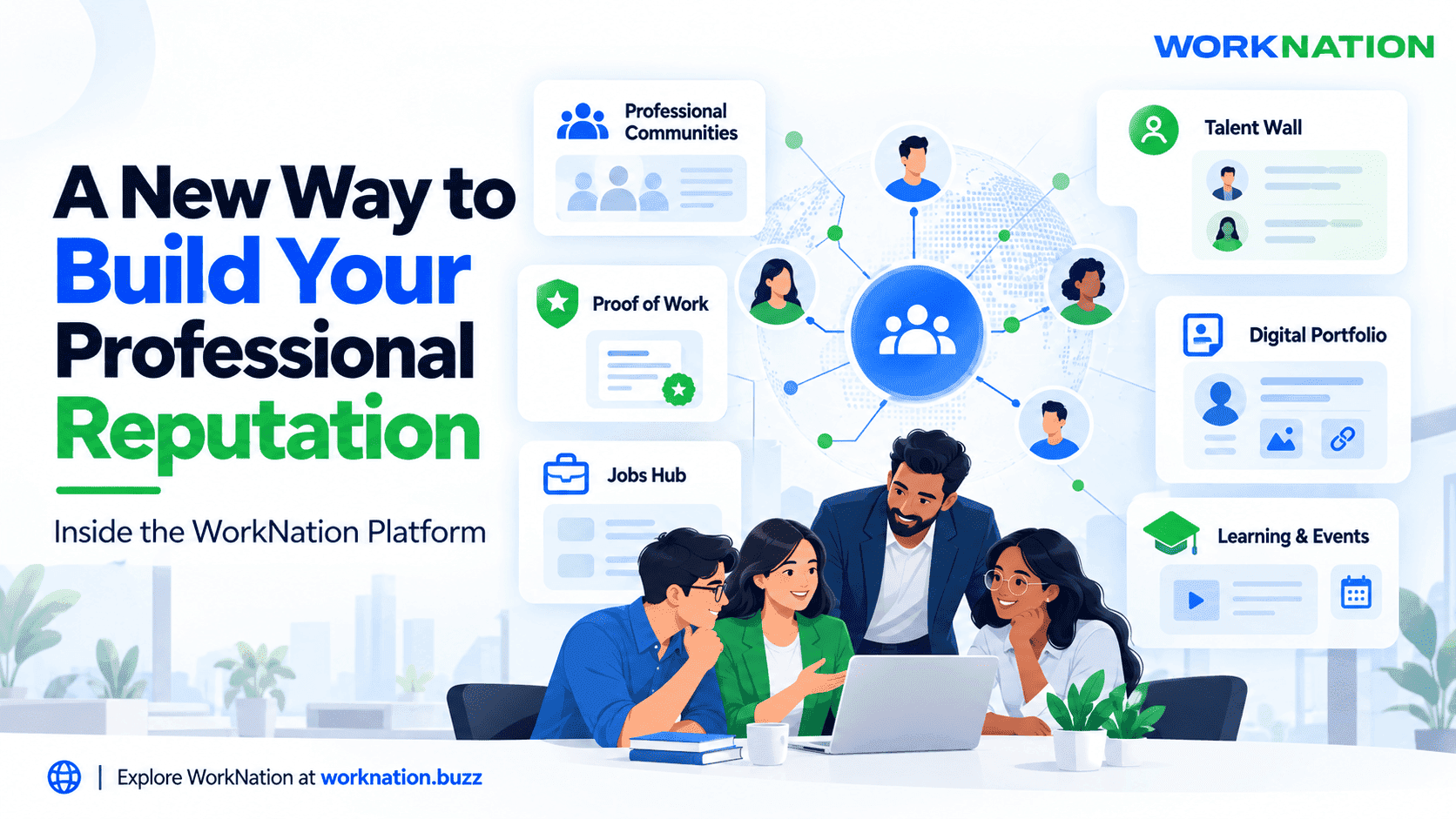
WorkNation links job ads with niche groups of pros and with a public Talent Wall. Firms can post jobs on its global jobs board. At the same time, they reach pros who take part in field groups.
Where do referrals and targeted outreach fit?
Job ads mostly reach people who check job boards this week. Referrals and reach-outs find a whole new set. They can do the work. They just aren't looking at job ads.
In 2019, a review looked at 101 studies on staff referrals. It ran in the Journal of Applied Psychology. It found that referrals help firms reach those who aren't job hunting. It found that staff can give a true sense of the job, too. They can do it before someone applies. Want staff tips to work well? Give your team the must-haves from the role brief. Then they know which skills and track record to look for. They won't just name their friends.
Keep two guard rails in place. They hold for staff tips and for your own reach-outs.
Watch for a closed loop: the same review warns of a risk. Lean hard on staff ties, and new hires may start to look like your staff. They may share the same roots and paths. So mix staff names with open job posts. That way, good people from outside your team's circle have a clear way in.
Use the same bar: a name from staff starts a talk. So does a name you found. It is not a free pass. Put each one through the same screen as all the rest. Use the same interview steps, too.
How should you compare job posting options?
First, set your choices side by side. Then post. Look at six things to pick your mix.
Who sees it: who uses it. And what kinds of jobs they want.
Where: can you aim at one city or one country? A few regions? Remote work?
Cost and work: the fee and the set-up time. Or the work it takes to post the ad and keep it fresh.
How much comes in: a flood of mixed forms? Or a small set of strong ones?
How you track it: how forms reach you. And if you can tell which source sent each one.
Who checks it: the one person who reads the replies. They move the best on to the screen.
Job posting channel comparison matrix
Channel 1: Company careers page
Who sees it: those who know your firm. Plus those who click through from reach-outs, groups and staff tips.
Where: what you state on the page. One city, or remote.
Cost and work: low cost. You need your own site, or a tool to track forms.
How much comes in: low to mid. It depends on how well known your firm is.
How you track it: high. Forms go straight to your inbox or your tracking tool.
Who checks it: the one who runs hiring, or the hiring lead.
Channel 2: Broad job platforms
Who sees it: job hunters. They search by plain job titles, types of work and place.
Where: strong filters for city, country and remote. It varies by board.
Cost and work: free, or paid per post or per boosted slot. Quick to post.
How much comes in: high. You tend to get a wide mix of good and poor fits.
How you track it: mid to high. Best when all forms route to one main form or ATS.
Who checks it: a recruiter, or a named screener.
Channel 3: WorkNation jobs platform
Who sees it: pros in tech, trade, ops and niche fields. Plus those in WorkNation's pro groups and on its Talent Wall.
Where: global or by country. Remote or on site.
Cost and work: a short, role-first form. Firms send the job ad and the time frame. They add the link to their own jobs page. Help to find and screen people is there if you need it.
How much comes in: mid. Replies come from pros and from field groups.
How you track it: it can send them to your own jobs page. Or WorkNation's hiring team can take in the forms for you.
Who checks it: your own hiring lead. A WorkNation recruiter can help if you want.
Channel 4: Specialist communities and industry networks
Who sees it: pros who know one field well. It may be a tech area or a line of work.
Where: often remote. Or tied to local chapters and hubs.
Cost and work: free to a mid-size fee. You need to shape the post to fit the group's rules.
How much comes in: low to mid. But more of them fit the field.
How you track it: mid. You need a tracked link back to your main form.
Who checks it: the hiring lead, or a team lead who knows the group.
Channel 5: Employee referrals
Who sees it: past co-workers and work friends of your team. That counts those who aren't on job boards.
Where: most of the time, the towns where your staff have lived and worked.
Cost and work: low cost up front. You need to brief the team well. You pay any set referral bonus once the hire is made.
How much comes in: low.
How you track it: high, if you log each name. Use a set link or an in-house form.
Who checks it: the hiring lead or recruiter. Never the one who sent the name.
Channel 6: Targeted outreach and sourcing
Who sees it: top pros and senior hires. Or small pools of rare skills. Most don't reply to job ads.
Where: the exact towns or time zones you search.
Cost and work: a lot of time per name. Or the fee for an outside search firm.
How much comes in: low and in your hands. Just those you reach out to who write back.
How you track it: high. You track it right in a search list or an ATS stage.
Who checks it: the hiring lead or an in-house search lead. Or an outside partner.
Worked example: Channel mix for a first operations manager
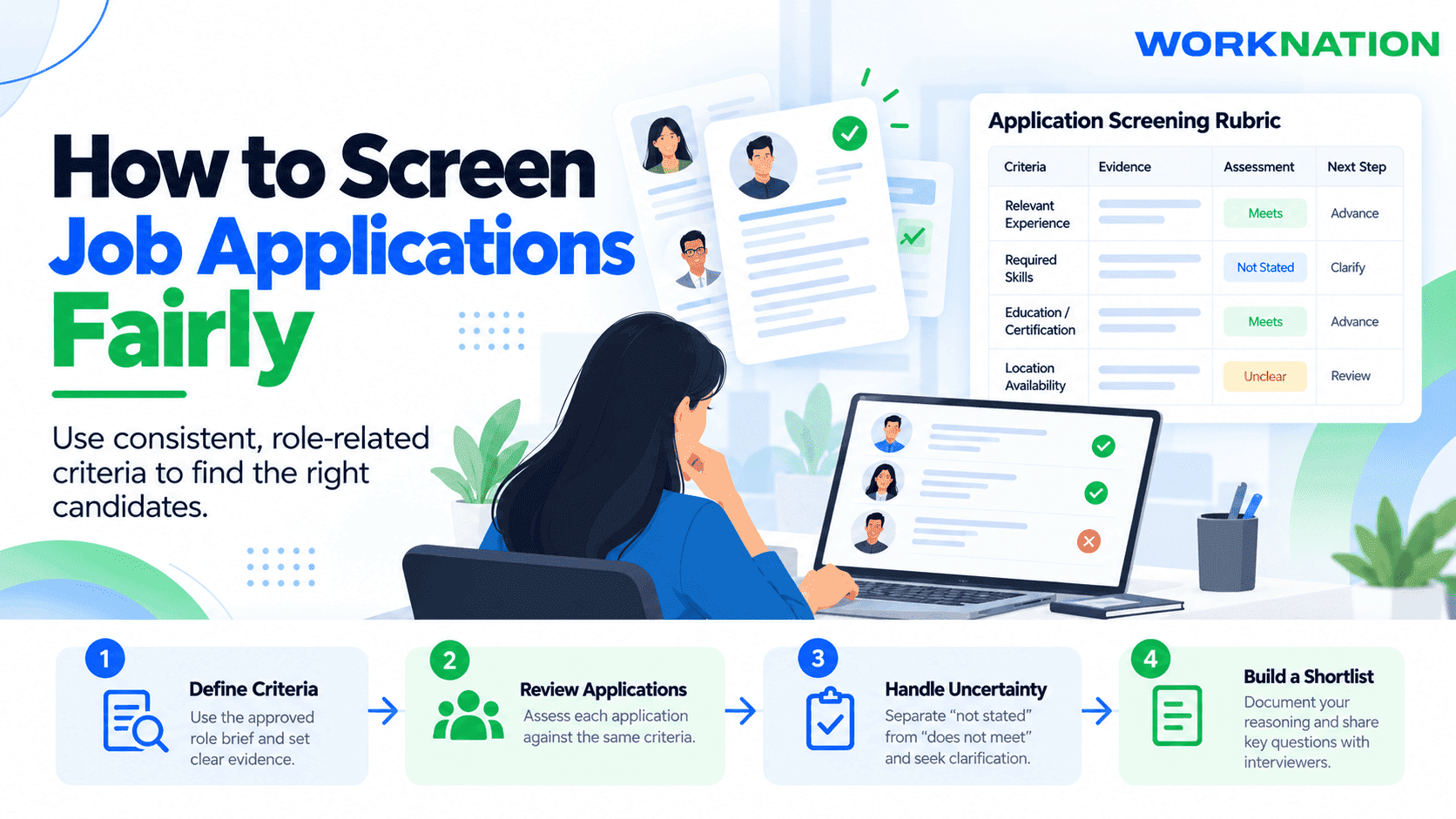
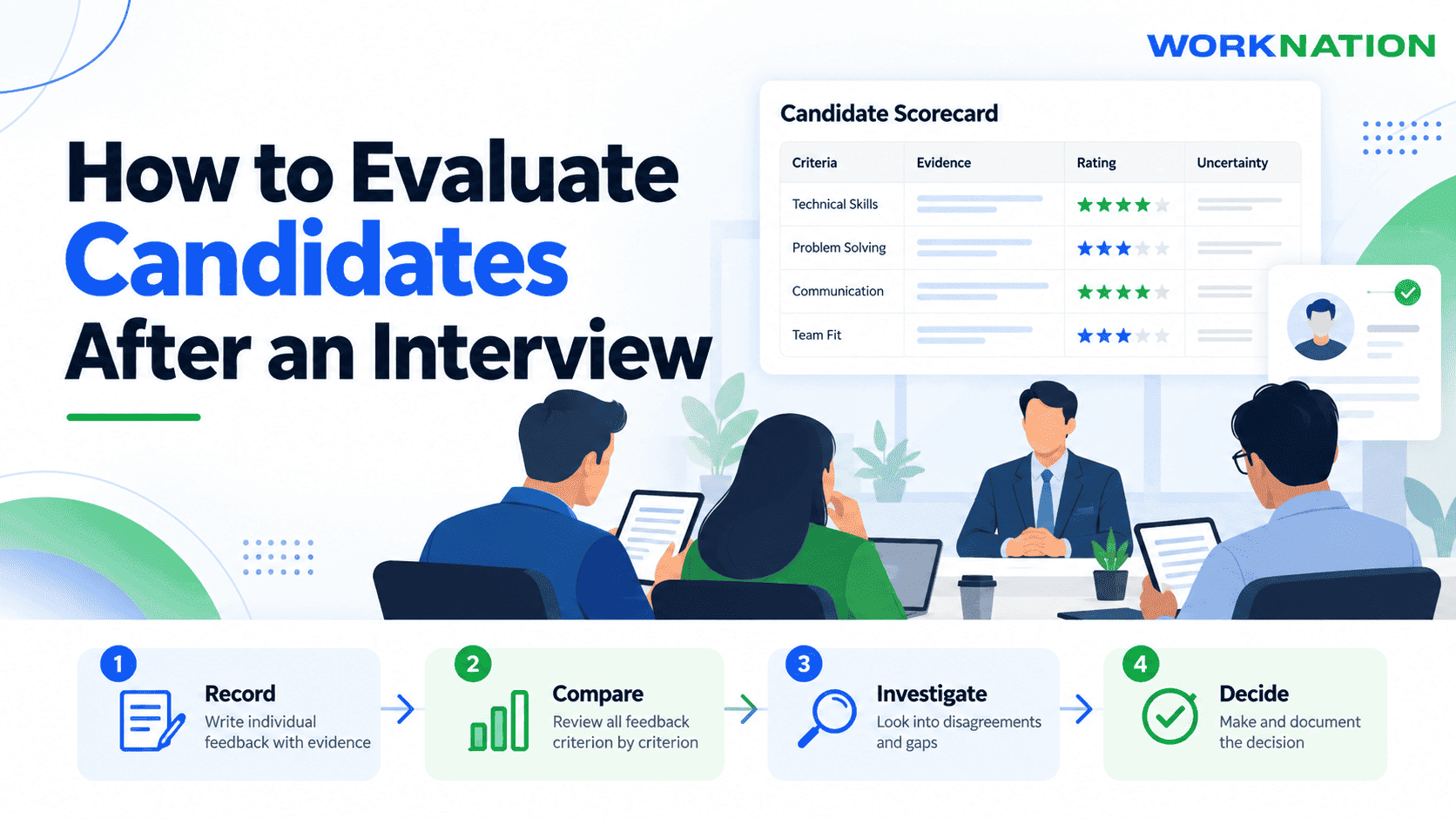
This is a made-up case. A 12-person firm wants to hire its first ops lead. We use the same job in the rest of this set of guides. You'll find it in How to Define a Role Before You Start Hiring. It is in How to Screen Job Applications Fairly. And it is in How to Evaluate Candidates After an Interview. The role needs hands-on charge of how work gets done. It needs someone to deal with vendors and the budget. And it needs clear talk with those who aren't in ops. Just the founder and the finance lead run the hire. So they have just a few hours a week to screen.
The founder does not post on ten job boards. Instead, the founder picks a mix of four.
Careers page: holds the full job ad and a short form. That way, each one who applies joins the same queue. Owner: founder.
One big job board, plus WorkNation's jobs board: these reach ops leads on the hunt. They want jobs at start-ups and firms on the rise. All forms route back to the main form. Owner: finance lead (first check on the must-haves).
One start-up ops group: the post goes in the group's weekly jobs thread. It has a tracked link. It reaches ops folks who have built work flows at small firms. Owner: founder.
Staff referrals with a tight brief: the founder tells the firm's 12 staff the three must-haves. The founder asks a clear question. Have they worked side by side with an ops lead who ran vendor budgets? Each name they send fills in the same form. Each is judged on the same score sheet. Owner: founder.
How many places should you post a vacancy?
Start with a small mix you can keep up with. Each place should reach its own crowd. Most of the time, that means your jobs page. Then add two or three more routes. Post the same job on ten boards that overlap. You won't get ten times the good fits. You get the same people twice. And you get a big pile of CVs that don't fit.
The U.S. Office of Personnel Management (OPM) has a guide on how to find and reach staff. It says to check how well each source works. Judge it by the staff you need. Don't treat reach-outs as one size fits all. In real life, that means you track each place from day one. Use a link that is just for that place. Or keep a short source log. Then you can see two numbers for each place. First, how many forms came in. Second, how many met your must-haves at the first screen.
What if posting does not reach the right people?
Say your post has been live for two weeks. Few who apply meet the must-haves on your score sheet. Don't pay for more job board slots yet. First, find out where things are stuck.
Check the ad first: good fits may see the page but not apply. Or each one who applies gets the level of the job wrong. If so, go back to How to Write a Job Description That Attracts Qualified Candidates. A vague title stalls any place you post. So does no word on where the job is based. So does a wish list no one could meet.
Check who sees it: is one big board sending hundreds of CVs that don't fit? Pause it. Put your time in a niche group, or a board with a tight focus.
Reach out when a post is not enough: a post may fall short. Maybe the pool is small. Maybe the job is urgent, or the search is kept quiet. Now is the time to set aside hours for your team to reach out. Or bring in help to hire. WorkNation's Post a Job form helps here. Firms can send in a job for a plain post. Or they can flag that a job needs more. That means a search, AI-assisted first screens and a short list from a recruiter. This runs through WorkNation's Hiring Solutions.
If you change one thing first, cap how many places you post. Then each place has a clear owner. And each form gets a fair read on time.
Post your role on WorkNation. Or get help with a more focused search.
FAQ
How many job boards should you post a vacancy on?
For most roles, start with your jobs page. Add two or three outside places. That is enough to start. Pick ones that reach their own groups. Say, one big job board, one niche group and staff referrals. That way, you can read each form with care. And you can see which source brings good fits.
Should employee referrals skip the application screening stage?
No. Referrals are a way to reach those who might not see a job ad. They are not a way round your bar. Put each name from staff through the same screen as the rest. Use the same interview score sheet. Then each one is judged on proof that fits the role.
When is posting a job online not enough to fill a role?
Job ads can fall short in three cases. The job may need a rare mix of skills. The right folks may not be on job boards. Or the search may need to stay quiet. In those cases, reach out to likely hires as well as post. Or reach out in place of the ads. Or work with a partner who can run the search for you.
Sources
U.S. Bureau of Labor Statistics, "Unemployed jobseekers by sex, reason for unemployment, and active jobsearch methods used" (CPS Table 34, 2025 annual averages, updated February 2026): https://www.bls.gov/cps/cpsaat34.htm
Svenja Schlachter and Godfrey Cadogan, "Employee referral hiring in organizations: An integrative conceptual review, model, and agenda for future research," Journal of Applied Psychology 104(11), 2019: https://doi.org/10.1037/apl0000412
U.S. Office of Personnel Management, "Recruitment and Outreach" guidance: https://www.opm.gov/agency-services/talent-management-services/staffing-and-recruiting/recruitment/
WorkNation, Post a Job page (read 26 October 2026): https://worknation.buzz/jobs/post
WorkNation, Hiring Solutions page (read 26 October 2026): https://worknation.buzz/hiring-solutions
Have a Funding Round or Exciting Update to Share?
Submit your press release to get featured on WorkNation and reach founders, investors, and tech leaders.