How to Write a Job Description That Attracts Qualified Candidates
Top Picks
Submit PR
Stay Ahead of the Market
Get the latest startup funding, hiring trends and global opportunities delivered to your inbox every week.
Key takeaways
Your job ad has one job, really. The right folks should read it, see if they fit, and hit apply.
Work from the role brief your team signed. Old posts and a rival's ad will steer you wrong.
Use a title folks search for. "Operations Manager" beats "Ops Ninja" each time. Get the rank right, too.
Why are you hiring? Two or three plain lines will do. Say what this hire will own.
Sort the tasks in a few groups. Then folks can see what their week will look like.
Two lists: must-haves and nice-to-haves. If a must-have has no real task behind it, it goes.
Spell out the plain facts. Where's the job, and is home work OK? Full-time or not? Hours? Pay, where that fits? End with how to apply.
Want a job ad that pulls in the right folks? Grab the role brief your team signed. Make it a plain note on four things. The work. The must-haves. The terms. And how to apply. That's it. A good ad has one job. The right folks read it, check if they fit, and apply. Clear, true facts make the good ones lean in. The rest move on. And they do it well before your inbox fills up. That's the whole point.
Here we walk through each part of a job post. You'll get a job description template to copy. You'll get a marked-up sample to reuse, too. This is the first guide in How to Attract Qualified Job Applicants. It follows on from How to Define a Role Before You Start Hiring.
How to write a job description, step by step
Translate: dig out the brief. You want three things from it: the role's aim, its tasks, its must-haves.
Structure: clear title on top, then one short line on the role. Tasks go in groups. Must-haves and extras get a list each.
Specify: the where (the office, home, or both), the kind of job, and the pay if it fits. Then how to apply, step by step.
Edit: cut the fluff. Read it on your phone. Hold each must-have up to the brief.
What should a job description include?
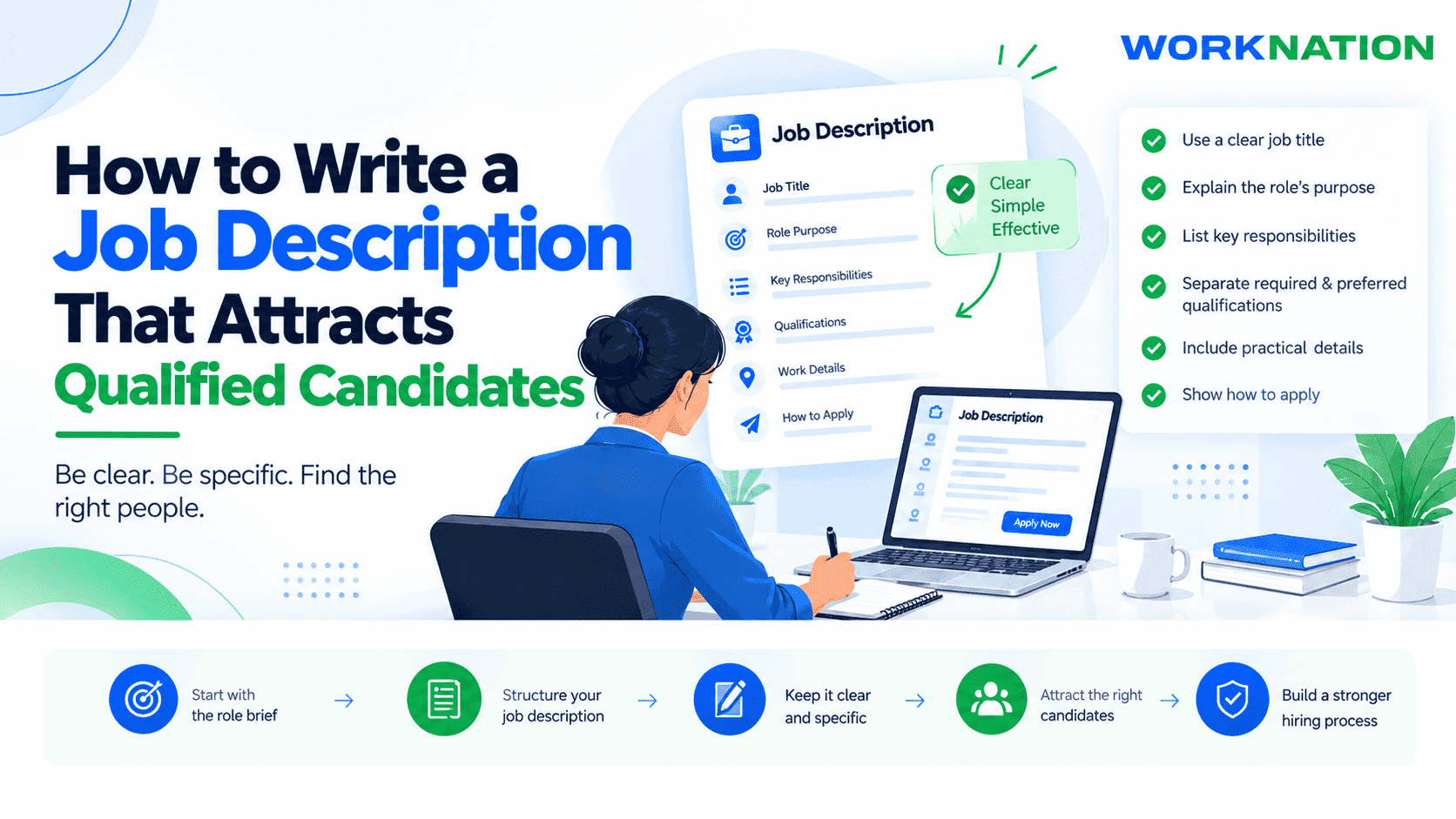
A full job ad has seven parts:
Job title: what most folks call the role. Add the rank.
Role purpose: why the job is there. Where it sits. What it owns.
Responsibilities: the main tasks. Also the calls this hire gets to make. Set them out in groups.
Required and preferred qualifications: what they can't do the job without. The nice extras go in a list of their own.
Practical details: where or how they'll work. The kind of job. The pay, where it fits. The hours, or the trips.
How to apply: where to send it and what to send. The last date, if you have one. And what comes next.
Brief company context: a short bit on what your firm does. Tuck it in where it won't bury the role.
Don't mix up your job ad and your role brief. They're two things. The brief is a plan for your own hiring team. (We cover it in How to Define a Role Before You Start Hiring.) It holds the stuff you'd say in house. Not out loud. Your pain points. The trade-offs your team made. Who runs each interview, and who signs off. The job ad is for folks on the far side of your door. They don't know your in-house terms. They don't need to. All they want is a few clear facts. Then they can choose to apply or not.
Write a recognizable job title
Use a plain title. It's the kind good folks type in a job search bar. It's the kind they'd spot on a CV at a glance, too. Think "Operations Manager", "Senior Backend Engineer" or "Accounts Payable Specialist". Does the rank help show the scope? Then add it. "Junior", "Senior" and "Lead" all work.
And those fun in-house names? "Growth Catalyst". "Operations Ninja". "Level 3 Partner". Your team gets them. No one else does. Leave them out. Leave out the place codes and job ID numbers, too. Some folks jam those in the headline. The U.S. Office of Personnel Management (OPM) has looked at this. It ran studies of federal job ads. Job seekers, it found, lean hard on plain titles and the first few lines. That's how they judge if a job fits their past work. And they do it first, then read on. So here's the test. Read just the title. Can a stranger tell what the job is, and how high up? If not, a lot of them will just scroll on by.
Explain why the role exists
Open with two or three lines on why you're hiring. Who will this hire work for? What will they own? Put the work up top. Three long blocks of praise for your own firm can wait. Or go.
Picture someone on the first screen of your post. They want to know two things. Just two. "What's this hire here to fix? And where do they fit on the team?" Now read this line: "We are a fast-paced, innovative market leader looking for a passionate self-starter." It tells them none of that. The real story does. Like this: "We're a 12-person B2B equipment supplier. This is our first ops manager. You'll take on our orders and our suppliers. Plus the day to day ops budget. Our founder runs all that now."
Describe the work through concrete responsibilities
Next up, list what this hire will do and decide. Two or three clear groups work well. Aim for four to six bullets in all. Put tasks that go hand in hand side by side. It helps. Say, "Orders and how they flow" next to "Vendors and the budget". That's far quicker to scan than one long wall of fifteen bullets.
Start each bullet with a plain verb. Then name what comes out of the task. Or the call they make. Here's the gap:
Weak and vague: "Support cross-functional operational excellence and drive process synergies."
Concrete and clear: "Run and fix the daily flow of orders. Sales to warehouse to courier."
Skip the small stuff. The things they'll touch once a year. Stick to the core of the job. That's the work that will fill most of their time. Think the first six to twelve months.
Distinguish required from preferred qualifications
Make two lists, not one. "Required" is what they need to do the work from day one. "Preferred" is what would get them up to speed quick. Nice to have, sure. Not a deal-breaker.
Each must-have should link back to a task on your list. The U.S. Equal Employment Opportunity Commission (EEOC) tells firms much the same. Your bar should match the real tasks of the job. Set a bar at a whim, and you keep out folks. Folks who could do it well. Here's a quick test. Does your task list say a word on data models? No? Then SQL has no place on the must-have list.
It helps to write each must-have as proof you could see. "5+ years" won't tell you much. Nor will a list of traits:
Instead of "5+ years of operations experience and strong communication skills," try two lines. "Has run and fixed up a full order, stock or ship-out process." And "Can tell clients and staff, in plain words, when things change or orders run late."
Let folks see how each must-have ties to the work. Two good things happen. Strong folks who took an odd path to the field know they can apply. And those who lack the core skills can see why it's not a fit. Nobody needs to spell it out.
Include the practical details candidates need
No one should have to apply and sit through a call. Not just to learn where the job is. Or if the hours suit their life. So give the terms their own spot, in plain words:
Work location or arrangement: on-site, a mix, or fully from home? For a mix, name the city. Say how many days a week they'll be in. For work from home, say which countries can apply. Need some time zone match each day? Say how much.
Employment type: full-time, part-time, a fixed-term deal or freelance.
Compensation and benefits: the pay range (or setup) you've OK'd. The main perks, where they fit. Some places have pay laws. They make firms list pay ranges in job ads. So look up the rules for each place you hire in, and do that first.
Schedule or travel expectations: shift work? Weekend cover? On-call turns, or a lot of time on the road? Flag it.
Explain how to apply
End with just how to apply and what comes next. Each extra hoop costs you good folks. Lots of them apply on a short break, in a rush. Or on their phone, on the bus.
Give them four things:
Application route: the one link or form to use. And please, don't make them send a CV. Then type it all out again in twenty boxes? No thanks.
Requested materials: just what your team will read at the first screen. Maybe a CV and two short questions on the role. Or a link to past work.
Deadline: shutting the post on a set date? Tell them. Same if you read forms in weekly batches.
Next steps: one line on what comes once they apply. Like this: "Each week we check new forms for what the role needs. Then we ask the best fits to a 20-minute call."
Edit the post for clarity and accuracy
Read the post twice first. Then put it live. Once side by side with the brief your team signed. Then once more on a phone.
Four quick checks:
Cut empty clichés: "work hard, play hard", "wear many hats", "rockstar", "fast-paced environment". Strike them, or swap in what's true. Say: "You'll be the only ops lead in a 12-person firm. So you'll set up the work flows and run them day to day."
Check internal consistency: a first-job title next to a list of top-rank must-haves? That's a red flag. And the must-haves need to match the tasks.
Format for mobile and accessibility: use clear subheads. Short blocks of text. Short bullet lists. That way, folks on a phone can find their way round. So can folks with a screen reader.
Confirm sign-off: run it past the hiring lead and whoever signs off. The post should match the brief they signed.
Job description template and annotated example
Use the outline below to draft your own post. Then hold it up to the marked-up sample. It's for the same ops job at a 12-person firm. You'll find it in How to Define a Role Before You Start Hiring. It's in Where to Post a Job to Reach the Right Candidates, too. It's in How to Screen Job Applications Fairly. And it's in How to Evaluate Candidates After an Interview.
Copyable job description template
Job Title: [The title most folks use for the role, and its rank]
Location & Work Arrangement: [City / On-site, Hybrid (days in the office), or Remote (which countries can apply, and the time zone match)]
Employment Type & Compensation: [Full-time / Part-time / Contract | The pay range you've signed off on, and the main perks where they fit]
Why This Role Exists: [2–3 lines. What the firm does. Why the job is open now. Who it's for, and what it owns.]
What You Will Do: [2–3 groups. 4–6 clear bullets in all. Show the work and the calls this hire will own.]
What You Will Need (Required): [3–5 core skills you can check. Tie each one to a task above.]
Nice to Have (Preferred): [1–3 skills that would help. They can learn them on the job. Or they'd help them get up to speed.]
How to Apply & Next Steps: [The link or steps. What to send. The last date, if there is one. A short list of the interview stages.]
Annotated example: Operations Manager
Job Title: Operations Manager
Location & Work Arrangement: Hybrid — Hyderabad, India (3 days a week at our Madhapur office, 2 days from home; the usual IST hours)
Employment Type & Compensation: Full-time, Permanent | ₹12,00,000 – ₹15,00,000 a year, based on your track record. Plus company health cover
[Annotation: the title, the place rule, the hours and the pay, all up top. No one has to guess if they can even apply.]
Why This Role Exists
We're a 12-person B2B industrial supplies firm. Our monthly orders keep growing across South India. Up to now, our founder has run it all. The orders. The courier firms. Now we're hiring our first Operations Manager. They'll work for the founder. They'll own our orders, supplier deals and day to day spend.
[Annotation: a few plain lines. The real need, the team size, who the hire works for and what they'll own. No sales fluff.]
What You Will Do
Order and Process Ownership
Own each order from start to end. That's from the client's first purchase order to the warehouse. And then to the door.
Spot where orders get stuck as they change hands. Fix the flow with the sales and warehouse leads. Then write down the new steps.
Track how right our orders are each week. And how fast they land. Does the same snag keep coming back? Step in and fix the root cause.
Vendor and Budget Handling
Look after our ties with three outside firms. They ship and pack for us. Keep their work up to the mark.
Go through the monthly supplier bills with our finance lead. Track ops spend next to the budget for the quarter. Push for a better deal when terms come up for renewal.
Cross-Team and Customer Communication
Stock runs low. Orders run late. The flow shifts. Tell the sales team and our B2B clients, in plain words.
[Annotation: the same three areas the role brief calls for. Each bullet is a real task or call.]
What You Will Need (Required)
Process ownership: you've picked up, run and fixed up an ops flow. Think orders, ship-outs, stock or service. And you can show what came of it.
Vendor and budget handling: you've worked with outside suppliers or service firms. Maybe you checked costs or kept a budget on track. Or you worked out the terms of a deal.
Clear communication: you write and speak in plain terms with folks not in your field. Clients, warehouse staff, the finance team.
Practical availability: you can be at our Hyderabad office three days a week. Hours are the usual IST ones.
[Annotation: these match the three core checks we use later. They're the same ones in the screening rubric and the interview scorecard. So the folks who apply and the folks who judge them work from one bar.]
Nice to Have (Preferred)
You've worked at a small firm (under 50 people). You built the systems from scratch. You didn't just take on a big ops team.
You know Zoho Inventory, or a tool like it, for tracking orders. (We'll train you on our setup in your first two weeks.)
[Annotation: it shows what helps. But it doesn't make tools folks can learn a false wall.]
How to Apply & Next Steps
Send your CV through our form at [link]. Add two or three lines on an ops task you made better. What was your own part in it? You don't need a cover note.
Our hiring has three steps:
1. We check your form for the must-haves above. (We reply to all who apply within 7 working days.)
2. A 30-minute call with our founder. We'll talk through your past ops and vendor work.
3. A 45-minute structured interview with our founder and finance lead. It has a short real-world task to talk through.
[Annotation: it says what to send. It drops the cover note. And it shows the stages to come.]
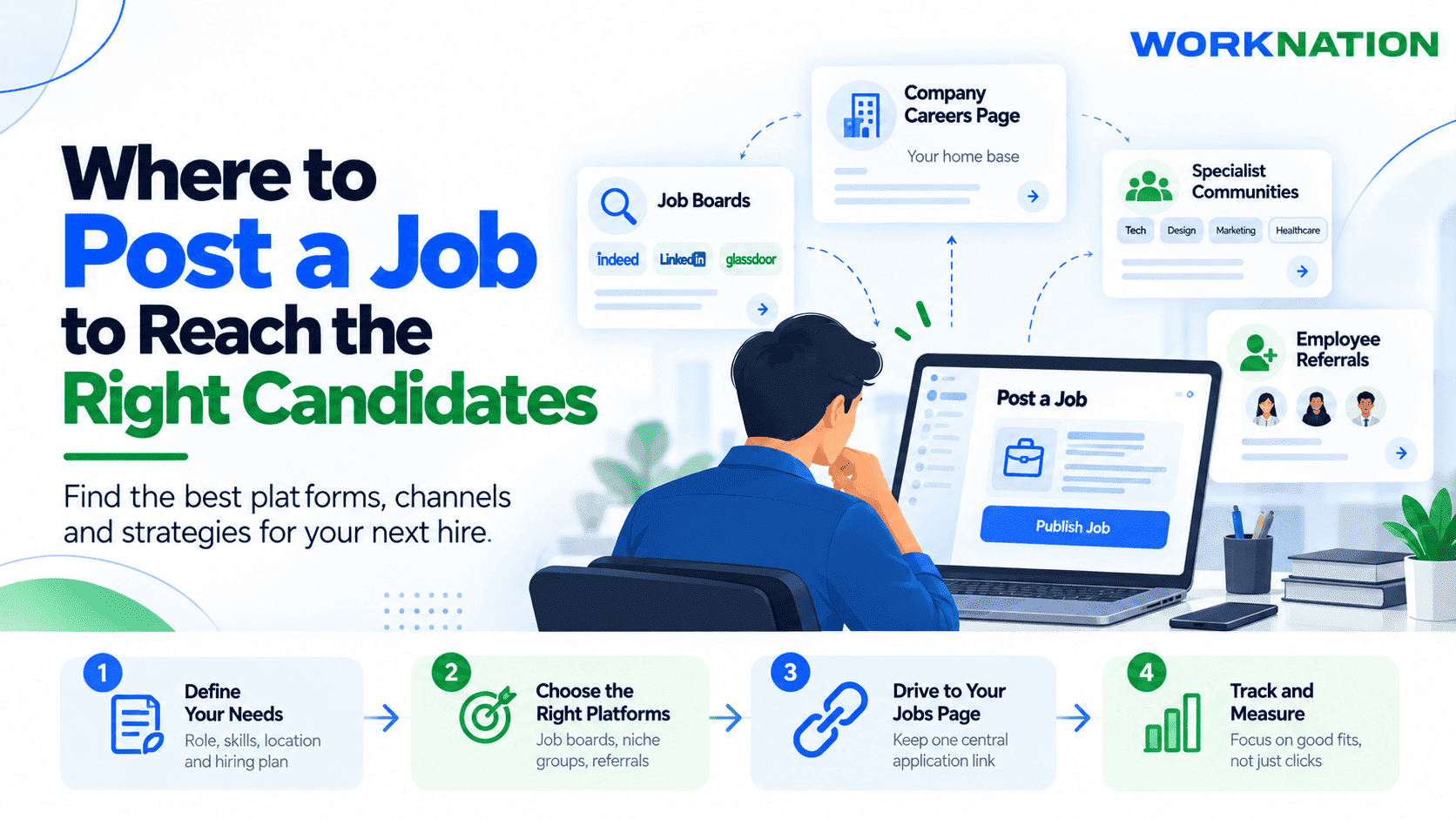
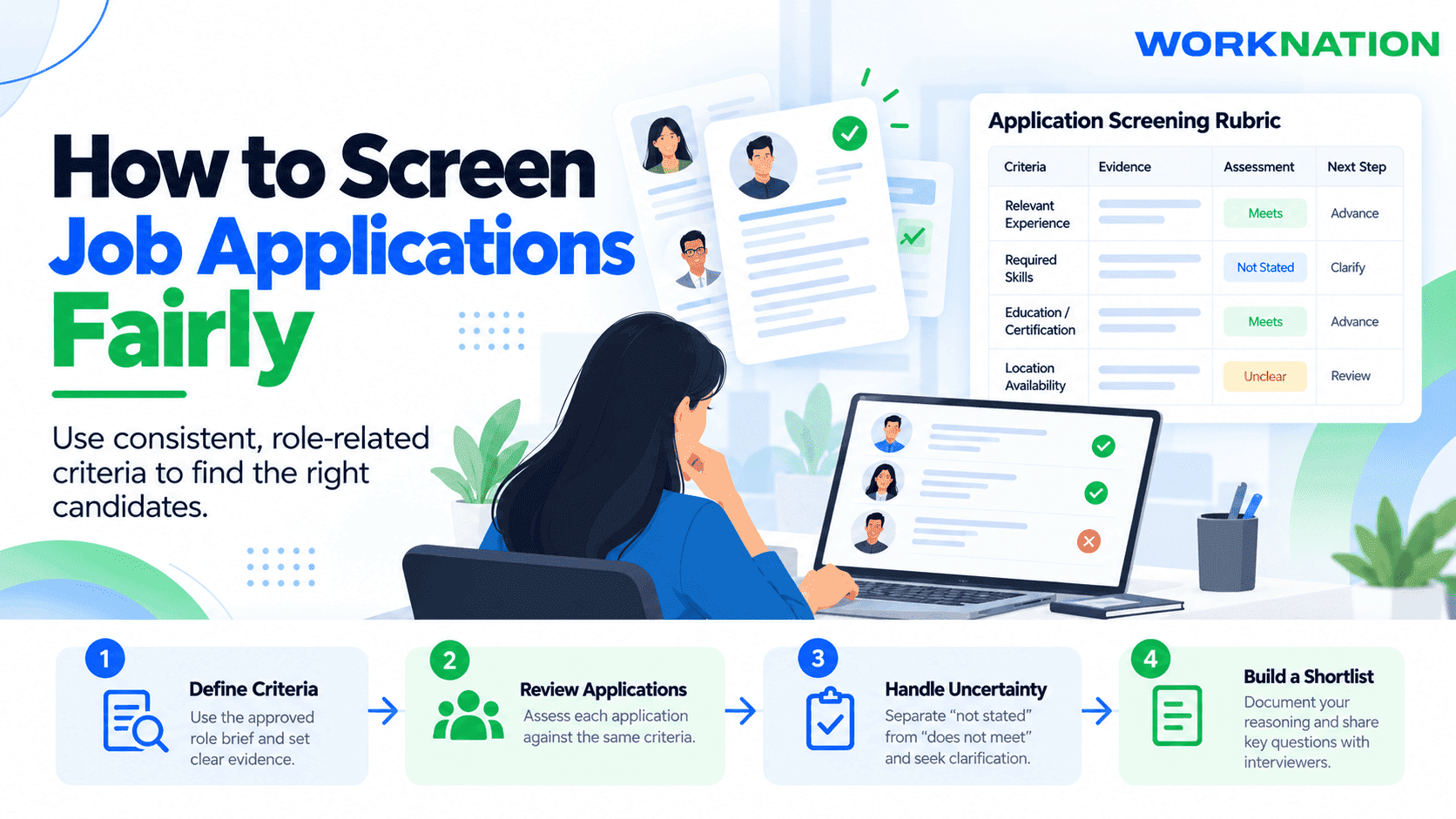
Get all this ready once. Then it's quick to post in more places, too. Say you use WorkNation's Post a Job page. Have your clear job ad on hand. Your time frame and jobs page link, too. Then you can post the job in minutes. Or you can ask for targeted hiring support. Post set to go live? Turn to Where to Post a Job to Reach the Right Candidates. It helps you pick the right places. Then How to Screen Job Applications Fairly will help you check the replies. You'll judge them all on the same terms.
Want to change just one thing first? Make it this. Go through your draft. Cut each must-have that doesn't tie back to a real task on your list.
Have your job description ready? Post your opening on WorkNation.
FAQ
How long should a job description be?
Shoot for 300 to 600 words or so. That's room to say why the role is open. You can list four to six core tasks. You can split the must-haves from the extras, too. And you can give the place, the pay and how to apply. Go much shorter, and posts tend to skip key facts. Past 800 words, the real job tends to get lost. It ends up stuck in stock blurb on the firm. Or in a wish list no one could meet.
What is the difference between an internal role brief and a job description?
A role brief is a plan for the hiring team. It sets down the business problem. It says what the hire should get done in their first six months. It notes the calls they can make. It says how you'll judge them, and who signs off. A job description makes that brief a clear note for folks who might apply. It helps good folks from out of house get a feel for the work. That's its job. Then they can choose to go for it or not.
Should you include salary in a job description?
Yes, if it's signed off or the law asks for it. Put the pay range up top. It saves time on both sides. No one spends hours on screens and interviews. Not for a role where the pay just doesn't line up. In lots of states and countries, it's the law, too. You have to post pay ranges in job ads. So check the rules where you're hiring.
Sources
U.S. Office of Personnel Management, "Job Announcement Study" / Plain Language in Federal Job Announcements guidance: https://www.opm.gov/policy-data-oversight/assessment-and-selection/
U.S. Equal Employment Opportunity Commission, "Prohibited Employment Policies/Practices" (Job Advertisements, Recruitment, and Qualification Standards): https://www.eeoc.gov/prohibited-employment-policiespractices
WorkNation, Post a Job page (read 27 October 2026): https://worknation.buzz/jobs/post
Have a Funding Round or Exciting Update to Share?
Submit your press release to get featured on WorkNation and reach founders, investors, and tech leaders.