Zenzap Raises $44M to Replace WhatsApp for Workplace Communication
Top Picks
Submit PR
Stay Ahead of the Market
Get the latest startup funding, hiring trends and global opportunities delivered to your inbox every week.
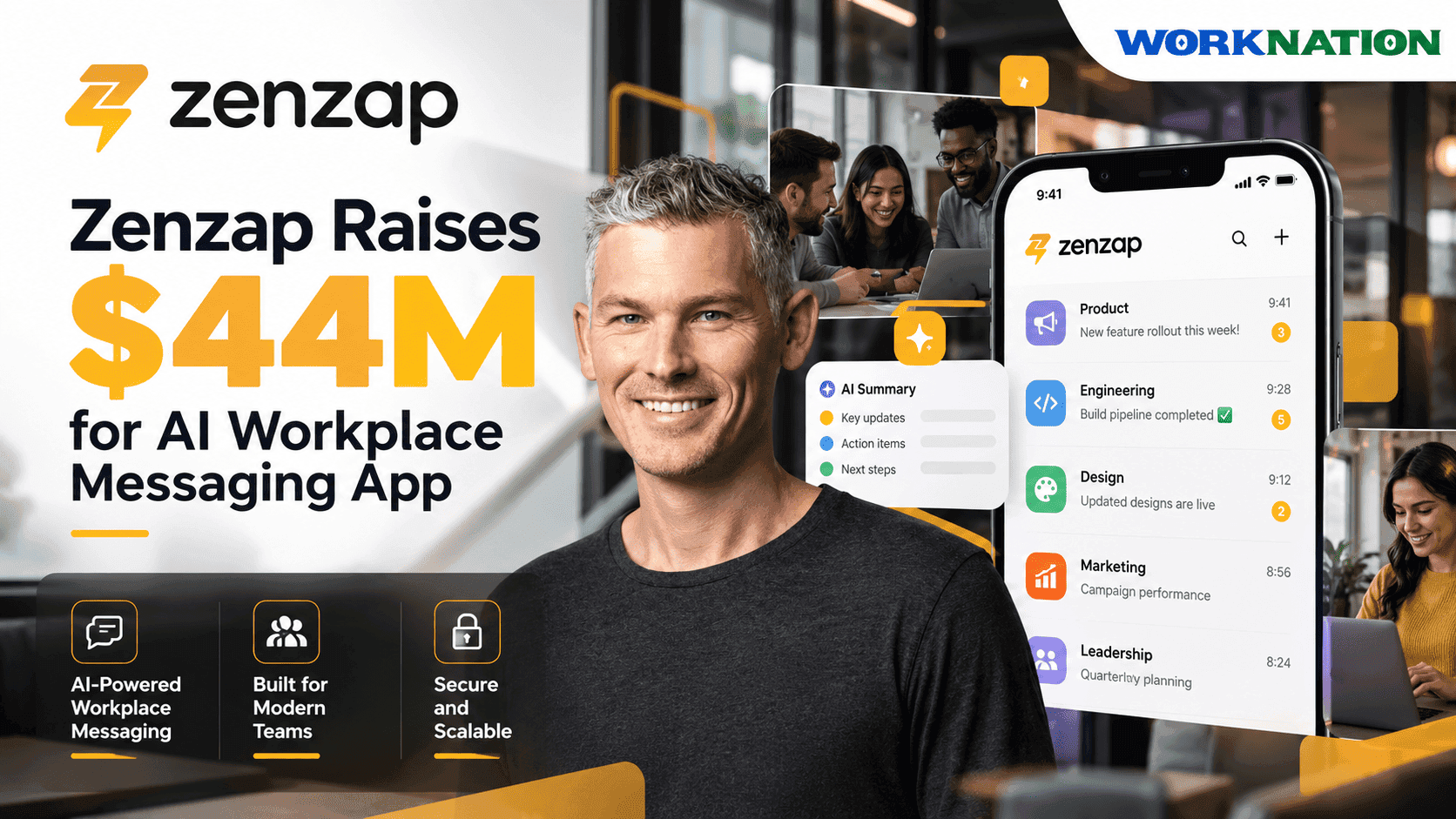
Zenzap, a workplace messaging startup founded by Guy Weiss, has raised $44 million to expand its AI-powered communication platform designed for businesses that rely on consumer messaging apps to coordinate their daily operations. The company aims to offer an alternative to WhatsApp, Telegram, Discord and iMessage for workplace communication, combining messaging, task management and AI-powered workflow tools in a platform built around the needs of everyday employees.
The funding includes backing from Bessemer, Lightspeed and The Garage, alongside individual investors such as Wix president Nir Zohar and former EY general manager Yoram Tietz, according to TechCrunch's October 14, 2026 report.
Zenzap is targeting businesses across industries such as hospitality, construction, healthcare and fast food. These sectors often depend on mobile communication to coordinate shifts, share documents, manage schedules and keep employees informed. The company believes existing workplace collaboration tools do not always address the needs of frontline and mobile-first workers.
Why Zenzap Wants to Replace WhatsApp at Work
Many organizations use consumer messaging applications to communicate with employees because they are familiar, accessible and easy to use. However, managing workplace communication through personal messaging apps can create challenges around IT oversight, security requirements and the separation of professional and personal conversations.
Zenzap is designed to address these challenges by providing a dedicated workplace messaging environment with AI features built into the platform.
Founder Guy Weiss told TechCrunch that consumer messaging apps are not suitable for workplace AI agents when they do not meet an organization's IT requirements. He also argued that platforms such as Slack and Microsoft Teams were not originally designed around the mobile-first, day-to-day workflows of average frontline employees.
Rather than focusing primarily on developers and office-based teams, Zenzap is positioning itself for the wider workforce, including employees who spend much of their time on the move or working in physical locations.
Its approach combines familiar messaging functions with tools that help organizations turn conversations into tasks, coordinate schedules and retrieve information across their workspaces.
What Zenzap Offers
Zenzap combines messaging, productivity tools and AI capabilities in one application. Its free tier includes group chats, direct messages and several features designed to help teams coordinate everyday work.
The platform includes:
Group chats and direct messaging for workplace communication.
Task management and the ability to turn messages into tasks.
Calendar integration and employee schedule management.
AI-powered voice chat and search.
Smart task sorting and task templates on paid plans.
Voice and video calling for paid customers.
AI-powered workflow automation agents.
AI-assisted voice-note and call transcription.
Workspace-wide AI search and file-storage options.
The platform uses a tiered pricing model. According to the report, paid plans start at $51 per month for up to 20 users. These plans unlock additional features, including voice and video calls, smart task sorting, task templates, increased file-storage limits and the ability to search across the workspace using AI.
Some advanced AI capabilities, including workflow automation and transcription, operate through a separate credit-based pricing system.
This combination allows Zenzap to offer basic messaging functionality while charging organizations for additional productivity and AI capabilities.
From Bootstrapped Startup to $44 Million in Funding
Zenzap's funding round marks a significant step for Weiss, who had previously built and sold a business without raising venture capital.
In 2012, Weiss bootstrapped StuccoMedia, an e-commerce marketing platform that was sold to Market Group in 2015. He subsequently spent several years as an investor before returning to entrepreneurship.
Weiss founded Zenzap in 2022 after meeting Bessemer partner Adam Fisher and exploring potential business ideas with his current co-founders, Noam Neumann and Jonatan Bien.
Initially, Weiss funded the company himself and worked out of Bessemer's office. He was reluctant to raise outside capital, citing concerns about the risks of returning to the fundraising process after an earlier successful entrepreneurial experience.
Fisher eventually persuaded him that Zenzap would require venture backing to scale its operations and reach a broader market.
The resulting $44 million fundraise provides the company with capital to expand its product capabilities and pursue growth across multiple industries.
The report identifies Bessemer, Lightspeed and The Garage among the investors, along with Nir Zohar and Yoram Tietz. It does not provide a detailed breakdown of the funding by individual investor or specify the company's valuation.
Enterprise Customers Across Multiple Industries
Zenzap is targeting businesses with large or distributed workforces, where employees need a straightforward way to exchange information and coordinate daily responsibilities.
The company lists organizations including FedEx, Dollar General, Taco Bell, Starbucks, Casey's and Regal among its clients. Weiss also told TechCrunch that individual branches of fast-food chains, including IHOP and McDonald's, use the platform to coordinate employee shifts and discuss supply-related needs.
These examples illustrate the type of operational communication Zenzap is trying to support. Instead of limiting workplace messaging to project discussions and office collaboration, the platform is designed to accommodate recurring activities such as scheduling, shift coordination and sharing operational updates.
According to Bessemer partner Adam Fisher, the platform's broader appeal could help it reach employees who do not primarily work with developer-focused collaboration tools. Fisher said Bessemer itself uses Zenzap within its investment team to discuss and manage deal flows.
The company reportedly has 50 employees working across the United States, Tel Aviv and Europe. Its next hiring priorities include product development and research and development.
AI Is Central to Zenzap's Workplace Strategy
Zenzap's strategy extends beyond creating another business messaging application. The company is building AI features into the communication environment employees already use to manage their work.
Its AI-powered search aims to help users find relevant information across workplace conversations, while task conversion allows messages to become actionable assignments. Workflow automation agents and AI-assisted transcription add further capabilities for organizations looking to streamline routine processes.
The company's approach reflects an important product distinction: employees can communicate through a familiar chat interface while using AI to help organize information and complete work-related tasks.
However, the article does not disclose independently verified productivity improvements, adoption rates across its customer base or the financial contribution of its AI features. The long-term commercial impact of these capabilities remains to be established.
Can Zenzap Compete With Slack and Microsoft Teams?
Zenzap is entering a competitive workplace communication market that includes established collaboration platforms as well as consumer messaging services.
Its differentiation rests on three main areas: mobile-first usability, frontline workforce needs and AI integrated directly into everyday communication.
Slack and Microsoft Teams serve a wide range of organizations, while consumer applications such as WhatsApp remain popular for informal coordination. Zenzap is betting that some businesses want a dedicated platform that combines the ease of consumer messaging with workplace management features and organizational controls.
The opportunity is particularly relevant to industries where employees may not spend their working day at a desk. Hospitality, retail, construction and healthcare organizations can have different communication requirements from software development teams or office-based professionals.
Still, raising $44 million does not guarantee widespread adoption. Zenzap will need to demonstrate that businesses are willing to move employees away from familiar messaging apps, that its AI tools provide practical value and that its pricing makes sense for organizations with large workforces.
The company will also need to establish its position against established workplace platforms that can continue expanding their own mobile and AI capabilities.
What Comes Next for Zenzap?
With $44 million in funding, Zenzap plans to continue developing its product and expanding its team, particularly in product and R&D roles.
Its immediate opportunity is to establish a stronger presence among businesses that depend on mobile communication but need more structured tools for managing tasks, schedules and workplace information.
If the company can make that transition simple for employees and demonstrate value for employers, it could establish a distinct position in the workplace software market.
For now, Zenzap's progress will depend on whether its combination of messaging, task management and AI automation can persuade organizations to replace informal communication habits with a dedicated workplace platform.
The central question is whether businesses will adopt another chat application or whether Zenzap can make workplace messaging useful enough that switching becomes worthwhile.
Key Details of Zenzap's $44 Million Fundraise
Company: Zenzap
Funding raised: $44 million
Founded: 2022
Co-founders: Guy Weiss, Noam Neumann and Jonatan Bien
Investors named in the report: Bessemer, Lightspeed, The Garage, Nir Zohar and Yoram Tietz
Product: AI-powered workplace messaging and productivity platform
Reported customers: FedEx, Dollar General, Taco Bell, Starbucks, Casey's and Regal, among others
Team size: 50 employees
Paid plan pricing: Starts at $51 per month for up to 20 users, according to the report
Reported next priority: Hiring in product and research and development
Source: TechCrunch, October 14, 2026.
Conclusion
Zenzap has raised $44 million to address a specific workplace challenge: businesses frequently rely on personal messaging applications for employee coordination, even when they need more structured communication and IT oversight.
By combining chat, task management, scheduling and AI-powered tools, the company is targeting employees beyond the traditional office and developer workforce.
Its funding provides resources to scale the platform, but the bigger test will be execution. Zenzap must prove that its mobile-first approach and AI features offer enough value for businesses to change established communication habits.
Have a Funding Round or Exciting Update to Share?
Submit your press release to get featured on WorkNation and reach founders, investors, and tech leaders.