Efficient Computer Raises $97M at $650M Valuation to Build More Energy-Efficient AI Chips
Top Picks
Submit PR
Stay Ahead of the Market
Get the latest startup funding, hiring trends and global opportunities delivered to your inbox every week.
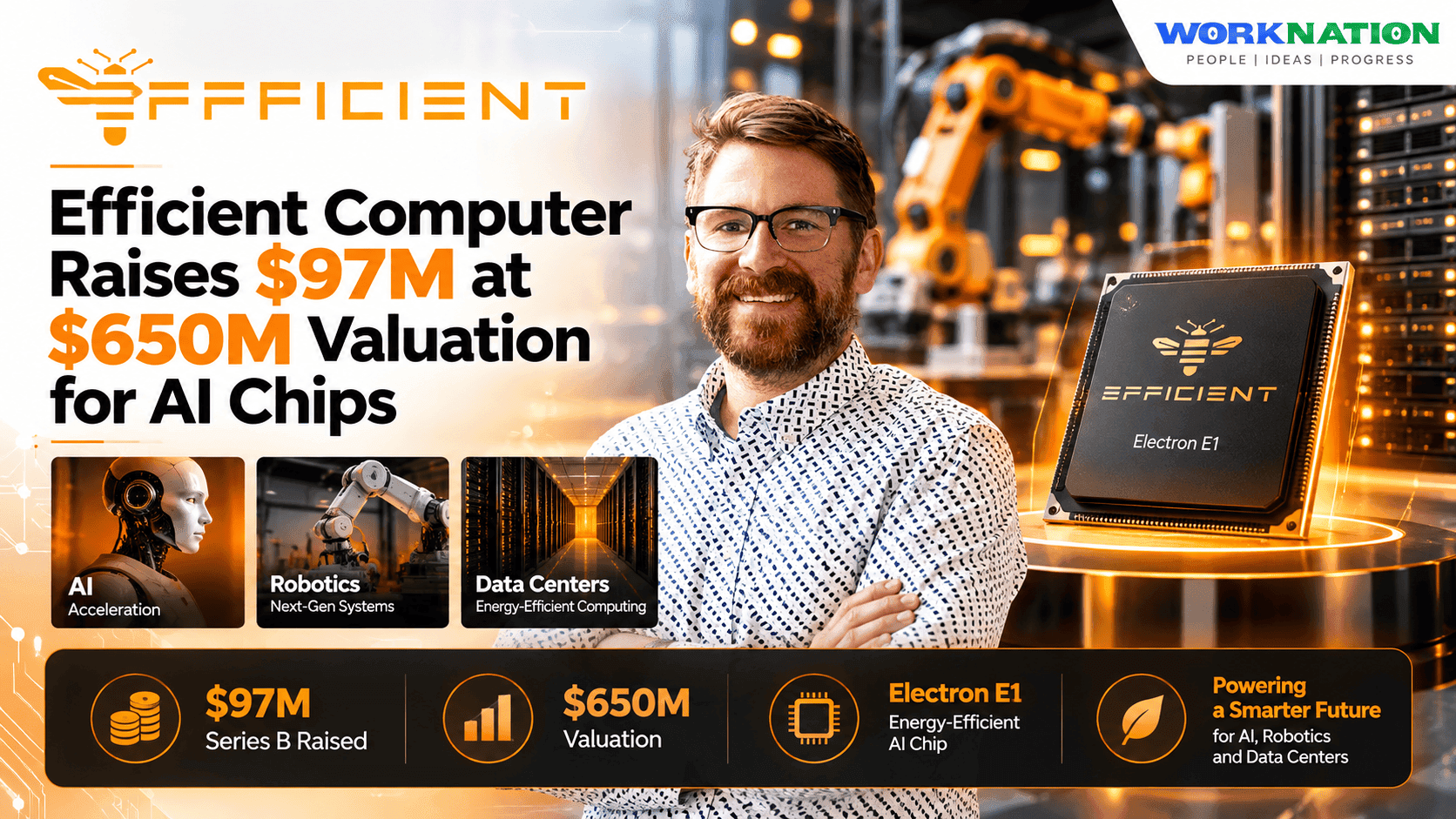
Pittsburgh-based semiconductor startup Efficient Computer has raised more than $97 million in Series B funding at a $650 million valuation, as it works to reduce the energy required to run increasingly demanding AI and computing workloads.
The round was led by TQ Ventures, with participation from Eclipse, Union Square Ventures, Giant Ventures, Triatomic Capital, TO Capital, TF Capital, Mana Ventures, Toyota Ventures, Overmatch and Borderless.
The latest financing brings Efficient Computer's total funding to $173 million, just seven months after the company raised a $60 million Series A led by Triatomic Capital.
The company is targeting a problem becoming increasingly important across artificial intelligence: computing power is growing rapidly, but so is the amount of energy required to provide it.
Efficient Computer is taking a different approach from many AI-chip companies by developing a programmable processor designed to handle general-purpose computing alongside AI workloads.
Tackling AI's Energy Problem
AI systems can deliver significant improvements in areas ranging from software development to robotics, but running those systems requires substantial computing infrastructure.
Efficient Computer believes that focusing exclusively on specialised AI accelerators leaves a large portion of modern workloads outside the accelerator itself.
The company's argument is based partly on Amdahl's Law, which describes how improving one portion of a computing system does not necessarily eliminate the limitations created by the remaining portions.
In practical terms, making an AI accelerator extremely fast does not automatically make the entire application faster or more energy efficient if other parts of the workload continue to consume significant resources.
Efficient Computer is therefore developing processors intended to handle a broader range of workloads.
The company says its architecture can reduce energy consumption by between 10X and 100X for general-purpose computation, including AI workloads.
Electron E1 Moves Into Volume Production
Efficient Computer's current processor is the Electron E1.
The company says E1 is already in volume production and is being deployed for applications including physical AI and autonomy, critical infrastructure observability, space and defense, and wearable devices.
The latest funding will help the company increase production of E1 processors for lead customers.
However, Efficient Computer has not disclosed the number of units shipped or its revenue.
That makes the transition from prototype and early production to sustained commercial volume an important milestone for the company.
TQ Ventures co-founding partner Andrew Marks highlighted the company's ability to develop both hardware and software and noted that the team has completed four chip tape-outs while already shipping processors to customers at volume.
A Programmable Alternative to AI-Only Chips
Many companies in the AI semiconductor market are designing processors specifically for AI inference or training.
Efficient Computer is pursuing a broader architecture.
Its Electron platform is based on a spatial dataflow architecture called Fabric.
The company has also developed a compiler called effcc, which allows developers to run C, C++ and common AI frameworks without completely rewriting their applications for the processor.
This software layer is an important part of the company's strategy.
Specialised chips can deliver significant performance for specific workloads, but developers may need to adapt their software to take advantage of them.
Efficient Computer wants its hardware to remain programmable enough to support a wider range of workloads while still providing substantial improvements in energy efficiency.
The company intends to extend its Fabric architecture toward data-center-class performance.
It is targeting more than 10X better energy consumption compared with current systems as it scales the architecture.
From Robotics to Data Centers
Efficient Computer's initial applications are focused on areas where power efficiency can directly affect what products are possible.
Physical AI is one example.
Robots and autonomous systems need to process sensor information, make decisions and control physical systems while operating within strict power and thermal constraints.
Reducing the energy consumed by computing could therefore allow developers to build systems with greater capabilities without increasing their power budgets.
The same principle applies to wearables and other edge devices, where battery capacity is limited.
Efficient Computer is also targeting critical infrastructure, space and defense applications.
The company's longer-term ambition is to extend the same architecture into data centers.
Data centers represent a substantially larger computing market, but they also present a more demanding test for the company's architecture.
Efficient Computer therefore plans to use the latest funding to scale Fabric toward data-center-class performance while continuing to ship E1 processors.
A Team Built Around Computer Architecture Research
The company's technology has roots in academic research at Carnegie Mellon University.
CEO and co-founder Brandon Lucia is a Carnegie Mellon professor.
He began working with co-founders Graham Gobieski and Nathan Beckmann nearly a decade ago on understanding why computers consume so much energy.
Gobieski serves as chief technology officer, while Beckmann is chief architect and also a Carnegie Mellon professor.
The company also lists Alex Hawkinson, founder of SmartThings and BrightAI, on its team.
The founders' academic background has shaped the company's focus on computer architecture rather than simply developing another specialised AI accelerator.
That long research runway is also part of the pitch to investors.
Major Investors Back the Approach
TQ Ventures led the Series B, joined by a group of existing and new investors.
Participants include Eclipse, Union Square Ventures, Giant Ventures, Triatomic Capital, TO Capital, TF Capital, Mana Ventures, Toyota Ventures, Overmatch and Borderless.
Several investors have followed the company through its earlier development.
Eclipse partner Greg Reichow said the firm had backed Efficient from the beginning because it believed solving AI's energy problem required rethinking computing architecture.
Union Square Ventures general partner Rebecca Kaden similarly described the company's approach as a fundamental rethink of computing constraints.
The latest financing gives Efficient Computer significant additional capital to move from its current processor into broader commercial deployment and data-center applications.
A Competitive AI Chip Market
Efficient Computer is entering an increasingly crowded semiconductor market.
Other startups are also targeting energy-efficient AI computing, although many are taking more specialised approaches.
EnCharge AI has raised $100 million for analogue in-memory computing technology.
Axelera AI has raised $250 million for edge AI chips.
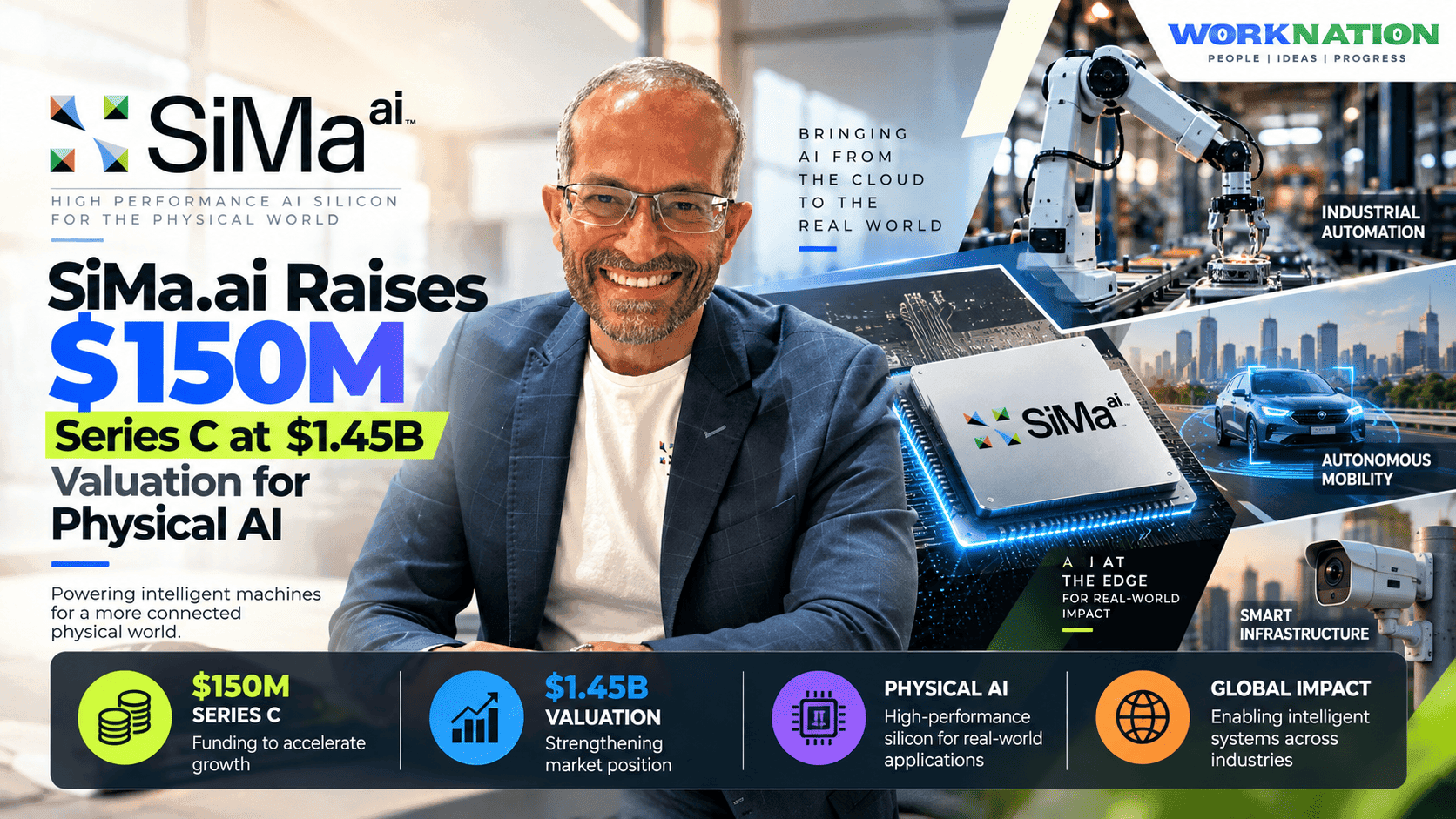
SiMa.ai recently raised $150 million for its physical AI platform targeting robotics, drones, automotive and other applications.
Other companies including Euclyd, Fractile and Positron are developing alternative AI computing architectures and have raised substantial amounts of capital.
Efficient Computer's distinction is its emphasis on programmable general-purpose computing alongside AI.
Rather than designing a processor for only one type of AI workload, the company wants its architecture to cover sensing, control, general-purpose software and AI processing.
The Next Test Is Commercial Scale
The $97 million financing gives Efficient Computer substantial resources to expand production and continue developing its architecture.
The company's Electron E1 is already in volume production, but the company has not disclosed revenue or shipment numbers.
That makes commercial adoption an important next milestone.
The company needs to demonstrate that its claimed energy-efficiency advantages translate into measurable value for customers and can support a sustainable semiconductor business.
Its longer-term ambition is even larger: taking the Fabric architecture from physical AI and edge applications into data centers.
If the architecture can deliver significant energy savings across both specialised and general-purpose workloads, the potential market extends well beyond robotics.
For now, Efficient Computer is moving from years of research into a stage where production, customer adoption and revenue will increasingly determine how far its architecture can go.
Have a Funding Round or Exciting Update to Share?
Submit your press release to get featured on WorkNation and reach founders, investors, and tech leaders.