Theia Insights Raises $8M to Replace Static Industry Classification Systems
Top Picks
Submit PR
Stay Ahead of the Market
Get the latest startup funding, hiring trends and global opportunities delivered to your inbox every week.
Amazon operates across multiple sectors. It runs cloud infrastructure, manages logistics, sells advertising, and produces media and hardware. However, most financial systems still classify it under a single category—Consumer Discretionary. This approach fails to reflect its full business scope.
Why Traditional Classification Systems Fall Short
Industry classification frameworks such as GICS and ICB shape how investors build portfolios and measure risk. These systems were designed for an earlier corporate structure. As a result, they have seen limited updates over time.
Today’s companies operate across multiple business lines. Therefore, static classifications often fail to capture their evolving nature.
Theia Insights and Its Approach
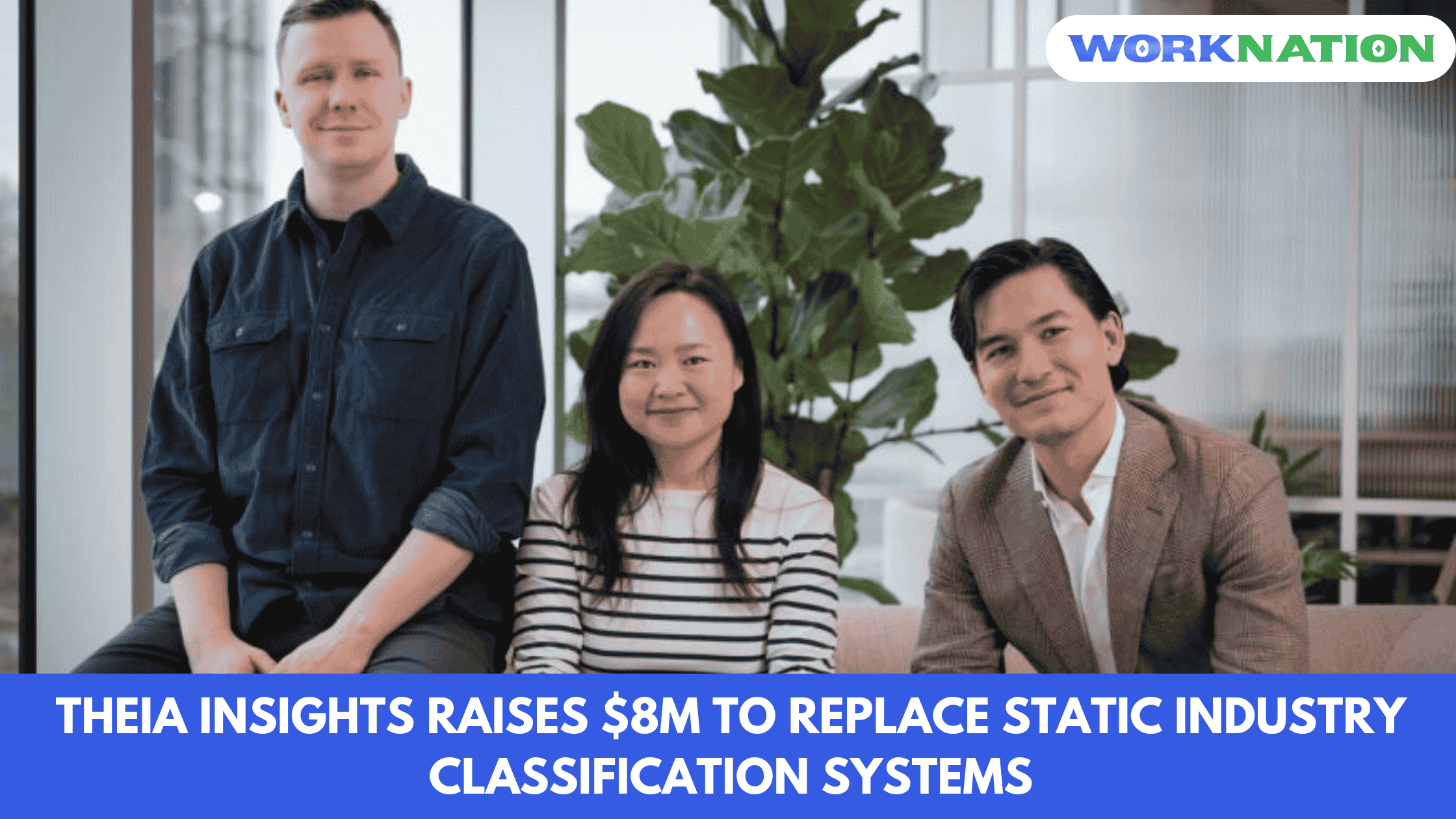
Theia Insights, a Cambridge-based deeptech firm, has developed an alternative system. The company recently raised $8 million in a Series A funding round. This brings its total funding to $14.5 million.
The round was led by MiddleGame Ventures, with participation from Further Ventures and Unusual Ventures.
The company was founded in 2022 by Dr Ye Tian. Previously, he worked as a PhD research scientist at Amazon Alexa. His background includes natural language processing and artificial intelligence. The founding team also includes professionals from Nasdaq, Morgan Stanley, Meta, UC Berkeley, and the University of Cambridge.
How the Technology Works
Theia’s system processes large volumes of corporate data. It includes regulatory filings, earnings transcripts, press releases, and financial reports. The platform applies natural language processing and quantitative models to extract business activities.
It then organizes this data into a dynamic and self-learning structure. The company refers to this as an ontology of the global economy.
Unlike traditional systems, Theia models companies as multi-dimensional entities. It tracks how revenue flows across different business segments and how these segments change over time. In simple terms, it answers “who does what by how much.”
Product Suite and Use Cases
The data generated by this system powers four products:
Dynamic Industry Classification system (TIIC)
Concept2Universe (C2U)
Thematic Factor Model (TFM)
Theme Watch Indices (TWI)
Each product serves a different purpose. For instance, C2U translates investment themes into company lists. Meanwhile, TFM helps identify long-term drivers behind stock price movements.
Target Customers and Expansion Plans
Currently, Theia serves institutional clients. These include index providers, banks, asset managers, and hedge funds.
The company now plans to expand into private markets. This area lacks dynamic classification systems. As more capital flows into private assets, the need for better data structures increases.
The new funding will also support engineering, research, and commercial growth.
Industry Perspective
Patrick Pinschmidt, co-managing partner at MiddleGame Ventures, highlighted the broader issue:
“Financial markets still rely on static classification systems that have changed very little over the past several decades. Theia’s approach builds a dynamic, AI-driven map of a company, sector, or investment theme, providing game-changing tools for investors and AI systems to reason from.”
Role of AI in Financial Data
The shift toward AI in finance is another key factor. Financial institutions are building AI-driven workflows for research and investment decisions. These systems require structured data that machines can interpret.
Theia positions its platform as a foundation for this transition. It aims to support both human analysts and AI systems with structured economic data.
Have a Funding Round or Exciting Update to Share?
Submit your press release to get featured on WorkNation and reach founders, investors, and tech leaders.