Sequen raises $16M to offer real-time personalization tools to consumer companies
Top Picks
Submit PR
Stay Ahead of the Market
Get the latest startup funding, hiring trends and global opportunities delivered to your inbox every week.
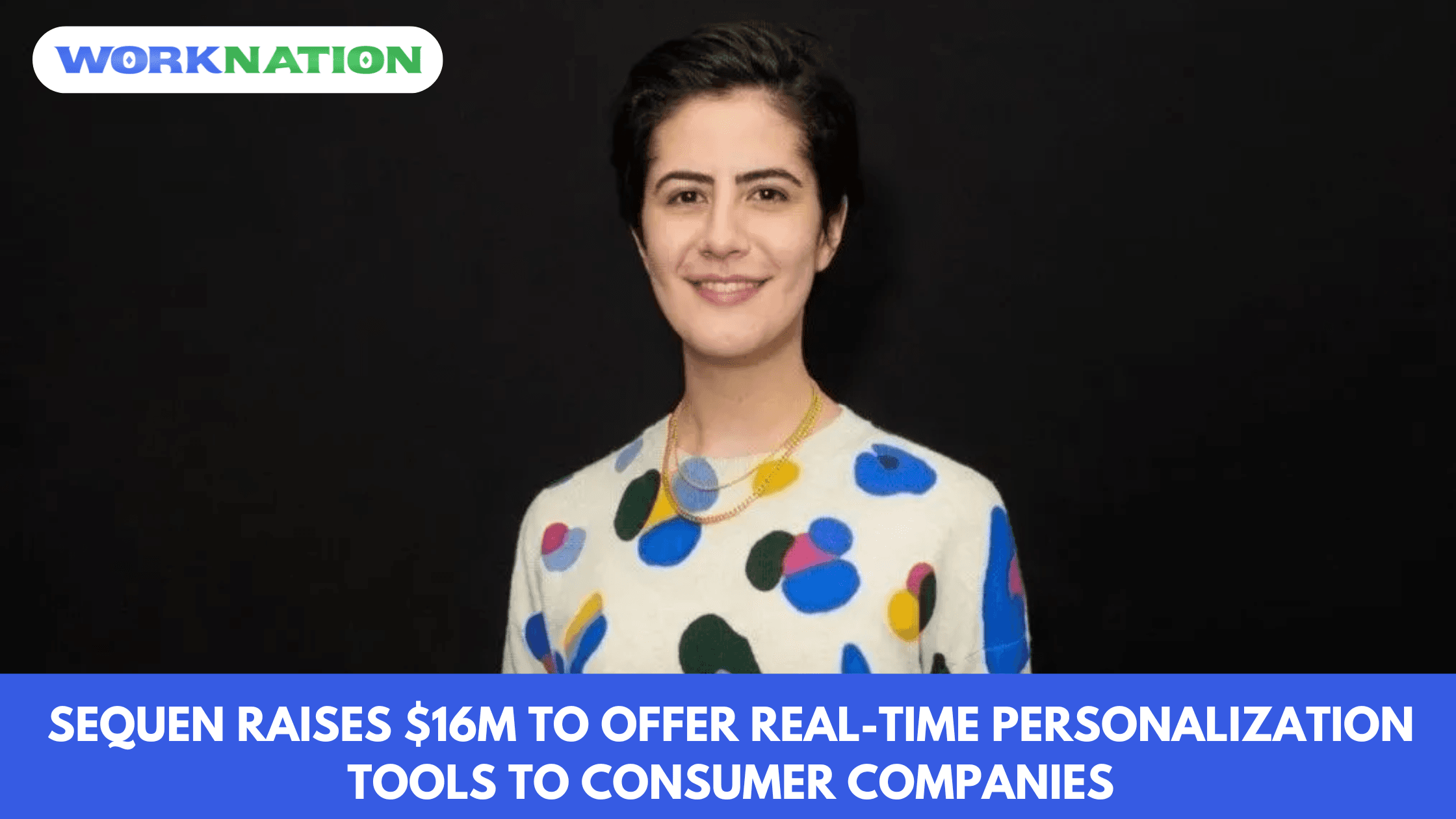
At Etsy, Zoë Weil played a key role in improving the company’s AI ranking systems. As a result, the platform recorded a billion-dollar increase in gross merchandise volume within a year. Now, with her startup Sequen, she aims to extend similar capabilities to other consumer businesses.
The company recently raised $16 million in a Series A funding round. It offers real-time personalization and ranking infrastructure, which has largely remained limited to major technology firms due to the need for large datasets.
Understanding how personalization systems work
Although the underlying technology may not be widely understood, many users interact with it daily. Platforms like TikTok, Instagram, and YouTube rely on similar systems to shape user experiences.
Explains Weil, Sequen CEO, “Modern tech isn’t really recommending content anymore. It’s bending your will in subtle ways over time to make you actually want things. And, in fact, the tech has gotten so good that a lot of people suspect platforms are eavesdropping on their conversations,” she says.
She links this behavior to a concept known as the large event model. Unlike large language models (LLMs), which process text, large event models analyze streams of user actions and behavioral patterns. Therefore, their use extends beyond simple recommendation systems.
Moving beyond cookie-based tracking
Weil suggests that Sequen’s approach could reduce reliance on cookies. Traditionally, cookies have been used to personalize user experiences. However, they have also raised privacy concerns and led to increased regulation.
“Our large event models learn from live user actions, not just clicks and scrolls, but also hovers, conversations, and stuff within a given session — not static profiles or third-party cookies,” Weil says. “That’s how you personalize in real time, even with sparse data. So yes, we do unlock TikTok’s algorithms for Fortune 500 companies that don’t have the infrastructure to do it … but I would say we’re taking it a step further,” she adds.
How Sequen’s platform works
Businesses integrate Sequen’s RankTune platform through APIs. Since most companies already use internal APIs for relevance systems, switching to Sequen’s infrastructure is relatively straightforward.
In addition, the system processes real-time data without requiring user identity. This reduces dependence on stored personal data while enabling faster decision-making, often within milliseconds.
“Our large event models are able to generalize to streams of real-time events that they get,” says Weil. “It doesn’t matter who is performing those events — they’re able to understand events and be able to make sense of them without relying on the user’s identity. So actually, the user’s identity is completely irrelevant.”
Early results from enterprise customers
Despite its privacy-focused approach, Sequen reports measurable business outcomes. According to the company, clients have seen improvements in revenue after adopting its system.
For example, a furniture company recorded a 7% increase in revenue after implementation. Earlier, a 0.4% increase was considered a strong result. Similarly, Fetch Rewards reported a 20% increase in net revenue within 11 days.
The company is also working with businesses in streaming media and online travel.
Pricing and adoption trends
Sequen prices its product based on requests per second (RPS). Different tiers support varying levels of demand, with higher tiers offering discounted pricing at scale.
Among its early customers, several contracts are valued in the seven-figure range. According to Weil, many clients expand usage after initial adoption.
“What we’ve seen consistently across the board is people opting for the highest tier, because as soon as they see us in one use case, they want to adopt us on their entire platform,” notes Weil.
Founding team and growth
Weil began her career in research before shifting toward product development. Over time, she focused on building ranking systems that generate measurable business outcomes. This experience led to the creation of Sequen.
The company was founded by Weil along with Ethan Benjamin, Mo Afshar, and Alexander Thom. Raphael Louca, formerly at Meta, recently joined as chief product officer.
Based in New York, Sequen has a 14-member team with experience from companies such as DeepMind, Meta, and Anthropic.
Funding details
The Series A round was co-led by White Star Capital and Threshold Ventures. Existing investors, including Greycroft, also participated. With this round, Sequen has raised a total of $22 million to date.
Have a Funding Round or Exciting Update to Share?
Submit your press release to get featured on WorkNation and reach founders, investors, and tech leaders.