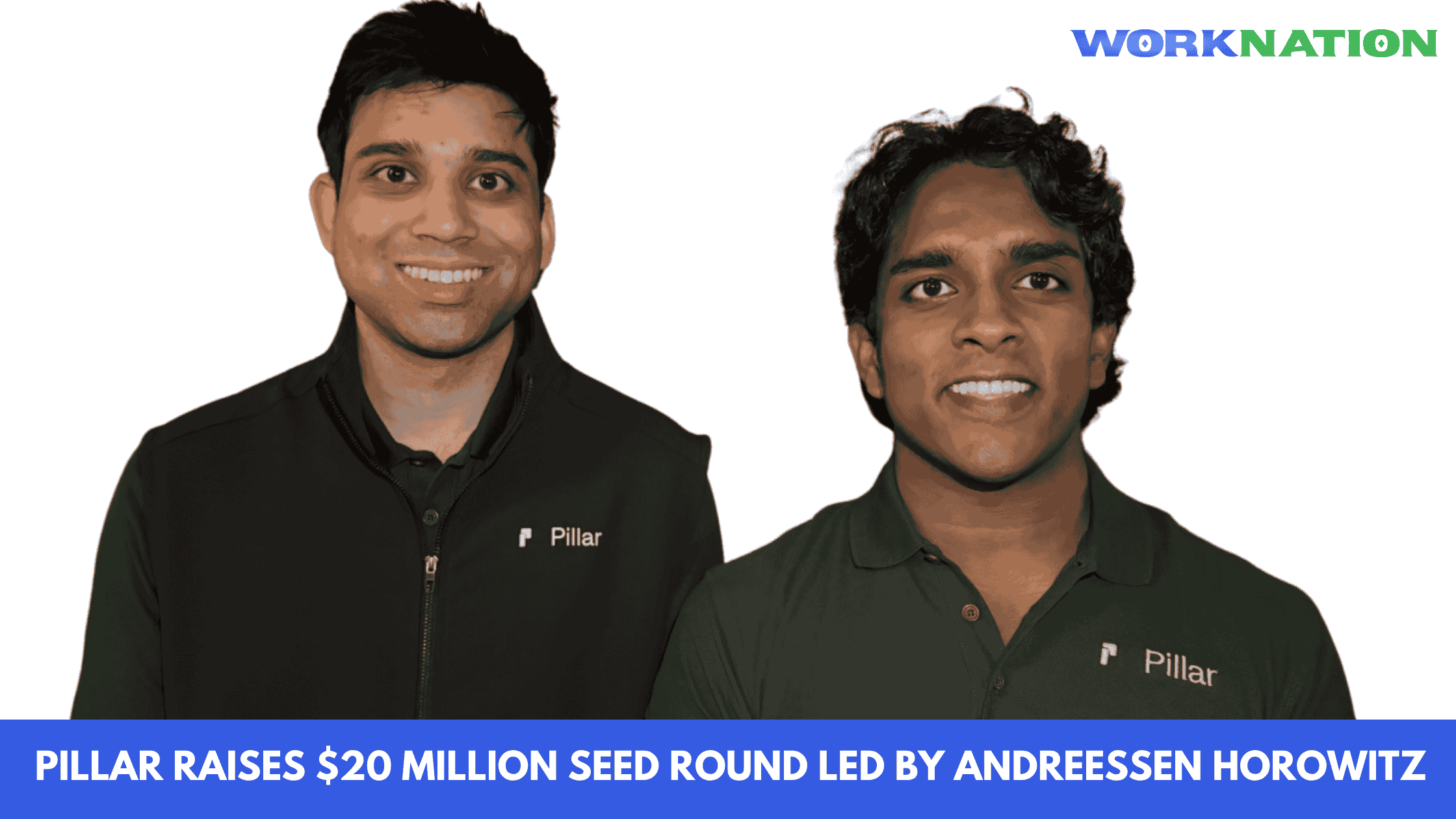
Pillar Raises $20 Million Seed Round Led by Andreessen Horowitz
Top Picks
Submit PR
Stay Ahead of the Market
Get the latest startup funding, hiring trends and global opportunities delivered to your inbox every week.
Pillar, a financial risk management platform focused on commodity-driven businesses, has raised $20 million in a seed funding round led by Andreessen Horowitz. The round also saw participation from Crucible Capital, Gallery Ventures, and Uber CEO Dara Khosrowshahi.
With this, the company’s total funding stands at $23 million since its founding in 2023.
What Pillar Does
Pillar builds tools that help businesses manage financial risk across commodities such as metals, food, and aviation fuel. These industries often face price volatility due to changing global conditions.
To address this, the platform automates hedging. In simple terms, hedging helps companies offset potential losses from price fluctuations by taking opposite financial positions.
How the Platform Works
Pillar uses artificial intelligence to process data from multiple sources. These include contracts, cash flows, inventory records, ERP systems, spreadsheets, and messaging platforms.
As a result, the system continuously evaluates a company’s exposure to risks related to commodities, foreign exchange, and freight.
It then builds and manages a hedging portfolio. Moreover, the platform adjusts positions based on market movements and a company’s defined risk tolerance.
In addition, Pillar executes trades and monitors exposure in real time. This shifts hedging from a periodic activity to an ongoing process.
Customer Base and Use Cases
The platform is already working with companies involved in commodity trading and recycling. These include firms such as Shibuya Sakura Industries, Sigma Recycling, and United Metal Solutions Group.
Such businesses typically deal with fluctuating input costs. Therefore, consistent risk management becomes important for financial stability.
Founders’ Background and Problem Statement
Pillar was founded by Harsha Ramesh and Chinmay Deshpande.
Before starting the company, Ramesh worked as a macro trader. He managed large derivative portfolios and advised companies on foreign exchange and interest rate risks.
However, he observed a gap. Large institutions had access to advanced tools and expertise. In contrast, small and mid-sized businesses had limited access to structured risk management systems.
Because of this, many companies treated risk management as optional rather than essential.
Product Vision and Market Position
Pillar aims to make risk management tools more accessible to smaller businesses. The company positions its product as a way to bring institutional-grade capabilities to a broader market.
Its goal is to make hedging as common as accounting or payments software.
At the same time, human oversight remains part of the system. Teams handle approvals and complex decisions, especially for large transactions. This ensures a balance between automation and judgment.
Competitive Landscape
Pillar operates in a space that includes traditional bank trading desks and existing commodity risk platforms such as Topaz and RadarRadar.
However, its focus on automation and accessibility may differentiate it from legacy systems.
Have a Funding Round or Exciting Update to Share?
Submit your press release to get featured on WorkNation and reach founders, investors, and tech leaders.