Hermeus raises $350 million to advance unmanned hypersonic aircraft development
Top Picks
Submit PR
Stay Ahead of the Market
Get the latest startup funding, hiring trends and global opportunities delivered to your inbox every week.
Hermeus has raised $350 million in a new funding round. As a result, the company has reached a valuation of $1 billion. The funding will support the development of its unmanned hypersonic aircraft program.
Funding mix includes equity and debt
The total funding includes $200 million in equity and $150 million in debt. The equity round was led by Khosla Ventures. Existing investors such as Canaan Partners, Founders Fund, In-Q-Tel, and RTX Ventures also participated.
In addition, new investors include Cox Enterprises and Destiny Tech100.
According to the company, the debt component will help reduce equity dilution. This allows the company to maintain greater ownership while continuing capital-intensive operations.
Focus on manufacturing and hardware expansion
Hermeus plans to use the funding to expand its manufacturing capabilities. Since the company focuses on hardware development, capital requirements remain high. Therefore, a mix of debt and equity provides flexibility in managing costs.
The company is currently scaling its production infrastructure. At the same time, it continues to invest in aircraft development and testing.
Shift to existing engine technology accelerates progress
Earlier, Hermeus was developing its own engine. However, the company later partnered with Pratt & Whitney, a subsidiary of RTX Corporation.
Instead of building a new engine from scratch, Hermeus modified the existing F100 engine. This decision reduced development time and enabled faster testing cycles.
As a result, the company could move closer to its goal of building a Mach 5 aircraft. In addition, the approach helped align with near-term requirements from the U.S. Department of Defense.
Prototyping approach supports faster iteration
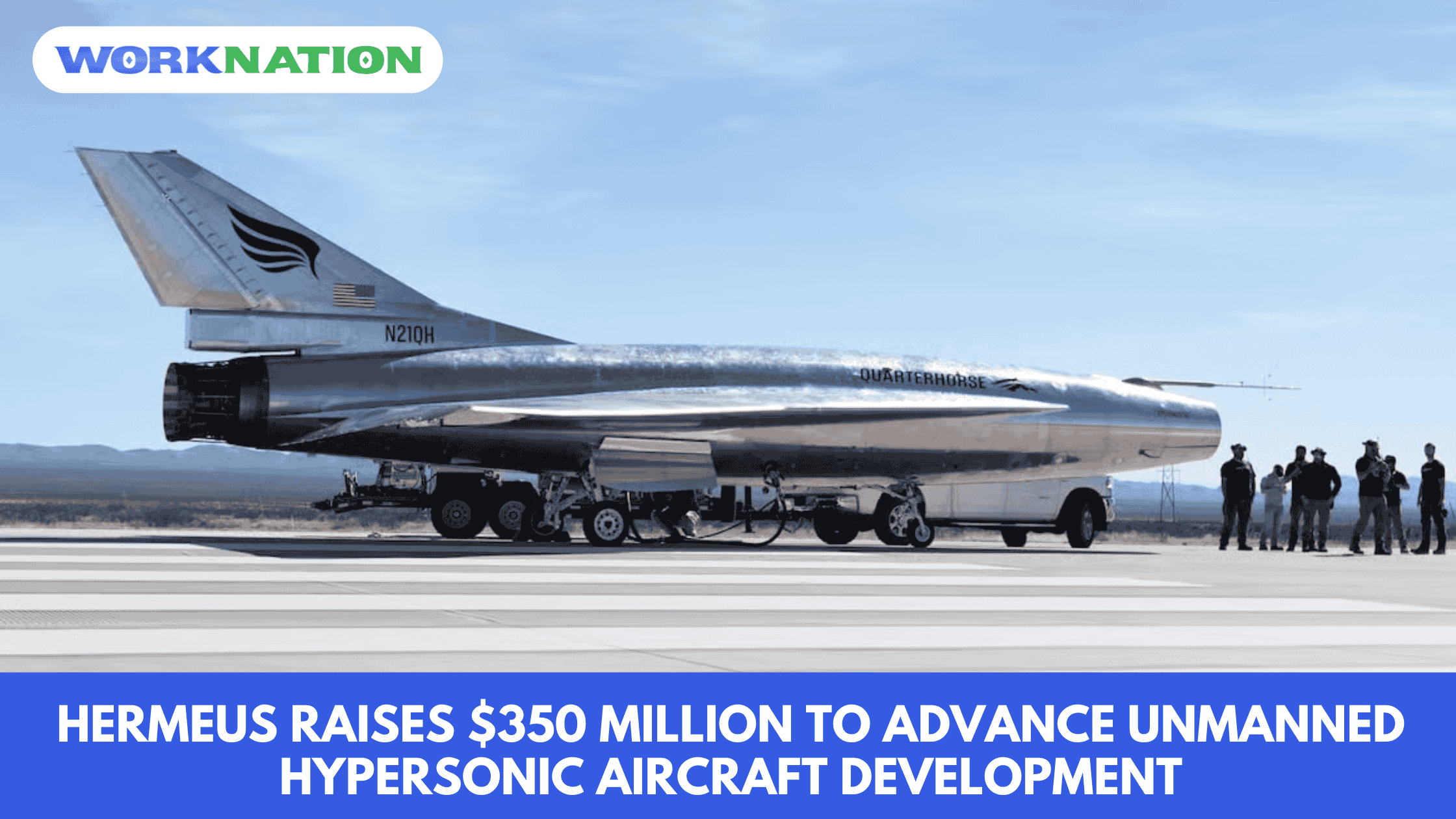
Recently, Hermeus tested a demonstrator aircraft similar in size to an F-16 fighter jet. The company now aims to make the next version supersonic. A third aircraft is also under development.
This rapid prototyping approach allows the company to test, learn, and improve quickly. However, such a model is still uncommon in the aviation sector, where development cycles are typically longer.
Talent and scaling remain key challenges
Despite progress, the company faces challenges in building skilled teams. Aircraft development at this pace requires specialised talent, which is limited in the industry.
At present, Hermeus has close to 300 employees. The company plans to expand its workforce further as development progresses.
Managing risks in aircraft development
The company has completed two test flights so far. However, leadership acknowledges that failures may occur during development.
Therefore, Hermeus is focusing on managing risks in smaller stages. By building multiple aircraft, the company aims to reduce overall development time and improve learning cycles.
Have a Funding Round or Exciting Update to Share?
Submit your press release to get featured on WorkNation and reach founders, investors, and tech leaders.